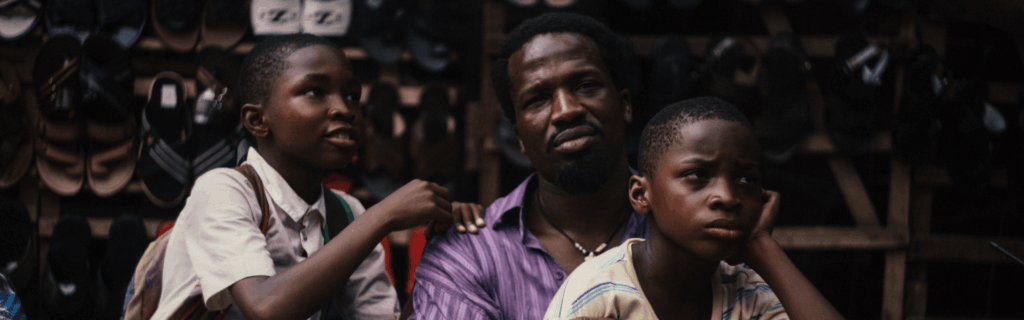
“Dear Father, I Will See You in Dreams”: My Father’s Shadow as Powerful Political Reverie
When the father takes the two boys with him to Lagos to seek overdue payment from his boss, the film renders the city legible through sheer proximity: the camera clings to faces in insistent close-up, letting skin and gaze fill the frame against a densely populated, slightly chaotic urban field. The result is an intimacy that feels pointedly personal—almost tactile—so that public space registers less as panorama than as pressure: noise, movement, and crowding filtered through what the father and boys see, endure, and attempt to comprehend during the political unrest in Nigeria in 1993.
