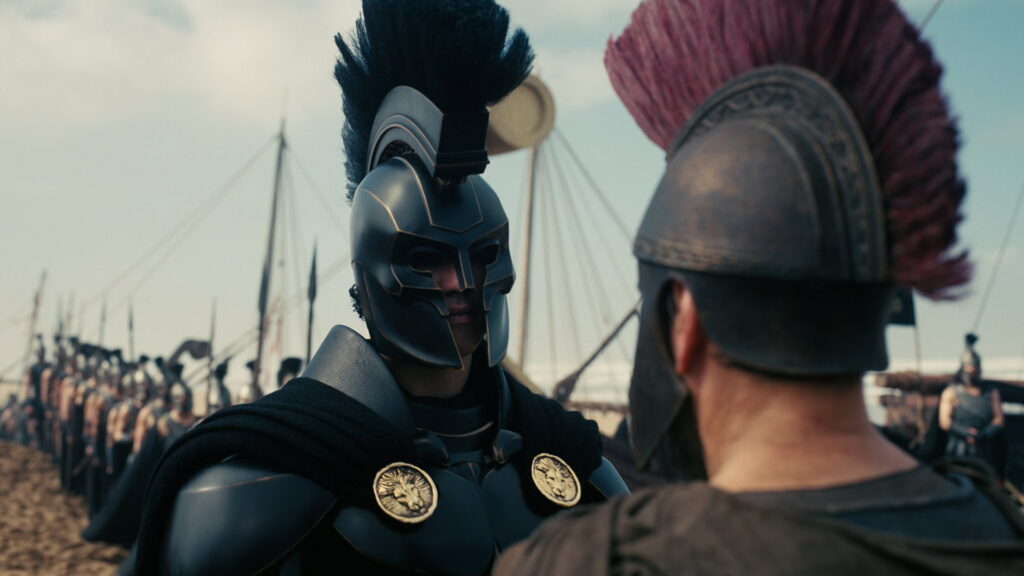
The Odyssey: When Christopher Nolan Loses His Cinematic Compass
Christopher Nolan’s The Odyssey (2026), written for the screen from Homer’s epic, arrives with all the expectations that inevitably accompany one of the filmmaker’s large-scale productions. Yet despite the magnitude of the source material and the evident ambition of the adaptation, the film surprisingly lacks much of the force normally associated with Nolan’s cinema. His most recognizable signatures—the propulsive montage, the manipulation of temporal and spatial perception, and the overwhelming use of sound as a dramatic force—feel considerably less distinctive here. The result is a film that is undeniably large in scale but strangely less powerful in cinematic presence.
