Anthology Book
Interactive Narratives: The Evolution of Storytelling in the Digital Age
Edited by Hudson Moura
In Preparation
The transformative potential of interactivity within novels, films, games, and digital media has created a dynamic dialogue between human creativity and technological innovation. From the epistolary novel to immersive digital media, interactive storytelling has evolved, challenging traditional, linear modes of narrative while fostering new relationships between creators, audiences, and interactive platforms.
This anthology, Interactive Narratives, seeks to explore the multidimensional nature of interactivity across various narrative platforms in the XXI century. By tracing its historical roots and mapping its modern manifestations, this volume will investigate how the concept of interactive narratives is reshaping narrative experiences and the theoretical and practical implications for creators, audiences, and archivists. We aim to compile cutting-edge research and theoretical reflections highlighting interactivity as a narrative tool and a mode of user agency that adds complexity to storytelling while expanding the boundaries of narrative engagement.
Focus Areas of the Volume:
The book is tentatively organized into five core sections, each offering conceptual directions to help orient contributors regarding the thematic focus and structure. These frameworks are intended as points of reference to inspire proposals rather than prescriptive theories to be strictly applied. Contributors are encouraged to develop their ideas within these themes without needing to specifically reference or apply the outlined theories or authors:
1. Duality and Ethics of Active and Passive Engagement:
Drawing on Žižek’s theory, interactive narratives blend both active and passive user roles. While user choices may appear to guide the narrative, interpassivity reveals how users sometimes adopt passive modes in complex digital systems. This section invites contributors to explore how narratives shift between user participation and algorithmic controls, balancing user agency with predetermined outcomes. Or, contributors may reflect on the ethical implications of user manipulation in digital storytelling, questioning the boundaries of user freedom versus design control and potential biases created by algorithmic choices.
2. Technological Affordances and User Agency:
Building on Janet Murray’s framework of procedural and participatory affordances, this theme will explore how technological design and procedural logic shape the boundaries of user agency in interactive storytelling. Contributors are encouraged to examine how technological innovation balances freedom and constraint within interactive narratives, enhancing narrative engagement through user-driven interaction and system-generated structure.
3. Perceptual and Affective Dimensions:
This section focuses on how user perceptions of interactivity—including narrative complexity, emotional engagement, and user impact—create immersive and emotionally resonant narrative experiences. Contributors are invited to explore how interactive storytelling fosters emotional depth and audience attachment through perceived control and reactive content, where user actions seem to directly influence narrative outcomes.
4. Narrative Complexity and User Involvement:
Drawing upon Henry Jenkins’ concept of additive comprehension, this section will address how narrative complexity and user involvement are intertwined in interactive storytelling. Contributors are encouraged to examine how branching storylines, multiple endings, and user choices can deepen the complexity of narratives, creating richer and more immersive experiences without diminishing the overall structure. This section will explore how interactive narratives balance user participation and maintaining narrative depth.
5. Archiving Digital Culture:
Drawing on Foucault’s insights alongside practical approaches by scholars like Lowood, Kirschenbaum, and Rinehart, this section critically frames digital archives as sites of preservation and power, shaping cultural heritage and access to interactive media. Contributors are invited to explore the preservation of virtual reality, multimedia installations, software, interactive fiction, and video game narratives. This area emphasizes innovative solutions for maintaining these media’s interactive and experiential qualities for future research and accessibility.
This volume will unite diverse perspectives and pioneering research, significantly contributing to the rapidly growing field of interactive media studies.
About the Volume:
This volume will be part of the Interactive Film and Media (IFM) Book Series, published by Routledge/Taylor & Francis. The series aims to advance scholarly discussions on interactivity in film and media.
If you have any questions, please contact Dr. Hudson Moura (hmoura@torontomu.ca). We look forward to receiving your proposals and insights into this evolving field.active storytelling. Submission for the volume is separate from the conference presentation, and inclusion will be subject to peer review.
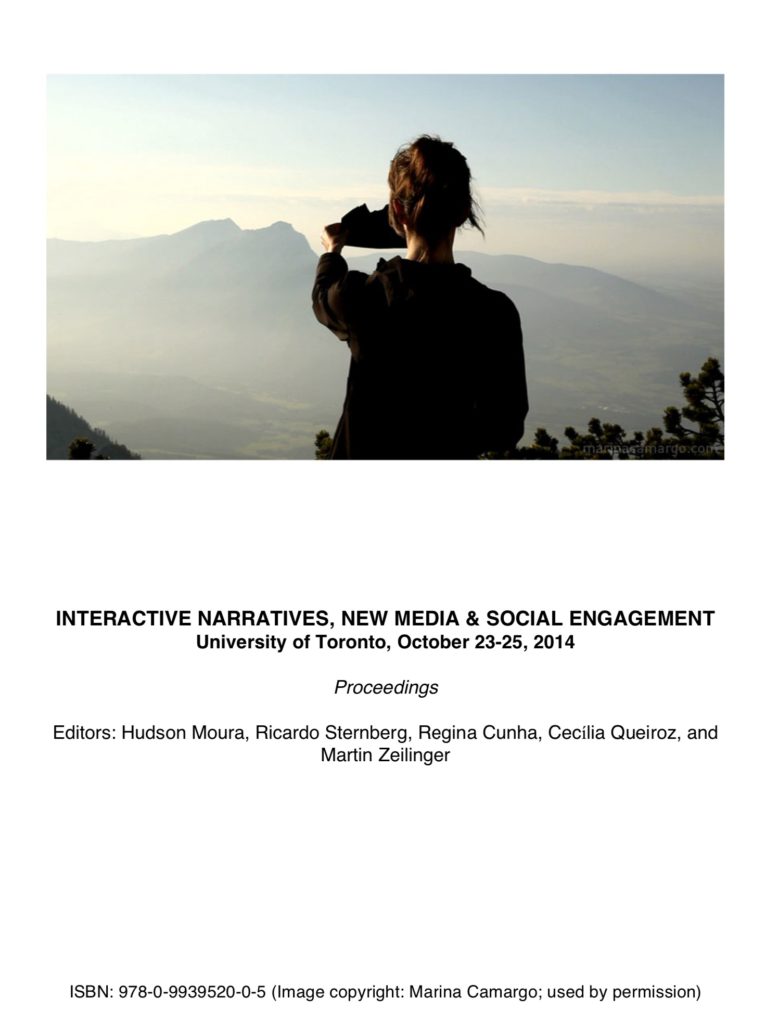
Interactive Narratives, New Media and Social Engagement
How has the digital screen changed our world in general and narrative and visual arts in particular is the broad focus of chapters of “Interactive Narratives, New Media and Social Engagement” eBook. The evolution of narrative practices from text-based literature to the advent of the digital revolution as storytelling moves from literacy to so-called post-literacy. The prevalence of new interactive digital narrative in all areas from games, to literature, to films, to video art has resulted in new forms of storytelling and, accordingly, provoked new practices of reading that transforms readers/viewers into active collaborators. Click here to download the entire E-Book.
Trajectoires du cinema brésilien contemporain
A special issue on Contemporary Brazilian cinema post-Cinema da Retomada published in Cinémas : revue d’études cinématographiques, automne 2011, vol. 22, n° 1, p. 7-189.
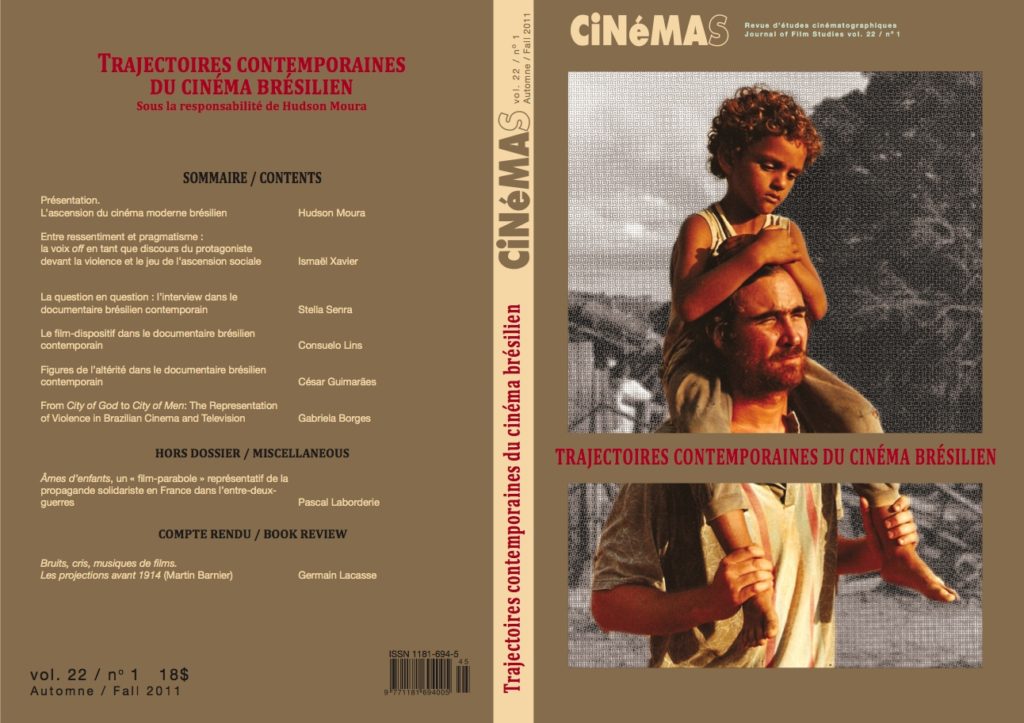
Présentation. L’ascension du cinéma moderne brésilien Hudson Moura
Pragmatisme du pauvre et ressentiment petit-bourgeois Ismail Xavier
La question en question : l’interview dans le documentaire brésilien contemporain Stella Senra
Le film-dispositif dans le documentaire brésilien contemporain Consuelo Lins
Figures de l’altérité dans le documentaire contemporain César Guimarães
From City of God to City of Men: Brazilian Cinema and Television
and the Representation of Violence Gabriela Borges
Dossiê Jerusa Pires Ferreira
Jerusa Pires Ferreira’s Dossier is a collection of 50 documents including articles and book reviews on Ferreira’s work. Also, the collection includes Ferreira’s biographies and interviews. Among the collaborators include Jacques Migozzi, Wladimir Krisinski, J. Guinsburg, and Marlyse Meyer.