by Hudson Moura
The Drama, written, produced, and directed by Kristoffer Borgli, starring Zendaya and Robert Pattison , begins with a familiar romantic premise but gradually transforms it into a sharp and engaging reflection on intimacy, doubt, and the unsettling instability of couplehood. At first, the film seems to be about a couple preparing for their wedding, navigating the expected practical and emotional challenges of the occasion: organizing the ceremony, choosing food and drinks, and, above all, writing vows. Yet even this apparently simple task becomes revealing, since it requires selecting the “best” or most memorable stories of the relationship to share publicly with family and friends. In this sense, the film immediately understands that marriage is not only a union, but also a performance—a staging of intimacy before an audience.
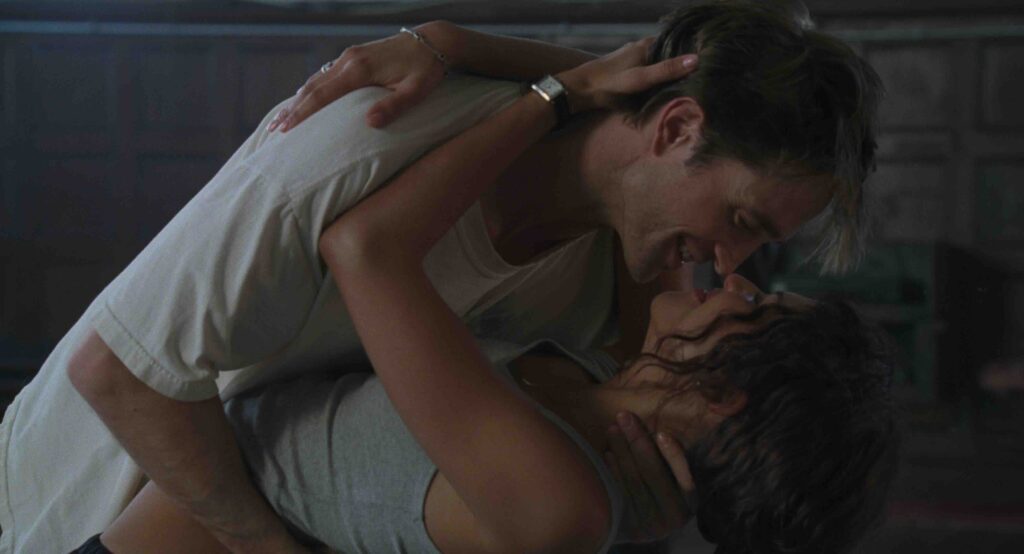
One of the film’s major strengths lies in its visual and tonal energy. The beginning is edited with dynamism and colour, giving the relationship immediate momentum, while the camera often favours extreme close-ups that emphasize the couple’s intimacy and their interactions with friends. These choices create an atmosphere of emotional immediacy, drawing the viewer into the texture of everyday affection, social ritual, and private vulnerability, while making even the smallest gestures, hesitations, and expressions feel charged. At the same time, Borgli often opens that intimacy onto the outside, showing the spaces around the apartment and the surrounding buildings, so that private emotion is constantly situated within a broader urban environment. The frequent use of contre-jour reinforces this effect: backlighting partially obscures faces and outlines bodies in shadow or glow, creating a perception that is at once intimate and uncertain. The characters seem close to us, yet never fully transparent. In this sense, the film’s visual form suggests that intimacy is never purely enclosed or fully knowable, but always shaped by distance, opacity, and the spaces that surround it.
The narrative takes a decisive turn during a gathering with the couple’s closest friends, including the maid of honour and best man, when a seemingly playful game is proposed: what is the worst thing you have ever done? From there, the film opens a fault line at the heart of the relationship. What begins as a casual social exercise becomes the trigger for a much deeper crisis, as the couple starts to question whether one can ever truly know the person one loves. The past, once spoken aloud or even partially suggested, becomes a destabilizing force. The film is particularly effective in exploring how something intended, imagined, or done long ago can suddenly acquire destructive power in the present.
This is one of those films in which the opening scene is crucial. It should not be missed, because its meaning becomes fully clear only at the end. The film’s beginning and ending mirror one another in a way that redefines the entire relationship, especially through the logic of the “meet cute,” which here is not simply charming but foundational to the whole emotional architecture of the narrative. Borgli uses this structure skillfully, allowing the ending to send the viewer back to the beginning with a different understanding of what seemed at first spontaneous, romantic, or innocent.
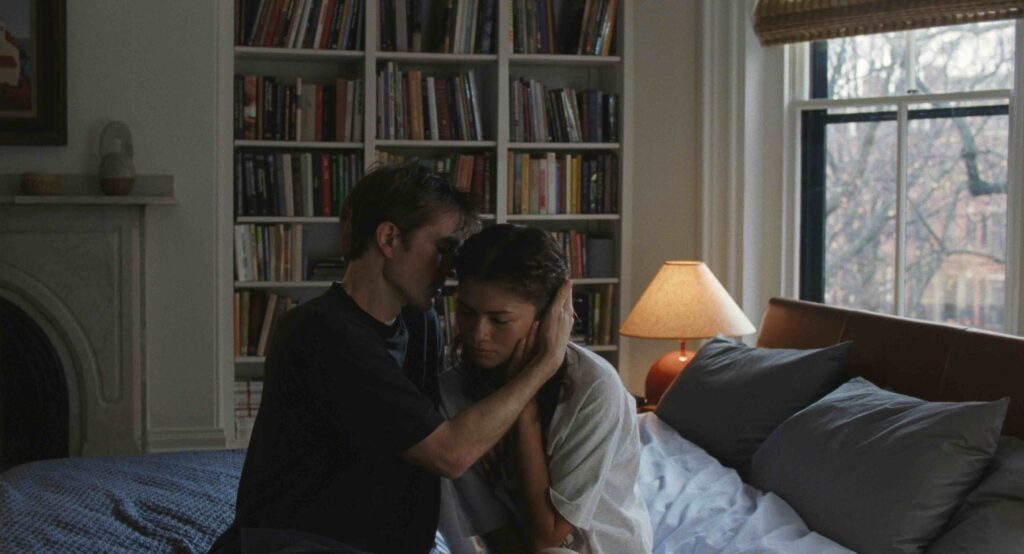
The performances are another major asset. The actors, Zendaya playing Emma and Robert Pattison playing Charlie, bring strong chemistry and nuance to their roles, moving convincingly from lightness to more dramatic and emotionally intense moments without ever making the film feel too heavy or oppressive. This balance is essential to the film’s success. The Drama remains charming, disturbing, and relatable even as it becomes more psychologically unsettling. The emotional shifts feel earned rather than exaggerated, and some scenes reach the level of a genuine tour de force, sustained by the performers’ ability to inhabit both tenderness and suspicion.
What makes the film compelling is precisely this tonal balance. It never abandons the pleasures of romantic comedy and relational drama, but it gradually infuses them with discomfort, uncertainty, and emotional volatility. The result is a film that is both entertaining and perceptive, one that captures how intimacy can move rapidly from warmth to estrangement, from play to revelation, from trust to doubt.
In the end, The Drama is a smart, stylish, and emotionally perceptive film about the fragile construction of romantic certainty. Through dynamic editing, extreme close-ups, and frequent contre-jour compositions, Borgli gives the relationship both intimacy and instability, closeness and opacity. Beneath its lively surface emerges a more unsettling question: do we ever truly know the person we have chosen to love? And if that certainty collapses, can we begin again? By treating marriage as both emotional truth and social performance, Borgli crafts a film that is charming, intense, and quietly devastating.
 Rating: 4.3/5