by Hudson Moura
The Indigenous film festival imagineNATIVE, which takes place June 2–7, 2026 in Toronto and June 8–14, 2026 online, remains an essential space for understanding how contemporary Indigenous cinema approaches memory, land, language, resistance, and transmission, while also making room for everyday life, historical wounds, and present forms of resilience. More than a showcase, the festival offers audiences a chance to encounter the distinct ways Indigenous filmmakers are appropriating cinema on their own terms, adapting the medium to particular storytelling traditions that often challenge dominant conventions of editing, pace, rhythm, characterization, and narrative progression. What emerges through these films is not a single model of Indigenous cinema, but a rich field of aesthetic forms and political perspectives, where territory, family, history, and survival are constantly being rethought on screen. The festival’s in-person and online formats also make that experience more accessible to a wider public; full details and tickets are available through the official festival site.

Aki
Darlene Naponse’s Aki is an almost wordless, deeply contemplative film that follows the passage of the seasons on the territory of Atikameksheng Anishnawbek in Ontario. Structured around the seasonal cycle as named in Anishinaabemowin—Biboon, Ziigwan, Niibin, and Dagwaagin—the film observes transformations in the natural world alongside scenes of Indigenous daily life: gatherings, celebrations, sports, work in the forest, and the ordinary rhythms of community life. Rather than centering a single character or plot, the film follows time itself, the land, and the people who live in relation to it.
What makes Aki especially striking is its refusal of conventional explanation. There is no guiding voice-over and no didactic framework imposed on the viewer. Instead, the camera acts as a witness to seasonal change, to water, thaw, ice, and sound, with a minimalist soundtrack that heightens the film’s meditative quality. This formal restraint becomes its strength: Aki is not simply a nature documentary, but an ode to territory and to the people who inhabit it, while also restoring visibility to ordinary Indigenous images too often absent from the screen. Rating: 4.4/5

Ni-Naadamaadiz: Red Power Rising
Shane Belcourt’s Ni-Naadamaadiz: Red Power Rising revisits a crucial moment in Indigenous political history in Ontario: the 1974 occupation of Anicinabe Park, led by Louis Cameron, who was labelled a terrorist by Canadian authorities but remembered by his community as a warrior. Drawing on an unpublished manuscript discovered by his son Tyler Cameron, the documentary reconstructs the occupation through archival footage, interviews, and Louis Cameron’s own words. The film also situates this struggle within the broader context of Kenora, a place marked by systemic racism and the legacy of residential schools.
The film’s strongest quality lies in its deeply personal structure. Although it documents an important chapter in Indigenous resistance, it is also the story of a son searching for his father’s voice, memory, and legacy. That gives the film a moving emotional force. At times, its melancholic tone makes the struggle feel like a lost or unfinished fight, but that melancholy does not weaken its politics; rather, it underscores the idea that present-day Indigenous sovereignty is built on past acts of courage, conflict, and sacrifice.Rating: 4.2/5
Nika & Madison
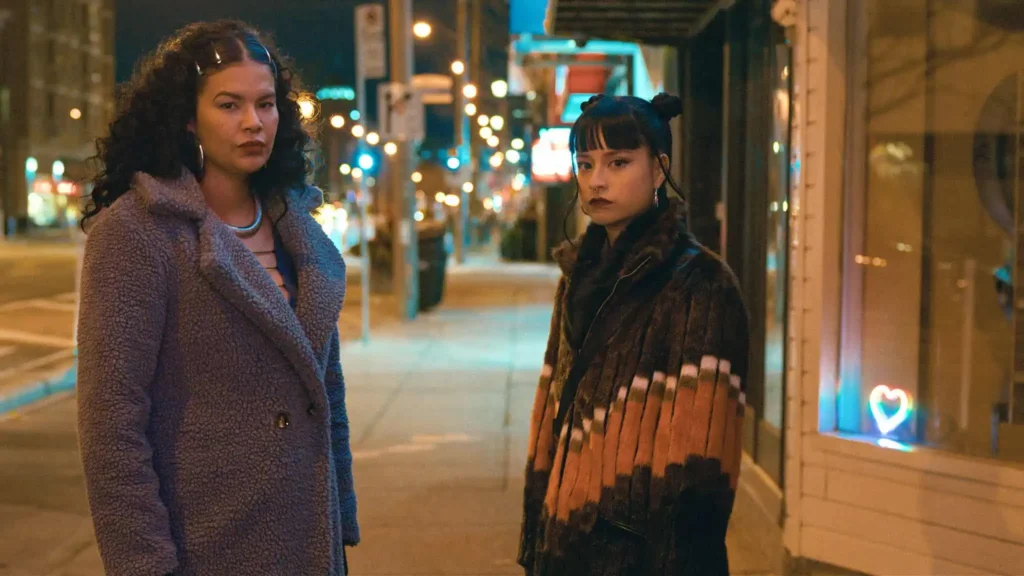
Eva Thomas’s Nika & Madison begins with a revealing line Madison heard from a classmate at the University of Toronto: “Sometimes I forgot you are even Native.” From there, the film develops into a story that echoes Thelma & Louise, but within a contemporary Indigenous context. Madison, a young Indigenous student in Toronto, returns to her reserve, gets hold after a bar fight, and is then assaulted by a police officer. Her cousin Nika intervenes to save her and gravely injures the officer. The two women go on the run, first within the protection of the reserve and then deeper into the woods, as the police close in.
What gives the film its urgency is the way it connects the fates of its two heroines to the broader reality of colonial violence in Canada. Nika & Madison is not simply a fugitive story; it is a film about why these women already know that the justice system will not protect them. When Nika asks an Indigenous lawyer what would happen if she surrendered to the police, she answers that she cannot predict her fate. What she does know is this: Indigenous people make up roughly 5% of the population, yet more than 30% of those incarcerated in Canada, with the numbers even more devastating for Indigenous women, who account for nearly half of the female prison population. She also notes that, in the previous two months alone, six Indigenous people had died at the hands of police.
By grounding its narrative in the realities of incarceration, police violence, and the vulnerability of Indigenous women, the film gives its road-movie structure a strong political charge. At the same time, what distinguishes it is the strength of community, the reserve as a space of shelter, and female solidarity as a mode of resistance.Rating: 4.2/5
Moon Noonk Edouard
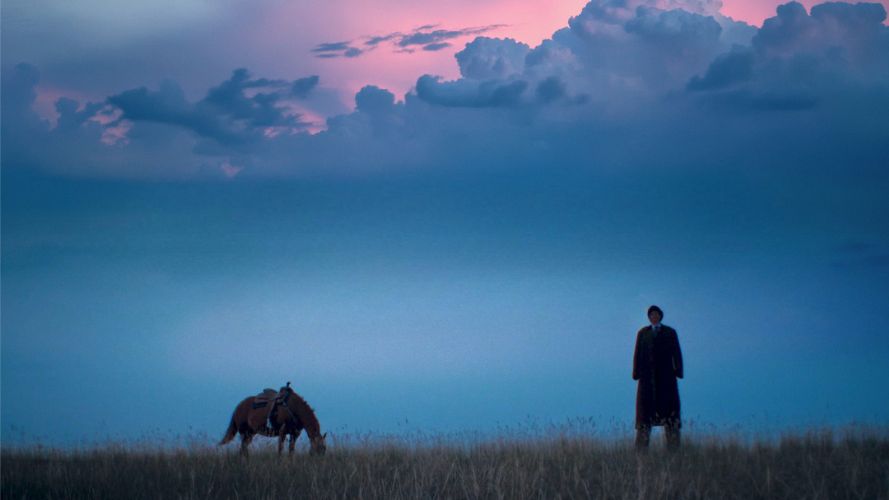
Moon Noonk Edouard is a moving and intimate documentary in which filmmaker Jessie Ray Short returns to the story of her great-granduncle Edouard Beaupré (1881–1904), known as the “Willow Bunch Giant” and remembered as one of the tallest men in recorded history. The film retraces his trajectory from Saskatchewan to his years as a strongman and spectacle performer in fairs across North America, before his early death at the St. Louis World’s Fair. But the documentary is not only about his life; it is equally about what happened after his death, when his body continued to be exhibited, and about the long struggle of his family to recover his remains and restore him to his community in Willow Bunch. Blending archival material, family testimony, and dreamlike reenactments, the film becomes both a portrait of a man whose body was constantly turned into spectacle and an act of familial and cultural reclamation.
What gives the film its force is precisely this movement from spectacle to healing. Rather than repeating the dehumanizing mythology that reduced Beaupré to his extraordinary size, Jessie Ray Short reclaims him through kinship, memory, and Michif heritage. The documentary frames the family’s effort not simply as historical correction, but as an emotional and spiritual act of return: after decades of exhibition and displacement, Edouard is finally brought back into the circle of mourning, ritual, and belonging. If the film has a particular strength, it lies in its poetic restraint and in its refusal to sensationalize a story that had already been sensationalized too many times. In doing so, Moon Noonk Edouard becomes not only a family story, but also a critique of the colonial and popular gaze that turned Indigenous and extraordinary bodies into objects of display.
 Rating: 3.3/5
Ceremony
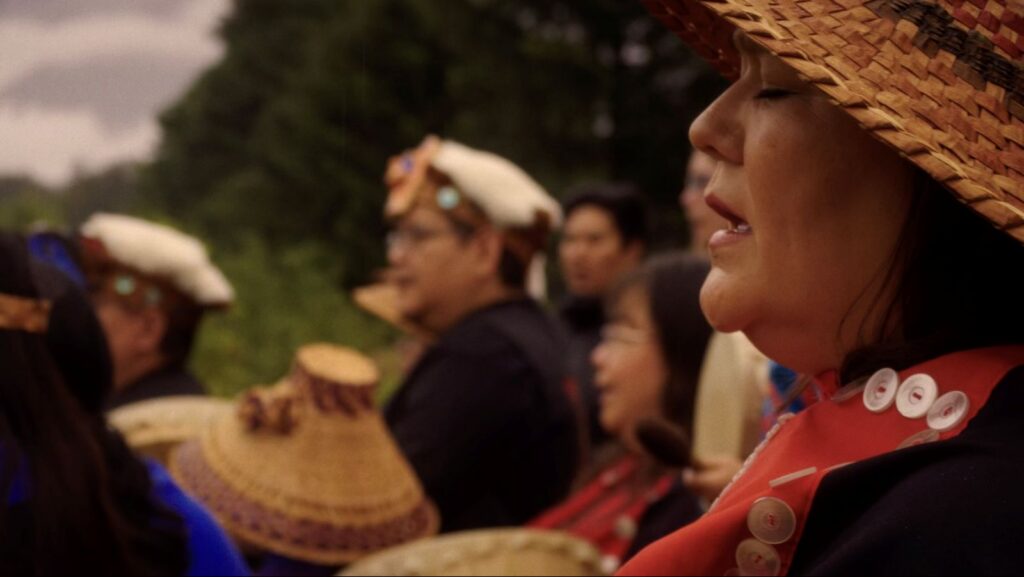
Ceremony, directed by Banchi Hanuse, is a documentary that begins with the disappearance of the sputc, or ooligan fish, in Nuxalk Territory, but gradually opens into something much larger: a meditation on land, memory, ceremony, colonial violence, and Indigenous resurgence. The film returns to a ceremony that used to take place every year before being interrupted by Canada’s colonial policies, and through that ceremonial framework it revisits the history of dispossession in Bella Coola, British Columbia. Told through Nuxalk voices, archival materials, radio broadcasts, scientific observation, and watercolour animation, the documentary shows how environmental damage, industrial extraction, and colonial policy are inseparable from one another. At the same time, it insists that the loss of the fish is not simply ecological; it is also spiritual, cultural, and historical, tied to a land that still remembers its people and to a people whose ancestors, songs, and energy remain embedded in the territory.
What makes Ceremony especially compelling is that it exceeds the apparent narrowness of its title and premise. The film becomes not only about ritual, nor only about the disappearance of the ooligan, but about the broader fracture between Indigenous communities and ancestral lands, and the long process of trying to restore those bonds. Its structure is particularly interesting, since leadership over the narrative circulates among participants, Elders, and the filmmaker herself, who at times appears on screen and shares in the act of guiding memory. The use of animation to bring historical and memorial stories to life deepens that sense of layered storytelling. If there is a challenge, it may be that the film’s richness and multiplicity make it feel more expansive and diffuse than the title initially suggests. But that very quality also seems to be its strength: after more than a decade in the making, Ceremony emerges as a complex, community-rooted documentary that denounces colonial history while affirming Indigenous sovereignty, cultural resurgence, and the enduring presence of Nuxalk lands and waters.
Rating: 4.5/5
Walls – Akinni Inuk: The Human on the Other Side
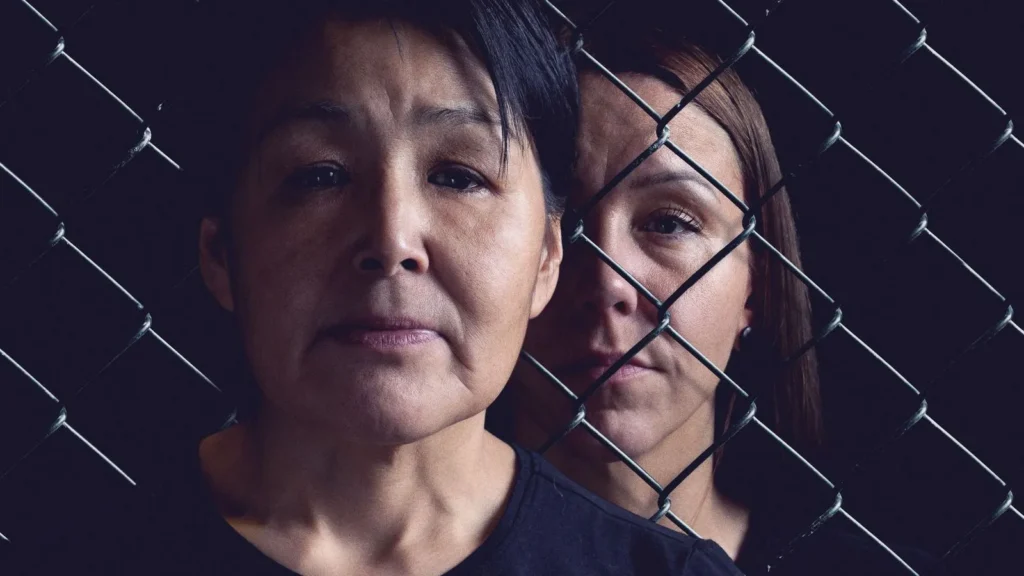
WallsWalls – Akinni Inuk: The Human on the Other Side, directed by Sofie Rørdam and Nina Paninnguaq Skydsbjerg, is a quietly powerful and deeply human documentary that emerges from an extraordinary relationship formed inside a Greenlandic prison. When directors Sofie Rørdam and Nina Paninnguaq Skydsbjerg were granted access to the correctional facility in 2017, they distributed small cameras to inmates—inviting them to document their own lives from the inside. Among them is Ruth, a woman incarcerated for over 10 years, whose complex story of trauma, survival, and endurance unfolds gradually through the filmmakers’ long-term engagement.
While the prison ultimately confiscated the cameras, Nina, who narrates the film, continues to follow Ruth’s story with extraordinary intimacy and care. The documentary becomes more than a portrait of incarceration: it is a shared space of emotional healing. Nina, grieving the loss of her own mother during the making of the film, finds in Ruth an unexpected mirror. Ruth’s testimony—of growing up surrounded by abuse, of acting out of pain and unresolved violence—forms the emotional core of the film. Her legal appeal becomes a turning point, with Nina accompanying her to court, translating proceedings from Danish (which Ruth does not understand).
Spoken in Greenlandic, the film is not only a story of injustice and institutional failure, but of connection, resilience, and mutual recognition. Through an evolving five-year relationship captured on camera, Walls – Akinni Inuk moves beyond the prison walls to examine what it means to listen, to be present, and to help one another find freedom from male abuse and social violence—literal and emotional—on both sides of the fence.
Rating: 4/5