by Hudson Moura
Elite Force (GIGN) (Netflix) — Adrenaline by the Book
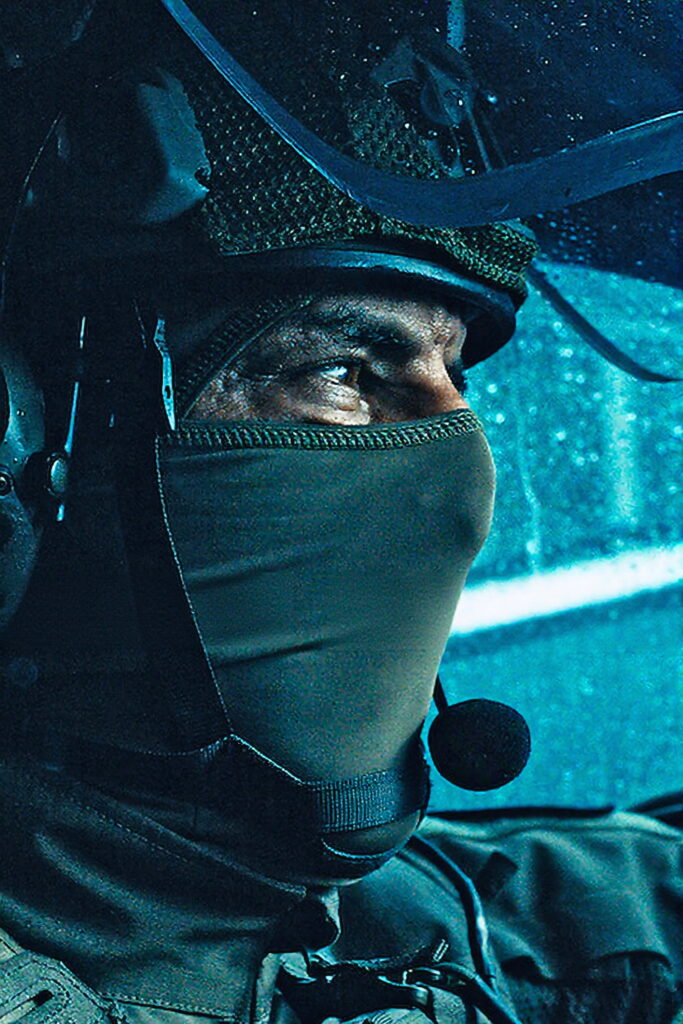
Created by Sylvain Caron and Julien Leclercq, Elite Force (GIGN) is built around two central characters: Sylvain Caron, played by Tomer Sisley (Largo Winch franchise), an experienced captain in France’s elite GIGN counterterrorism unit, and Max, played by Tristan Zanchi, the son of Sylvain’s late best friend and a new recruit placed under his responsibility. While Sylvain leads the team through gruelling training, bomb disposal, hostage situations, terrorist threats, and internal rivalries, Max must prove that he deserves his place within the unit. Their relationship gives the series its strongest dramatic dimension. Max is trying to follow in his father’s footsteps, while Sylvain must confront the memory of his closest friend and assume an almost paternal responsibility toward his son. The circumstances surrounding the father’s death gradually connect with the principal threat of the season, turning the plot into a revenge story that links personal history with the larger criminal and terrorist conflict. The fact that the story has an autobiographical basis gives this theme of inheritance, loyalty, and belonging an additional resonance. The series still checks almost every expected box of the elite-police thriller, sometimes feeling built around a checklist of high-stakes situations rather than a particularly original dramatic vision. Yet the relationship between Sylvain and Max gives the missions continuity and emotional weight. Sisley brings authority and physical presence, while Zanchi adds vulnerability and youthful impulsiveness. Formulaic as it may be, Elite Force remains an efficient, engaging, and highly watchable procedural thriller—and it works well enough that I am already waiting for a second season..
 Rating: 4/5
Jogada de Risco (Globoplay) — A Fascinating World Wasted by a Weak Script
Created by Sofia Maldonado, Thiago Dottori, and Cauã Reymond, Jogada de Risco enters a potentially fascinating world of football agents, ambitious families, players’ addictions, prostitution, drugs, illegal betting, organized crime, and the constant negotiation of careers and money. At its centre is Maurício (Cauã Reymond), a former player turned agent who, together with his more morally grounded right-hand assistant Cris (Mariana Sena), tries to contain the excesses of his clients while conducting his own deals with figures from the criminal underworld. In that sense, the series recalls other dramas about talent agents, such as the French series Call My Agent!, starring Camille Cottin, or the British series Flack, starring Anna Paquin, although here the world of actors, artists, and celebrities is replaced by that of professional football players. Unfortunately, an enormously rich dramatic environment is reduced to a simplistic and often clichéd script. Players fall into familiar patterns of sex, drugs, greed, and scandal; characters frequently become caricatures; and the direction lacks the firmness necessary to impose coherence on so many competing storylines. Reymond has undeniable charm, but his performance is surprisingly limited, relying too often on the same gestures—most visibly, smoking almost continuously—as a substitute for greater psychological complexity. Most frustrating is the absence of strong dramatic hooks connecting and advancing the different plots. Jogada de Risco does not merely feel underdeveloped, it feels like a considerable narrative opportunity squandered.
 Rating: 2.5/5

The Shards (Disney+) — Ryan Murphy Gets Lost in 1981 Los Angeles

Based on Bret Easton Ellis’s novel and developed by Ryan Murphy, The Shards combines teenage coming-of-age drama, erotic thriller, serial-killer mystery, and a portrait of privileged youth in Los Angeles in 1981. Despite all these provocative ingredients, it rarely develops a strong hook capable of pulling the different elements together. The series clearly evokes the psychological and erotic thrillers of the period, recalling films such as Brian De Palma’s Dressed to Kill, while the early reference to Stanley Kubrick’s The Shining immediately establishes an atmosphere of paranoia, unstable perception, and uncertainty. The problem is that the blurring of reality and fiction, already present in Ellis’s novel, becomes even more confusing on screen. Instead of deepening the mystery or making Bret’s point of view more psychologically disturbing, it often weakens the narrative momentum and leaves the viewer uncertain about what exactly is at stake. There is also a curious emptiness beneath the stylish surface. The serial-killer plot, Bret’s homossexuality, his friendships, and the privileged Los Angeles environment should create a rich combination of desire, danger, and paranoia, but the different threads do not always reinforce one another. Murphy’s prolific career has always been remarkably uneven, and his name alone is no guarantee of either quality or originality. Here, the series has the appearance of something daring and provocative, but not always the dramatic substance to sustain it. The more interesting The Shards seems to be hiding underneath its own mystery: a city whose apparent freedom gradually reveals something darker. Unfortunately, that series never fully emerges.
Rating: 2.5/5
Furious (Disney+) — A Revenge Thriller Uncomfortably Close to Reality
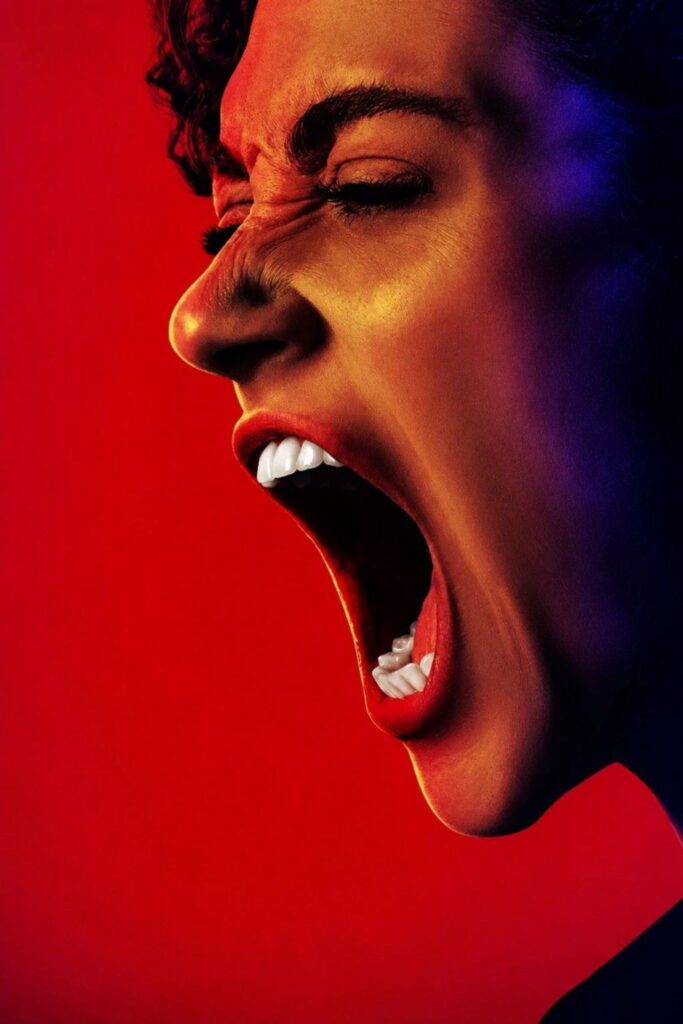
Created by Elizabeth Meriwether and starring Emmy Rossum, Furious begins with the familiar cat-and-mouse structure of an FBI agent pursuing an elusive female serial killer. The series is loosely inspired by Bob Rafelson’s 1987 film Black Widow, starring Debra Winger and Theresa Russell, which was written by Ronald Bass, who also serves as an executive producer on the series. But Furious pushes that premise into considerably darker territory. Here, the murders are driven not simply by financial calculation but increasingly by revenge, while the story’s involvement with sexual abuse and minors inevitably evokes scandals disturbingly close to contemporary reality, most notably the Jeffrey Epstein case and the broader networks of exploitation and abuse associated with it. This is precisely what makes the series both compelling and difficult to enjoy. Furious is exceptionally dark and often extremely violent, and there are moments when its fictional world feels too close to recognizable forms of real exploitation to function comfortably as entertainment. Its strongest quality lies in the moral instability of its two central women: both move toward their own ideas of justice until the distinction between victim, avenger, criminal, and investigator begins to blur. Yet for all its darkness and moral ambiguity, the series ultimately falls back on a surprisingly obvious and simplistic figure: the avenging female angel, a trope that feels less provocative than dated—almost like a return to the revenge fantasies of the 1990s.
 Rating: 3/5