by Hudson Moura
The 51st Toronto International Film Festival (TIFF) takes place from September 10 to 20, 2026, bringing together Canadian and international cinema across 11 days of premieres, discoveries, established auteurs, and emerging filmmakers.
This year’s edition features around 300 titles and filmmakers from nearly 30 countries. Among the major filmmakers are new works by Pedro Almodóvar, Danny Boyle, Ryûsuke Hamaguchi, Hirokazu Kore-eda, Cristian Mungiu, Andrey Zvyagintsev, Lukas Dhont, Mike Leigh, and Gael García Bernal, alongside high-profile premieres such as Siân Heder’s opening-night film Being Heumann, Peter Farrelly’s I Play Rocky, and the closing-night Canadian production Villeneuve: The Rise of a Legend.
The festival also continues its tradition of bringing filmmakers and stars directly to Toronto for red carpets, premieres, Q&As, and its In Conversation With… series, which this year features Korean star Lee Min-ho, Oscar-nominated cinematographer and filmmaker Rachel Morrison, comedian and director Chris Rock, actor Andrew Scott, and Canadian breakout Hudson Williams, whose event is presented as part of TIFF Next Wave.
Short reviews and ratings out of five will be posted below throughout the festival, with this page updated regularly until TIFF 2026 concludes on September 20.
Minotaur: A Refined Russian Intimate Drama in the Shadow of War
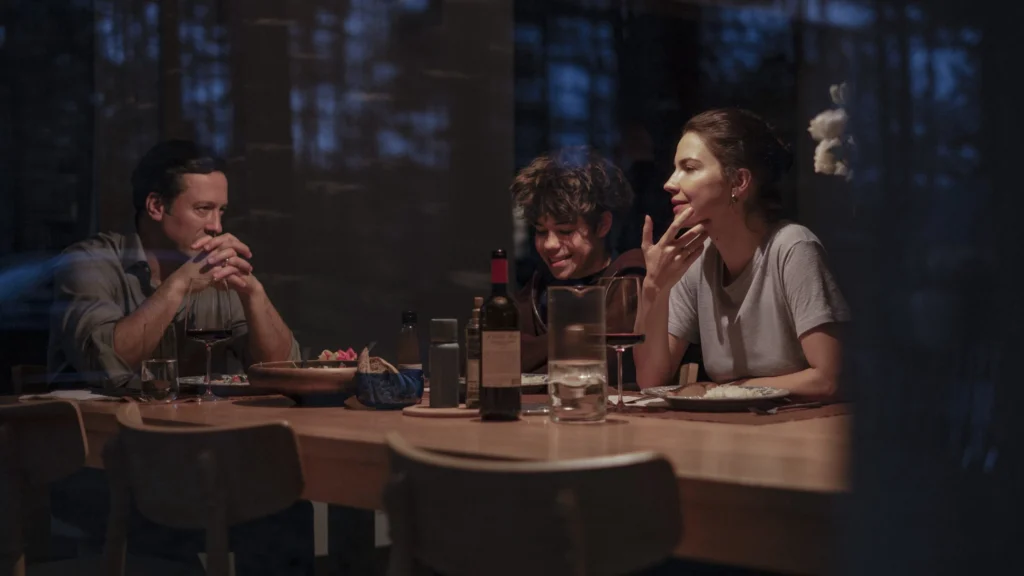
Andrey Zvyagintsev’s Minotaur is a sober and remarkably controlled family drama set in Russia in 2022, during military mobilization. Reworking Claude Chabrol’s La Femme infidèle, the film follows successful businessman Gleb, who must decide which of his employees will be sent to government troops while simultaneously becoming consumed by suspicions that his wife Galina is having an affair. Zvyagintsev masterfully places these two crises alongside one another without allowing the war to overwhelm the intimate drama. Instead, political anxiety, corruption, and social fear penetrate an immaculate domestic world already fractured by loneliness and emotional distance. Through precise compositions, an exceptionally restrained soundtrack, patient pacing, and an almost minimalist use of space, Minotaur transforms marital jealousy into something deeper: an exploration of vulnerability, affection, responsibility, and the inability of wealth or power to protect us from emotional uncertainty. The title itself evokes a moral labyrinth in which private desire and public violence become increasingly difficult to separate. A refined, emotionally complex return from Zvyagintsev, who won the Grand Prix at Cannes 2026 as well as the Cannes Soundtrack Award.
 Rating: 4.2/5
Coward: A Profoundly Moving Love Story Behind the Front
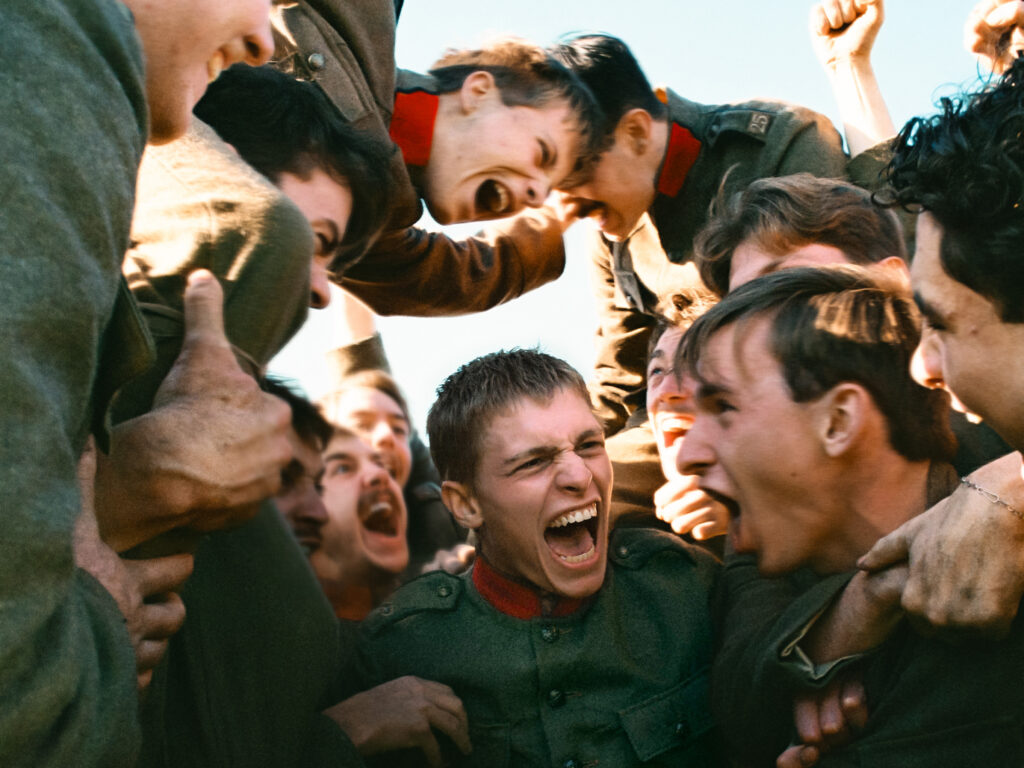
Lukas Dhont’s Coward transforms the First World War into an intimate story of love, survival, and emotional freedom. Rather than focusing on battles or military strategy, the film stays close to Pierre (Emmanuel Macchia) and Francis (Valentin Campagne), whose attraction develops behind the front amid fear, loss, and the constant pressure of war. Dhont’s close camera work, fluid framing, and focus on glances and physical proximity give the film an intensely emotional quality, while Francis’s group of performers creates a striking alternative space where theatre, gender play, humour, and imagination briefly challenge the violence and rigid masculinity surrounding them.
Inspired by archival evidence of wartime theatrical revues, Coward turns art into more than escapism: it becomes a form of freedom and resistance. The title itself gains unexpected complexity, questioning conventional ideas of courage and suggesting that choosing life, love, and another possible future can itself be a political act. Macchia and Campagne, who jointly received the Best Actor award at Cannes 2026, anchor the film with remarkable chemistry. The result is a profoundly moving war film that finds tenderness, desire, and humanity in the spaces that official history often leaves unseen.
Rating: 4.5/5