L’Image-Exil
L’expérience du déplacement au cinéma d’après Gilles Deleuze et Maurice Blanchot
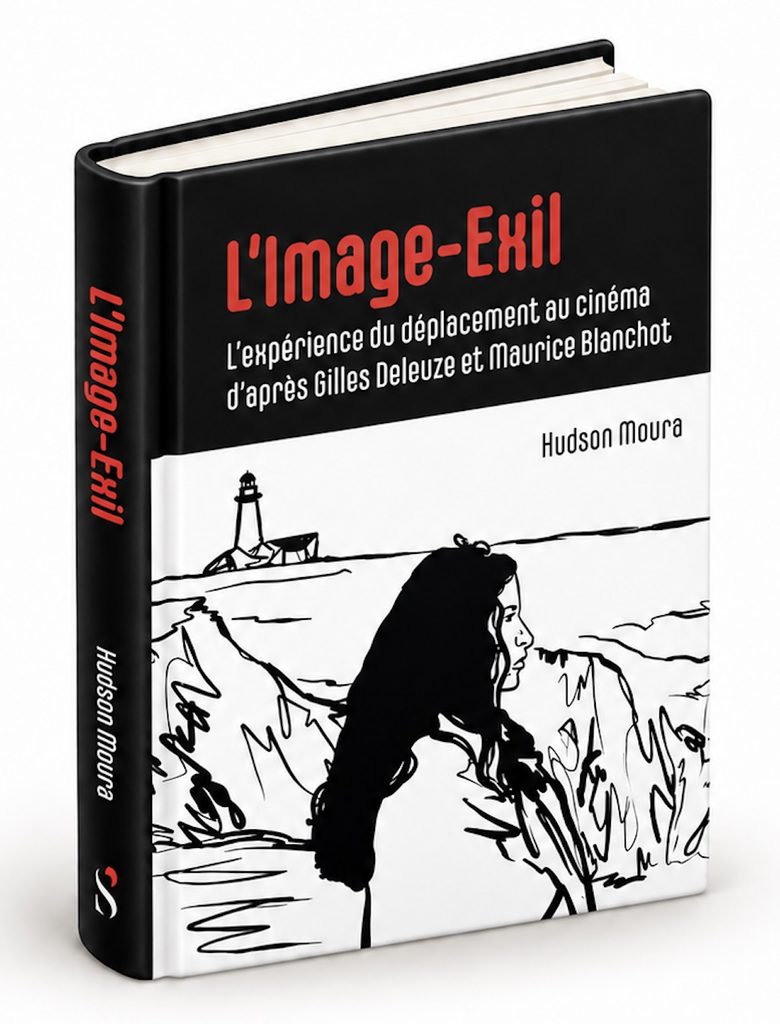
Hudson Moura
Presses Universitaires du Septentrion, 2026
ISBN 978-2-7574-4512-9
Published in French
Publisher / Purchase the eBook

About the Book
How can cinema represent an experience that resists language?
Exile—lived through loss, uprooting, displacement, and the disruption of belonging—becomes, in cinema, a site of formal and sensory reinvention. L’Image-Exil explores the capacity of the cinematic image to give form to this limit-experience.
Drawing on several years of research, the book develops the concept of the Exile-Image through four specific films: Terra Estrangeira by Walter Salles and Daniela Thomas, Claro by Glauber Rocha, Nostalghia by Andrei Tarkovsky, and Notebook on Cities and Clothes by Wim Wenders.
In dialogue with Gilles Deleuze, Maurice Blanchot, Henri Bergson, Giorgio Agamben, and Walter Benjamin, the book examines how exile can transform the image itself—its relation to space, time, memory, absence, movement, and the visible.
Rather than treating exile solely as a narrative theme, L’Image-Exil asks how displacement becomes an aesthetic and perceptual condition of cinema.
The Exile-Image
The concept of the Exile-Image describes an image transformed by displacement.
It emerges where cinema confronts rupture, estrangement, memory, absence, and unstable forms of belonging. Exile therefore concerns not only what the image represents, but also how cinematic space, time, perception, and mediation are reorganized through displacement.
Across four distinct case studies, the book examines different modalities of this transformation.
Four Films, Four Experiences of the Exile-Image
Walter Salles and Daniela Thomas — Terra Estrangeira
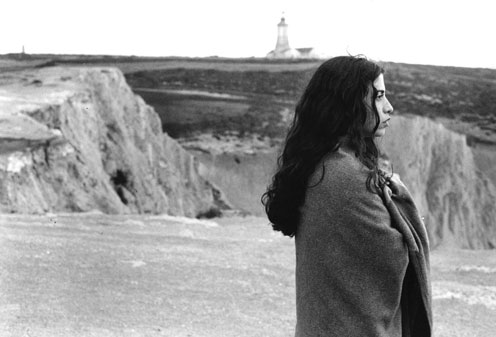
Terra Estrangeira (Foreign Land / Terre lointaine) examines exile through economic displacement, estrangement, and the experience of space.
Set between Brazil and Portugal, the film follows characters whose movement across the Atlantic does not lead to stable belonging. Migration instead produces disorientation and an altered perception of territory, distance, home, and foreignness.
The film provides the book with a way of thinking about the Exile-Image through spatial displacement: exile changes not only where the characters are located but also how cinematic space itself is experienced and perceived.
Andrei Tarkovsky — Nostalghia
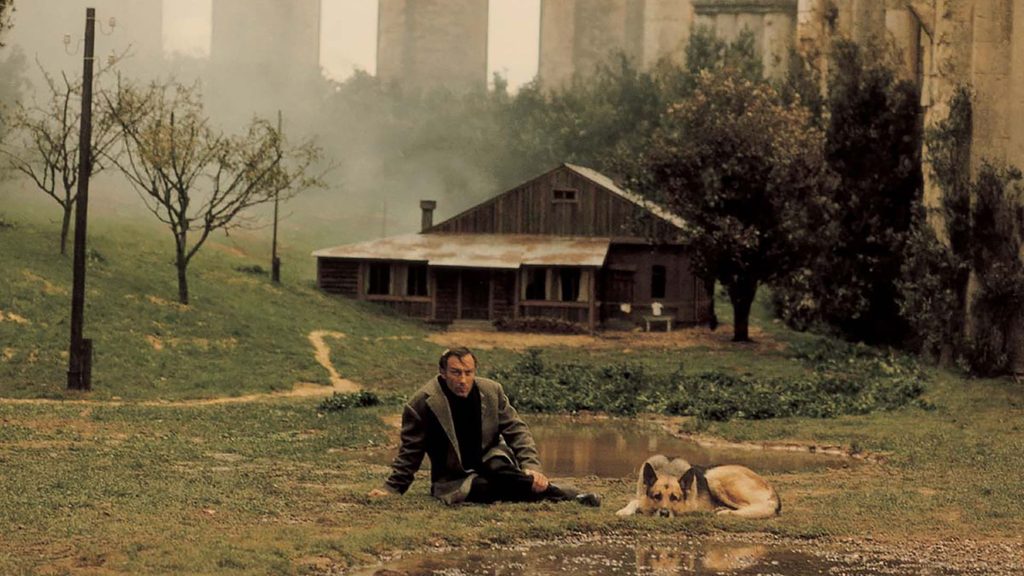
Nostalghia approaches exile through memory, temporal experience, and the impossibility of recovering what has been lost.
The film’s displaced protagonist experiences another country through persistent memories of home, producing a tension between present perception and an absent elsewhere.
The chapter examines this experience through questions of memory, the time-image, and the inconceivable, exploring how Tarkovsky’s cinema makes absence perceptible without resolving it through conventional representation.
In Nostalghia, exile becomes less a geographical condition than an experience of time: the displaced subject inhabits simultaneously what is present and what can no longer be reached.
Glauber Rocha — Claro
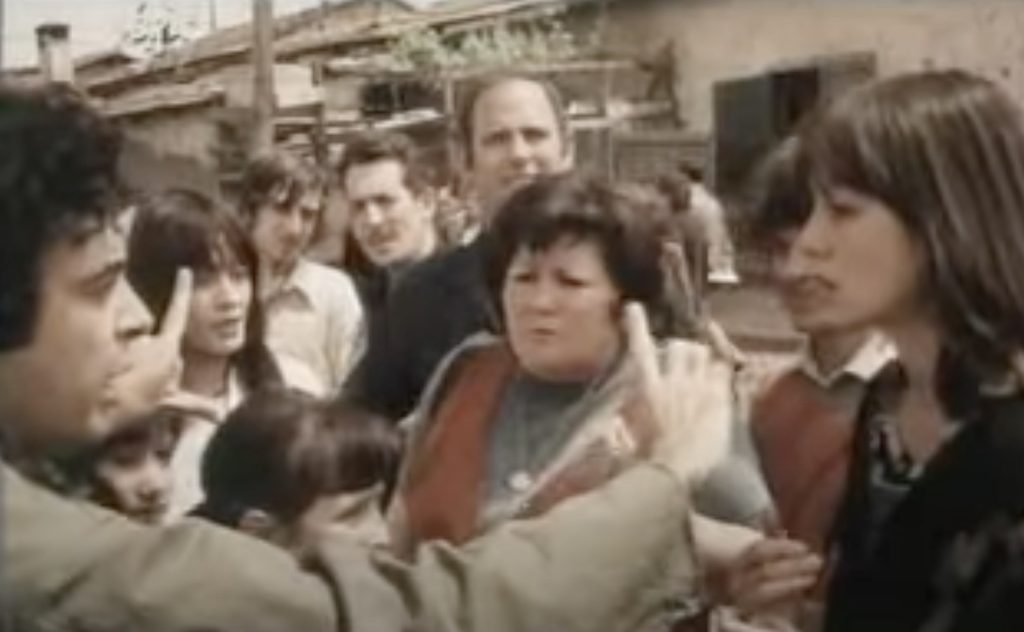
In Claro, the Exile-Image emerges from Glauber Rocha’s own condition of political exile and from the film’s confrontation between displacement, politics, language, and cinematic form.
Made in Rome during Rocha’s years away from Brazil, Claro transforms the condition of exile into a deliberately unstable and heterogeneous cinematic experience.
The chapter examines the film through a poetic-political dialectic in which exile becomes inseparable from experimentation with image, speech, history, and political expression.
Rather than simply representing political displacement, Claro turns exile into a principle of cinematic creation.
Wim Wenders — Notebook on Cities and Clothes
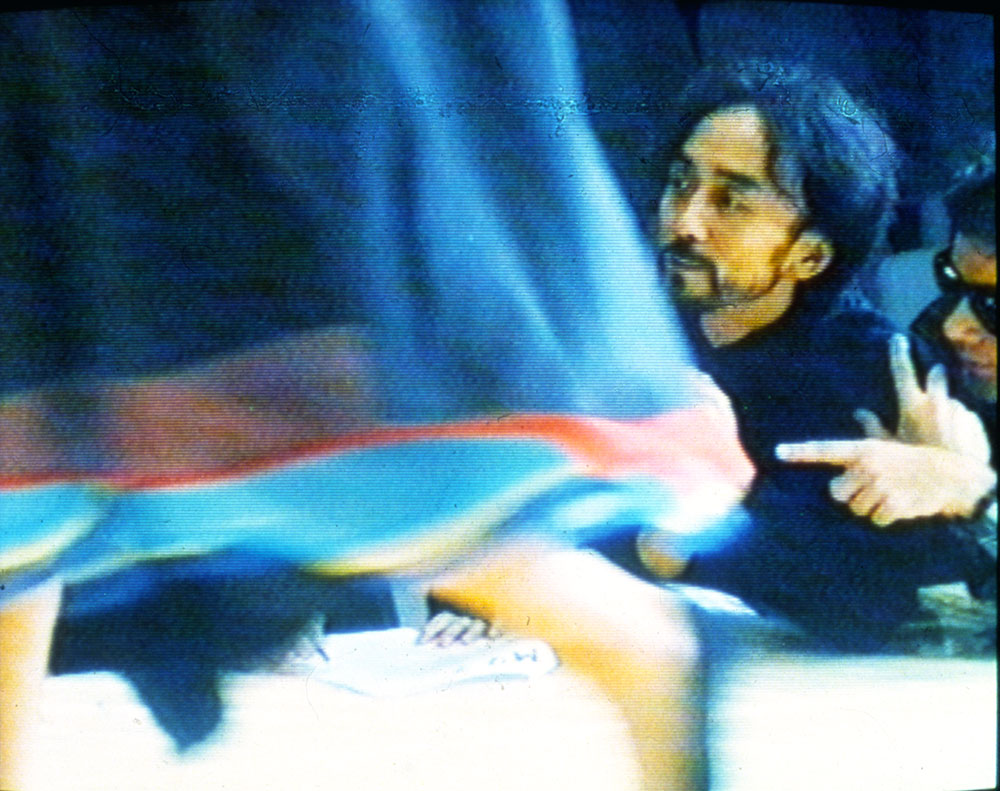
Wim Wenders’s Notebook on Cities and Clothes (Aufzeichnungen zu Kleidern und Städten / Carnet de notes sur vêtements et villes) moves the discussion of exile toward the intermedial displacement of the image itself.
Through Wenders’s encounter with fashion designer Yohji Yamamoto and through the interaction between cinema and video, the film questions the stability of cinematic identity at a moment of technological transformation.
The chapter examines the passage between film and electronic/video images, considering how changes in medium, texture, recording practices, and visual technologies produce new forms of displacement within cinema.
Here, exile no longer concerns only people or territories: the cinematic image itself becomes displaced, moving between media, technologies, and modes of perception.
Philosophical Framework
L’Image-Exil develops its argument through an interdisciplinary dialogue between film theory, philosophy, and cultural studies.
The book engages particularly with:
Gilles Deleuze — movement, time, becoming, and cinematic thought
Maurice Blanchot — exile, absence, exteriority, and the experience of the limit
Henri Bergson — memory, duration, and perception
Giorgio Agamben — displacement, belonging, and political existence
Walter Benjamin — memory, history, rupture, and the displaced image
These perspectives provide the conceptual foundations for understanding exile not simply as a subject represented by cinema but as a force capable of transforming the image.
Description en français
À propos du livre
Comment le cinéma peut-il représenter une expérience qui résiste au langage ?
L’exil — vécu à travers la perte, le déracinement, le déplacement et la rupture de l’appartenance — devient au cinéma un espace de réinvention formelle et sensorielle. L’Image-Exil explore la capacité de l’image cinématographique à donner forme à cette expérience-limite.
Fruit de plusieurs années de recherche, l’ouvrage développe le concept d’Image-Exil à partir de quatre films : Terra Estrangeira de Walter Salles et Daniela Thomas, Claro de Glauber Rocha, Nostalghia d’Andreï Tarkovski et Carnet de notes sur vêtements et villes de Wim Wenders.
En dialogue avec Gilles Deleuze, Maurice Blanchot, Henri Bergson, Giorgio Agamben et Walter Benjamin, le livre analyse la manière dont l’exil transforme l’image elle-même — son rapport à l’espace, au temps, à la mémoire, à l’absence, au mouvement et au visible.
Plutôt que de considérer l’exil uniquement comme un thème représenté à l’écran, L’Image-Exil interroge la manière dont le déplacement devient une condition esthétique et perceptive du cinéma.
Publication
Hudson Moura
L’Image-Exil : L’expérience du déplacement au cinéma d’après Gilles Deleuze et Maurice Blanchot
Presses Universitaires du Septentrion
Collection Cinéma, Images et Sons
Published 26 February 2026
ISBN 978-2-7574-4512-9
Language: French
About the Author
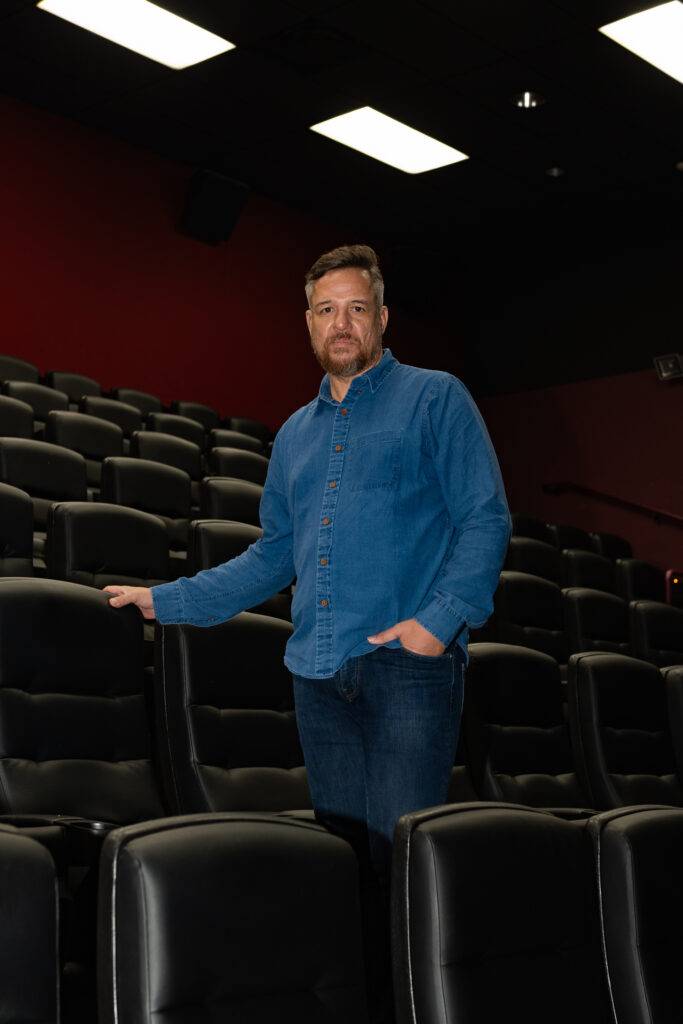
Hudson Moura is a film and media scholar, professor, critic, editor, and curator at Toronto Metropolitan University. His research focuses on cinema, exile, migration, interactivity, politics, digital media, and cultural representation.
His current research extends the concept of the Exile-Image toward refugee representation, interactive documentary, digital archives, forensic media, and contemporary regimes of visibility.
He is Co-Founder and Editor-in-Chief of the Interactive Film & Media Journal, Chair of the Interactive Film & Media International Conference, and a film critic for CBC/Radio-Canada.