By Hudson Moura
Bart Schrijver’s The North follows two longtime friends on an ambitious walking expedition across the Scottish Highlands, transforming what initially appears to be an outdoor adventure into a restrained exploration of friendship, masculinity, and emotional distance. Rather than celebrating spectacular landscapes or the personal revelations traditionally associated with such journeys, the film concentrates on the physical and psychological endurance of walking together. Its central paradox is particularly intriguing: two men who spend nearly every moment in each other’s company, sharing a tent, meals, and the challenges of the trail, remain surprisingly incapable of expressing their deeper emotions.
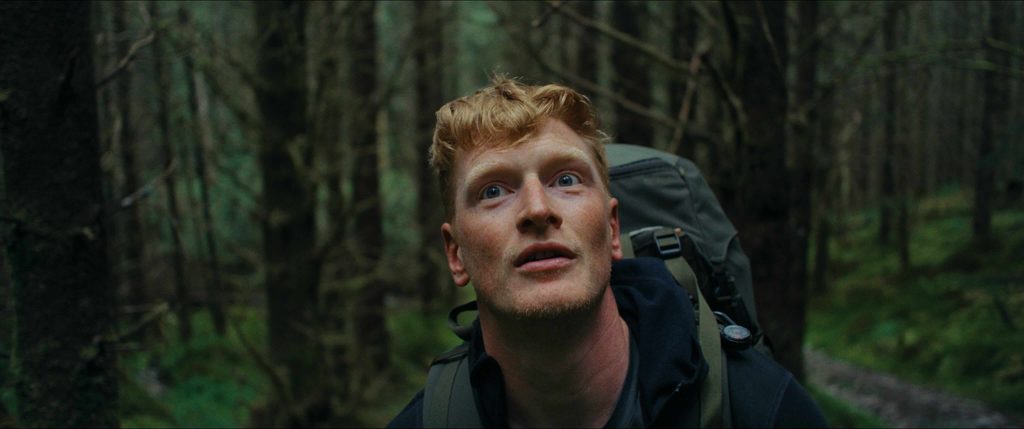
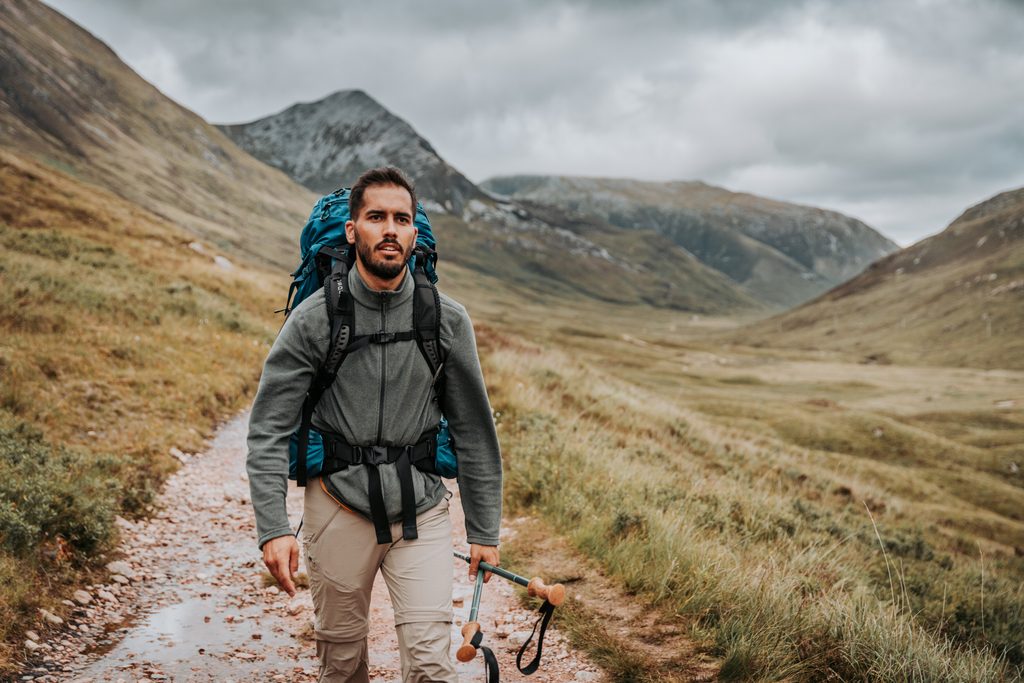
The film begins somewhat abruptly, with a telephone conversation between two friends celebrating an achievement whose significance is not immediately clear. Ten years later, Chris (Bart Harder), a Dutchman, and Luis (Carles Pulido), a Spaniard, arrive at a landmark on Scotland’s West Highland Way. For viewers unfamiliar with the region, Schrijver provides little contextual information about their relationship, destination, or the nature of their expedition. Only gradually do we understand the scale of their undertaking: an approximately 600-kilometre journey toward Cape Wrath, expected to take around twenty days.
Although fictional, The North adopts a documentary-like language, following the men as they cross villages, negotiate difficult terrain, pitch their tent, and encounter fellow travellers. Conversations unfold naturally, interrupted by exhaustion, practical concerns, and the necessity of continuing to walk. This observational approach creates the impression of accompanying two actual travellers rather than watching characters follow a carefully constructed dramatic plot. The destination, however, matters less than what the journey gradually reveals about their friendship.
Friendship Tested by the Journey
Chris and Luis approach the expedition with different expectations. Chris has established a relatively stable adult life, with professional responsibilities and a relationship with Sarah, with whom he is considering having a child. Even during the expedition, he remains connected to his work. Luis, meanwhile, seems more invested in recovering a sense of freedom and spontaneity. He would rather consult traditional maps than rely constantly on GPS and smartphones, hoping to rediscover something from the adventure spirit or even something they once shared.
Their contrasting attitudes become particularly evident when Luis injures his knee and cannot continue walking for several days. He asks Chris to wait for his recovery, but Chris proposes continuing alone and having Luis rejoin him later by transportation. Luis feels betrayed, particularly because he believes he has previously made similar sacrifices for his friend. Chris, however, remains determined to complete the expedition within the time available before returning to work.
What might appear to be an ordinary logistical disagreement exposes a deeper conflict about loyalty, companionship, and personal commitment. Schrijver is effective in allowing these minor tensions to reveal how two people with a shared past can gradually develop incompatible expectations of their friendship.
Masculinity and Emotional Distance
One of the film’s most interesting dimensions is its examination of contemporary masculinity, particularly among men in their thirties confronting adult responsibilities and changing personal relationships. Chris and Luis share considerable physical intimacy: they sleep in the same tent, endure relentless rain, negotiate difficult paths, and spend nearly every moment together. Yet this proximity rarely translates into emotional openness. Practical concerns are easily discussed, while disappointment, affection, and vulnerability remain largely unspoken.
This contradiction becomes especially meaningful through their encounters with other walkers. In one moving episode, they meet a man walking to raise money and honour his brother, who died of testicular cancer. His reflections on grief, admiration, and the importance of men acknowledging illness introduce an emotional sincerity largely absent from Chris and Luis’s own conversations.
The encounter provides a revealing contrast: while physical endurance is traditionally associated with masculine strength, expressing vulnerability often proves considerably more difficult. Schrijver does not turn this observation into an explicit lesson, but it quietly informs the film’s understanding of friendship and the emotional limitations imposed by conventional ideas of masculinity.
A Landscape of Endurance Rather Than Wonder
Scotland’s extraordinary landscapes would seem to offer an irresistible opportunity for spectacular cinematography. Yet Schrijver adopts a remarkably sober visual approach, more interested in documenting the physical experience of walking than in transforming the Highlands into breathtaking images. The cinematography is effective but relatively conventional, occasionally missing opportunities for greater visual ambition.
Nevertheless, this restraint also reflects the film’s refusal to romanticize nature. Chris and Luis are rarely overwhelmed by the beauty surrounding them. Instead, they confront incessant rain, cold temperatures, mosquitoes, rocky paths, and physical exhaustion. Nature becomes an indifferent environment that constantly tests their perseverance rather than a welcoming space for spiritual enlightenment.
The landscapes retain their splendour for viewers to contemplate, creating an interesting contrast between what we see and what the characters endure. Schrijver also avoids the familiar conventions of journeys toward personal redemption, allowing emotional tensions to unfold without forcing dramatic revelations or easy resolutions.
Walking Together, Growing Apart
What ultimately distinguishes The North is its perceptive understanding of friendship as a relationship that requires continuous negotiation, particularly when two people are moving in different directions in life. Chris and Luis begin their expedition with the apparent certainty of an enduring bond, but the journey gradually reveals how little they understand about each other’s present expectations.
There is something quietly melancholy about watching two friends struggle to preserve a connection through an experience presumably intended to renew it. Their disagreements rarely become explosive, and their emotional distance remains largely unspoken. Yet precisely because so much is left unresolved, their companionship becomes increasingly fragile.
At times, the film’s documentary-like restraint limits its dramatic intensity. Its initially confusing narrative context, conventional cinematography, and reluctance to develop certain conflicts more fully make the experience less engaging than its premise might suggest. Nevertheless, Schrijver avoids the sentimentality of inspirational adventure films to offer a modest but meaningful reflection on male friendship.
The North is ultimately less about conquering a demanding landscape than confronting the changing nature of a longstanding relationship. Its most revealing observation is that two people can travel hundreds of kilometres together, share almost every physical experience, and still remain separated by an emotional distance neither quite knows how to cross.
The film opens this week across Canada.
 Rating: 3.3/5
Film Info: The North – Imdb