by Hudson Moura
Last updated on May 26, 2026
The Inside Out 2SLGBTQ+ Film Festival, running in Toronto until May 31, once again confirms its importance as one of the most vibrant spaces for sexual diversity cinema in Canada and beyond. What makes this year’s edition especially compelling is the breadth of its programming: comedy, drama, documentary, experimental work, and several highly anticipated Canadian films, including world premiers.
Although Inside Out presents a broad range of voices and identities, it should not automatically be described as a “queer film festival” in the stronger countercultural sense of the term. Rather, its programming seems closer to what film theorists call a negotiation between traditionalist and queer strategies, and, in this case, it often leans toward a more accessible 2SLGBTQ+ festival model that privileges polished, audience-friendly, and emotionally legible stories over formally radical or politically disruptive queer cinema.
Traditionalist programming tends to favor positive, inclusive, but also often homonormative and less transgressive representation, while more explicitly queer programming is countercultural, activist, and resistant to stable identity categories. Many festivals adopt safer, more popular titles and even “outdated” but well-liked narratives in order to attract audiences, sponsors, and press attention. That framework seems useful here: despite its diversity, Inside Out appears less invested in unsettling audiences than in offering a relatively normalized, institutionally legible, and commercially viable version of 2SLGBTQ+ cinema, one designed to reach a broader audience that may still be open to these stories but not necessarily to more radical queer forms.
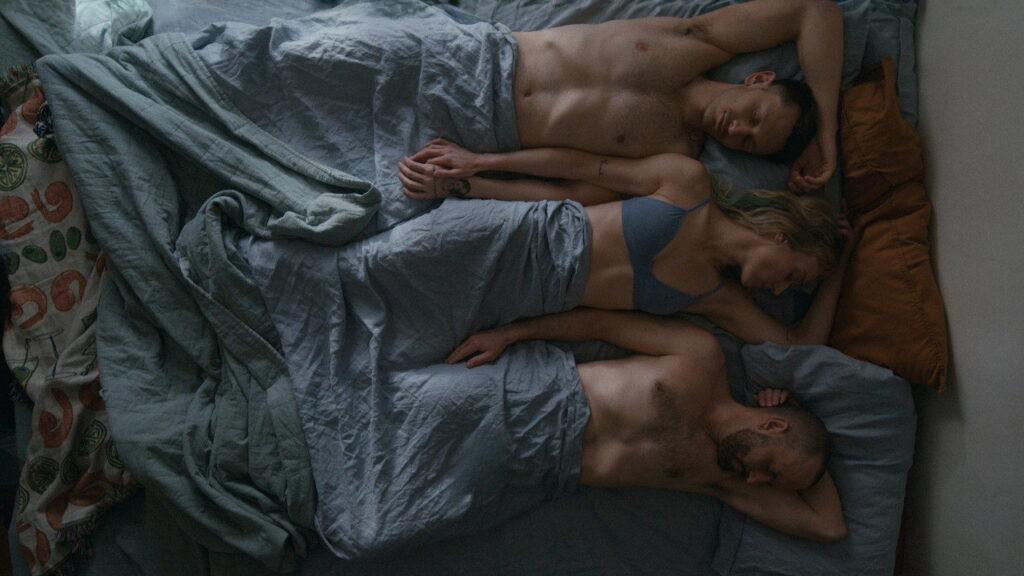
I Come Home
Directed by Glen Wood | Canada, 2026, 97 minutes
Glen Wood’s I Come Home, presented as world premiere and the festival’s Centrepiece Gala, begins from an already fraught family situation and makes it more complex still. The film follows a throuple trying to maintain balance just as an unexpected pregnancy unsettles the relationship. This intimate emotional crisis unfolds during a wedding, within a family environment shaped by judgment, tension, and normative expectations. The film’s premise is compelling because it does not reduce polyamory to a sociological talking point. Instead, it frames it as a lived emotional reality marked by desire, uncertainty, negotiation, and vulnerability.
What seems strongest here is the film’s willingness to take emotional complication seriously. Rather than treating the throuple as merely provocative or emblematic, it appears to explore the unstable terrain between love, fear, culture, legitimacy, and domestic pressure. At the same time, the material may not always reach the full force suggested by its premise, which is perhaps why the film feels more solid than revelatory. Still, as a world premiere and a key Canadian title in the festival, it stands out as an honest and timely exploration of intimacy under pressure. Rating: 3.5/5
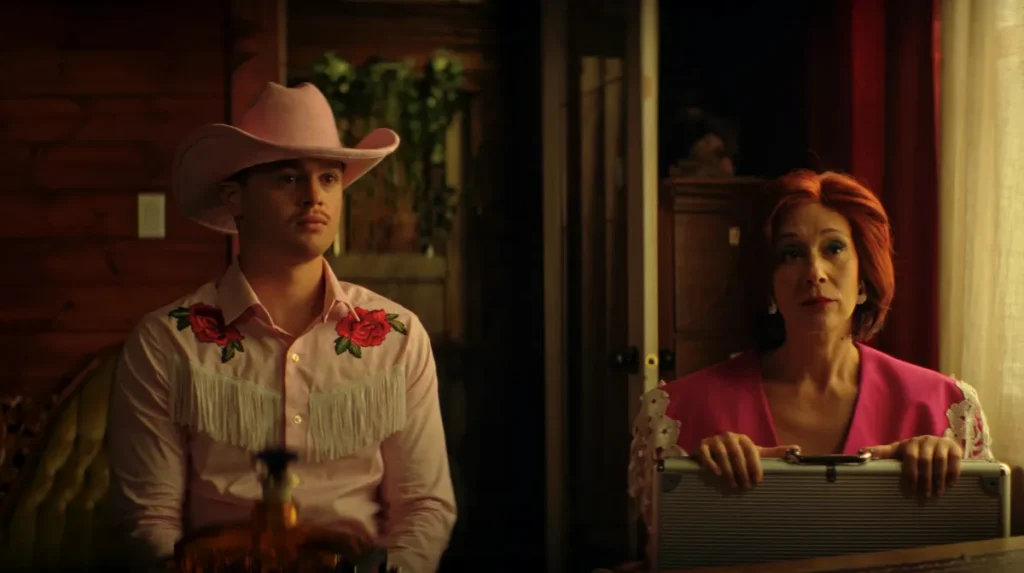
Lunar Sway
Directed by Nick Butler | Canada, 2026, 98 minutes
Nick Butler’s Lunar Sway appears to be one of the festival’s most delightfully offbeat offerings. The film follows Cliff, a somewhat adrift young man living in a small desert town, engaged in the usual rituals of low-key personal confusion, including therapy. His fragile routine is disrupted by the arrival of two women: one claims to be his biological mother, while the other introduces herself as a bounty hunter. From there, the film seems to drift into stranger territory, populated by dubious motels, petty scams, sexual detours, and a dreamlike atmosphere.
What makes Lunar Sway especially promising is its embrace of tonal eccentricity. It seems to operate as a dark comedy, a coming-of-age story, and a surreal fable all at once. This kind of quirky, unstable texture can easily become mannered, but here it sounds like an asset: the film appears to bring a freer, stranger, and more mischievous energy to the festival. In a lineup that includes many emotionally heavy works, Lunar Sway offers something more playful without sacrificing depth or oddity. It may well be one of the festival’s most memorable titles precisely because it dares to be slightly bizarre. Rating: 4/5
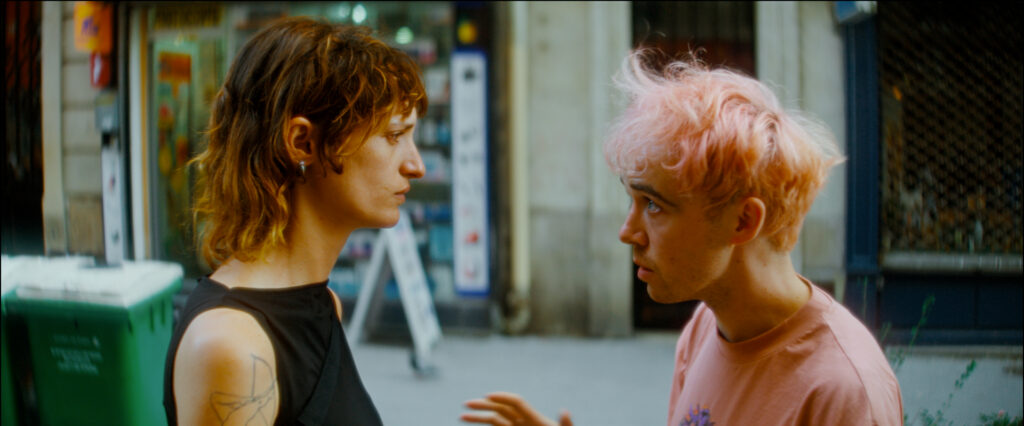
A Second Life
Directed by Laurent Slama | France, 2025, 87 minutes
Laurent Slama’s A Second Life is built on an elegant contrast between outward noise and inward collapse. Set in Paris during the Olympic Games, the film unfolds in a city overflowing with movement, traffic, tourists, and spectacle. Yet at its centre is Elisabeth (Agathe Rousselle), a woman living through a profound depression, who increasingly tries to withdraw from the world, even removing her hearing aids to recover a sense of silence. Into that fragile solitude steps an unexpectedly expansive tourist, Elijah (Alex Lawther), whose presence begins to disturb her isolation and perhaps reopen something in her emotional life.
The film’s cinematography is spectacular. Shot impressively in the streets of Paris during the Olympic Games, it adopts a distinctly impressionistic visual style, making clear references to painters such as Claude Monet and to the world of his gardens. This aesthetic choice is not merely decorative: it resonates deeply with the film’s central tension between the beauty of what is visible and the more unstable, subjective way in which that world is perceived by Elisabeth.
What makes the film particularly attractive is this juxtaposition of public chaos and private distress. Slama proves highly inventive and precise in the way he moves between Elisabeth’s outer environment and her inner world. A Second Lifebecomes at once an urban portrait and an intimate emotional study, using Paris not simply as a backdrop but as a kind of pressure chamber for Elisabeth’s state of mind. The image of a woman trying to mute the world while the city reaches a peak of global spectacle is especially striking. If the film sustains that tension throughout, it may well stand as one of the festival’s most delicate and resonant works: melancholic, sensory, and emotionally precise.Rating: 4.2/5
Heals
Directed by Pailin Wedel | Thailand, 2026, 102 minutes
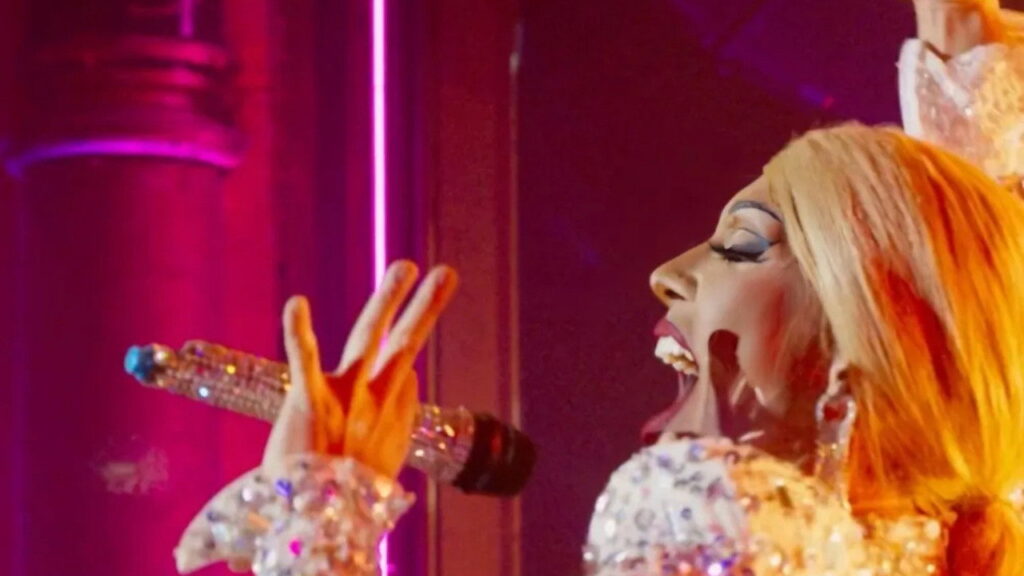
Pailin Wedel’s Heals, world premiere and the closing film of the festival, traces the life of Pangina Heals, moving from a traumatic childhood to the historic achievement of becoming the first Asian drag queen with a Las Vegas residency. On one level, the film offers the arc of a remarkable performer’s rise to international prominence. But it also promises something more intimate and more difficult: a portrait of how drag can become a means of survival, healing, and self-reconstruction in the face of family pain and inherited trauma. That is what likely gives Heals its emotional force. His father dressed as a drag queen is priceless and moving.
The documentary does not seem content with the celebratory surface of performance success, it looks instead at the deeper labour of becoming oneself, and at how queer identity is often forged through both rupture and chosen kinship. By linking artistic creation to intergenerational trauma and family reinvention, the film appears to turn biography into something broader and more moving. It makes sense that Inside Out chose it as its closing film: it sounds like a work capable of leaving the festival on a note that is at once painful, triumphant, courageous, and deeply inspiring.Rating: 4/5
SHORTS
The InsideOut 2026 shorts program appears to confirm, in miniature form, many of the qualities that define the festival as a whole: formal experimentation, political sensitivity, and a strong interest in bodies, identities, and social vulnerability as they are shaped by contemporary systems of surveillance, desire, migration, and intimacy. What is striking in this category of films is the range of approaches on display.
Lázaro’s Temptation (A perdição de Lázaro)
Written and directed by Diego Paulino | Brazil, 2026, 27 min
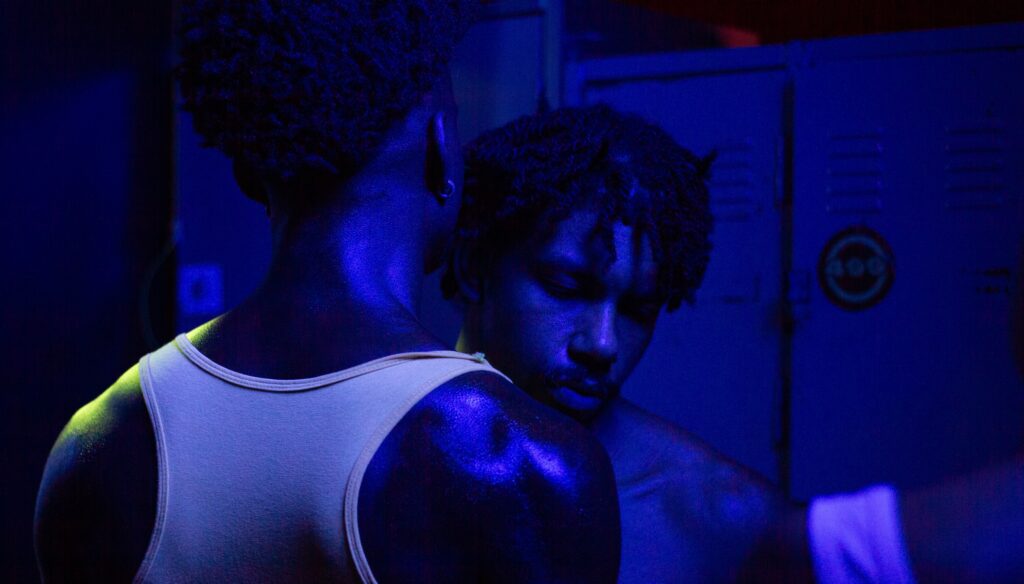
Diego Paulino’s Lázaro’s Temptation follows Lázaro, a young Black man in São Paulo who is deeply insecure about his body. The film unfolds within an all-Black Brazilian cast and places Lázaro in a world where masculinity, queer desire, and embodiment are constantly negotiated. He goes frequently to the gym, but the film does not reduce this to a simple narrative of physical transformation. Instead, it seems to split the world around him into two perceptual registers: one more colorful, expressive, and openly queer; the other darker, more restrictive, and tied to heteronormative masculinity. Alongside him is his friend João, whose outlook is very different: more body-positive, less anxious about bodily norms, but also more attentive to the spread of surveillance cameras and the feeling of being watched everywhere in the city. In that sense, while Lázaro struggles to be seen and recognized, João raises a more troubling question about a contemporary society obsessed with visibility, exposure, and self-display, often at the cost of privacy itself.
What makes the film especially compelling is its boldness. The short appears to connect Blackness, queerness, body politics, and urban surveillance in a way that is both formally original and thematically complex. Rather than offering a straightforward coming-of-age or self-acceptance story, it seems to stage identity as something fractured by competing visual worlds, emotional pressures, and structures of control. Its emphasis on Black queer subjectivity is not decorative but constitutive of its form and politics. If the film truly sustains this richness, then it sounds like one of those shorts that feels larger than its running time: visually inventive, intellectually layered, and emotionally urgent.Rating: 4.5/5
0004NGEL
Written and directed by Eli Jean Tahchi | Canada, 2025, 12 min
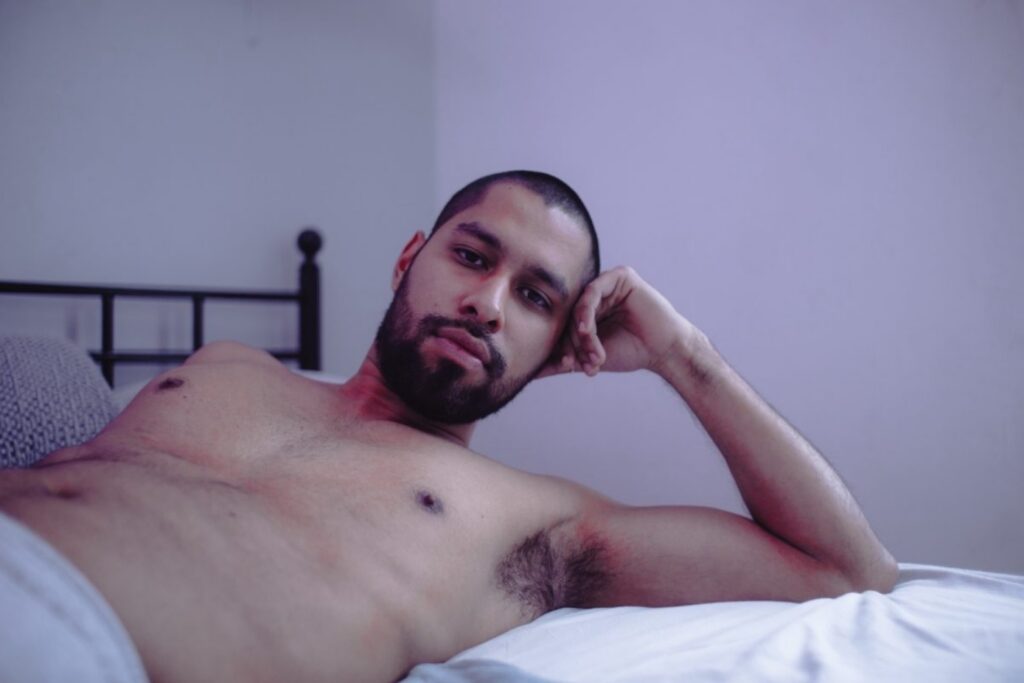
Eli Jean Tahchi’s 0004NGEL centers on Angel, a Mexican go-go boy living in Montréal whose life is lived under constant digital scrutiny. He performs online, displaying his body in multiple spaces while comments, paid tokens, and forms of virtual spectatorship shape the terms of his erotic labor. The film follows him through dancing, working out, pole performance, and livestreamed sexual display, but it also reveals another dimension of his life: his relationship with his mother in Mexico, who is caring for a child, and to whom he sends money. This creates a dual structure in which performance, migration, family responsibility, and economic survival are tightly interwoven.
What seems most interesting about 0004NGEL is the ambiguity of its form. The short appears to hover between fiction and documentary, with Angel played by Angel Vargas and the mother by Florentina Vargas, and that uncertainty becomes both its strength and its weakness. On the one hand, this blurred register gives the film a singular texture, making its portrait of digital labor and bodily exposure feel unusually immediate. On the other hand, that same ambiguity may leave the viewer unsure of the film’s precise stakes or distance from its subject. The sombre, eerie soundtrack during the online performances seems especially important, because it prevents the erotic display from being read simply as spectacle. It gives those scenes an undertone of melancholy, vulnerability, and perhaps alienation. Yet for all its formal singularity, the film remains somewhat limited in its access to Angel’s inner life, stopping short of a more intimate portrait of his emotional reality.Rating: 3.5/5
Purebred
Written and directed by Caleb J. Roberts | Ireland, 2025, 14 min
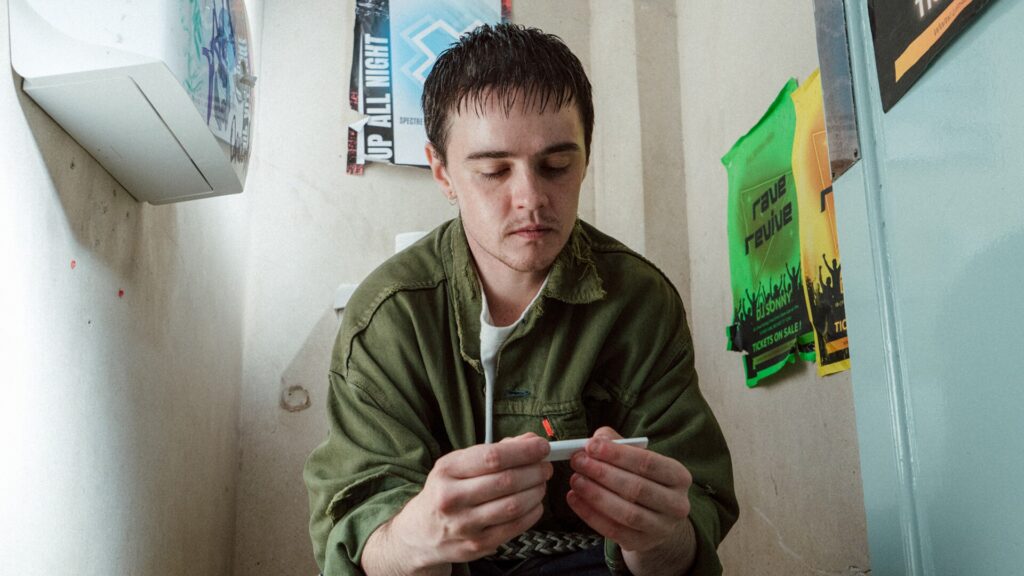
Caleb J. Roberts’s Purebred opens with a strikingly intimate and tense image: Owen, an Irish trans man, taking a pregnancy test in a public washroom. From there, the film follows him as he visits his boyfriend Seán, who does not seem to imagine or understand the situation in the same way. The narrative is brief, uncertain, and emotionally charged, built around the possibility of pregnancy, the instability of relational expectations, and the difficulty of naming what is happening between two people in a moment of crisis. Like many short films, it appears to rely on condensation: very little is explained, and much is left suspended.
That brevity seems to be both the film’s strength and its weakness. On the one hand, the short form allows Purebred to remain raw, intense, and unresolved, which suits its subject. It does not over-clarify or over-psychologize, and that restraint can give the film a strong emotional charge. On the other hand, the same uncertainty may also leave the viewer wanting a slightly fuller development of the stakes. Much of the film’s power seems to rest on performance and style: the intimate approach, the close-ups, and the work of Pete MacHale and Diarmuid Noyes, whose performances carries the film’s emotional weight. If the direction is as focused as the premise suggests, then Purebred sounds like a short that understands how to turn minimal narrative into concentrated emotional tension.Rating: 4/5
Pakka
Written and directed by Iniyavan Elumalai | Netherlands, 2025, 18 min
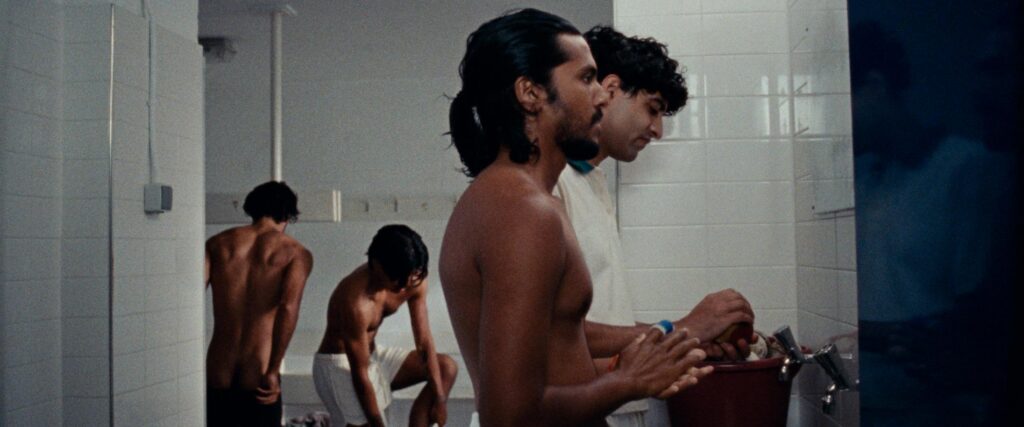
Pakka unfolds over what feels like a last evening among friends. A group of young gay Indian friends in London find their bond disrupted when Kathir (Chirag Benedict Lobo) announces that he is returning to his family in Kerala to marry a woman. The revelation forces each of the friends to respond differently: Vasu (Kymo De Valk) reacts with anger, condemning the lie involved; Jiva (Atharv Dhiman) seems caught between jealousy, tenderness, and heartbreak; and Rinkoo (Ruchir Kathusing) responds with a kind of resigned sadness. What follows is not a melodramatic explosion, but a gradual emotional unraveling, marked by food, conversation, and one final cricket game in which the group seems to understand that, even if one player leaves, the game must go on with another captain.
What makes Pakka moving is the delicacy with which it stages emotional divergence within a shared queer friendship. The film seems less interested in judging Kathir than in showing the painful variety of reactions his decision produces: anger, grief, resignation, and perhaps love that cannot quite declare itself. The line “Tell me I don’t need to go” suggests the true tragedy of the film: the desire for someone else to provide the courage one cannot find alone. If the short has a strength, it lies in the way it lets intimacy, cultural pressure, and disappointment coexist without over-explaining them. It sounds emotionally rich, understated, and quietly devastating.Rating: 4/5
Grandma Nai Who Played Favorites
Written and directed by Chheangkea | Cambodia, 2025, 19 min
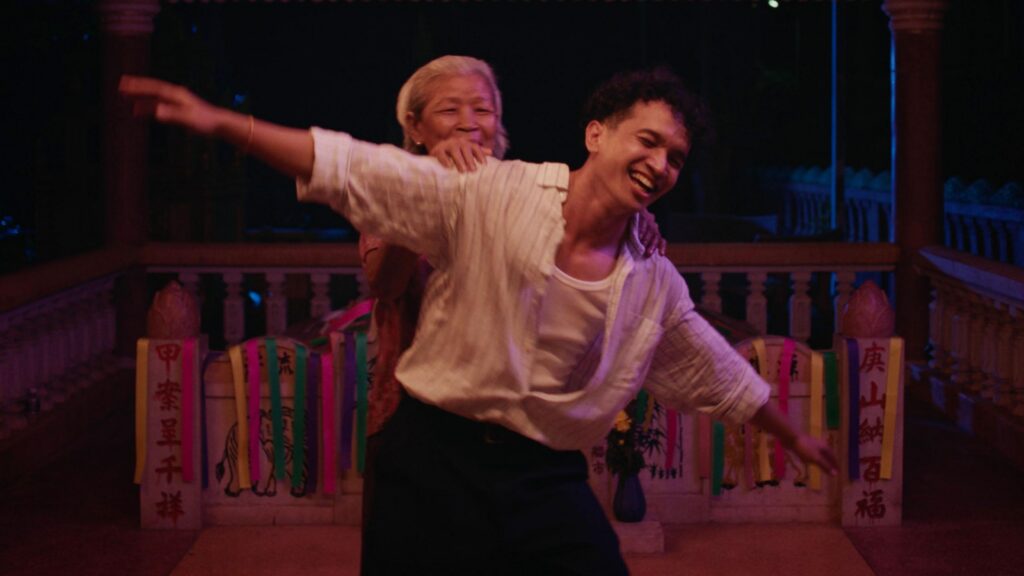
In Grandma Nai Who Played Favorites, the late Grandma Nai (Saroeun Nay) watches from her tomb as her family arrives on the national day of tomb cleaning. But this is not really a solemn act of maintenance. Instead, the family turns the ritual into a feast, complete with firewood, elaborate food, and petitions to the dead for money, cars, and good fortune. Amid this gathering, Grandma Nai’s attention focuses on her 29-year-old grandson Meng (Bonrotanak Rith), who is being pressured by his mother for being single and not yet married. As the family tries to guide him toward an arranged marriage, Grandma Nai senses that Meng may be more interested in the prospective bride’s brother.
The short seems to find a beautiful balance between humor, tenderness, and quiet wisdom. Its premise is already lovely: a grandmother who may only fully understand the stakes of a young life after her own death. What appears most appealing here is the film’s gentleness—its suggestion that wisdom sometimes comes too late, but that it may still arrive in time to help the living. The cinematography sounds beautiful, and the direction of the actors precise, allowing the emotional undercurrents to emerge softly rather than through melodrama. This seems like a film of grace and affection, one in which queer desire, family ritual, and posthumous care come together with unusual warmth.Rating: 4.4/5
MAGID / ZAFAR
Written and directed by Luís Hindman |UK, 2025, 19 min
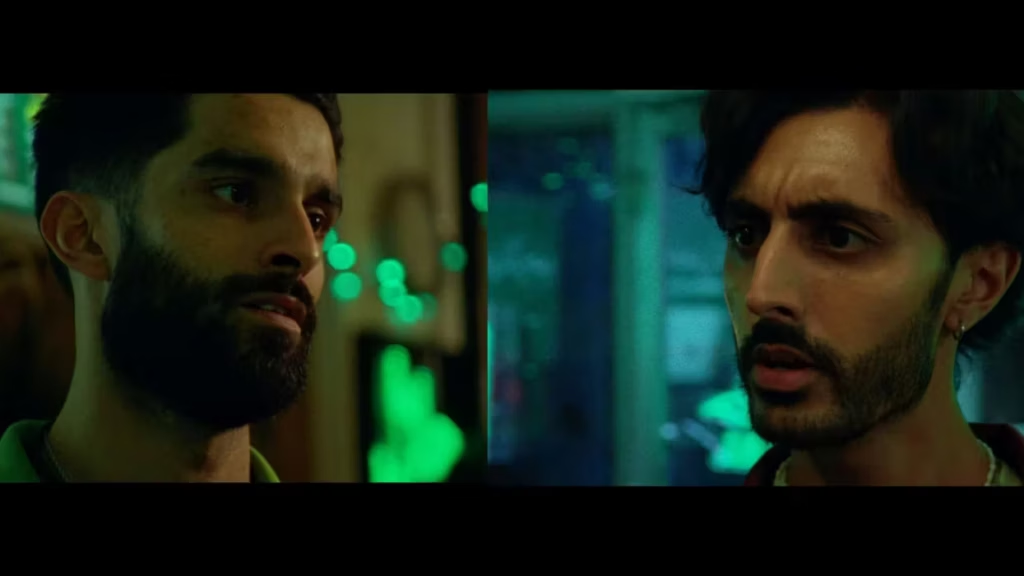
MAGID / ZAFAR centers on Magid (Eben Figueiredo), a gay cook who is preparing to get married, while carrying the unresolved weight of a relationship he has never truly ended. Rather than confronting his childhood friend and boyfriend Zafar (Gurjeet Singh) directly, he has simply stopped answering his messages and begun avoiding him. That avoidance ends when Zafar appears at Magid’s workplace and discovers the truth. The film apparently begins at a fast pace and then slows toward the end, allowing the emotional consequences of Magid’s silence to settle more heavily. In the space of nineteen minutes, the short opens a history of intimacy, betrayal, social pressure, and emotional cowardice.
What seems especially striking about the film is its sense of compression. It appears to contain enough emotional and narrative material for a feature, and that can be read both as compliment and limitation. On the one hand, the short sounds intense, suggestive, and full of unresolved history; on the other, it may leave the viewer with the feeling of having seen only one fragment of a much larger story. Yet that incompleteness may also be the source of its force: the film sounds like it trusts tension, omission, and aftermath. It seems less interested in full explanation than in the painful collision between what is announced publicly and what remains emotionally unfinished.Rating: 4.1/5
Xylella fastidiosa
Written and directed by Thomas Colineau | France, 2025, 22 min
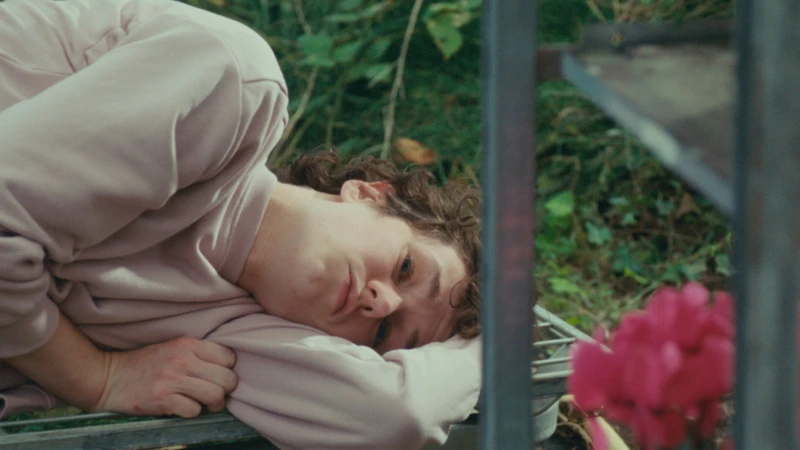
In Xylella fastidiosa (which is a deadly plant disease), Simon works in a garden centre in southern France alongside his overbearing mother. He has been ghosted by Corentin, and his loneliness takes on an unusual form: in the greenhouse, flowers begin to speak, offering commentary, companionship, and reflection. The plants become a kind of emotional and psychological support system, asking questions about dependence, self-pollination, and relational need. At the same time, the film moves toward something more elegiac: a nostalgic and mournful homage to an older generation lost to HIV, especially through the figure of Simon’s uncle Hyacinthe, who died in 1991 before Simon was born, and who might have become a mentor figure able to guide him through questions of gender, love, and indecision.
This sounds like one of the most conceptually original films in the group. The talking flowers could easily become whimsical or overly precious, but they seem to function as a poetic device that links solitude, queer lineage, and intergenerational absence. The film’s shifting relation to gender—approaching Simon at times as “he” and at times as “she”—also suggests a more fluid and exploratory sensibility. Most moving of all is the sense that the film is haunted by the mentors and elders a younger generation never got to know because of AIDS. That gives the short a depth beyond romantic disappointment: it becomes a letter to the dead, and to the queer relations that history interrupted.Rating: 4/5
something still
Directed by Ariel Mahler | USA, 2025, 19 min
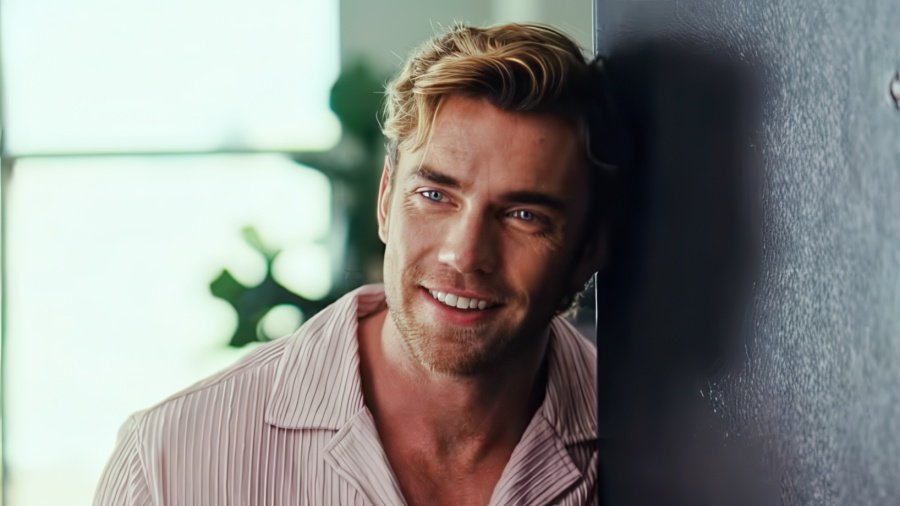
In something still, Tom (Josh Brodsky, also the writer, drawing on his own life experience) arrives in apparently semi-empty apartment with card-boxes, and the film moves between this present emptiness and memories of earlier, happier days in the same space with his gorgeous and muscular boyfriend Max (Zane Phillips, photo above). Those memories are not simply nostalgic; they gradually reveal the fault line that damaged the relationship. Tom wanted more variety in their sexual life, and in dangerous game what may have begun as an experiment, awakened something in Max that neither of them fully anticipated. The short appears to be about aftermath: about returning to a space once filled with erotic possibility and emotional warmth, only to confront how desire altered the structure of the relationship itself.
The film’s strength seems to lie in its emotional restraint. The apartment becomes a space of reckoning, and the contrast between past happiness and empty present loss gives the narrative its force. Because the film is rooted in Tom’s recollection eyes, it likely takes on a reflective and painful tone, less about blame than about the way intimacy can change when desire opens something neither partner knows how to contain. It sounds intimate, melancholy, and psychologically fine-tuned.Rating: 4/5
Callback
Written and directed by Matthew Puccini | USA, 2026, 16 min
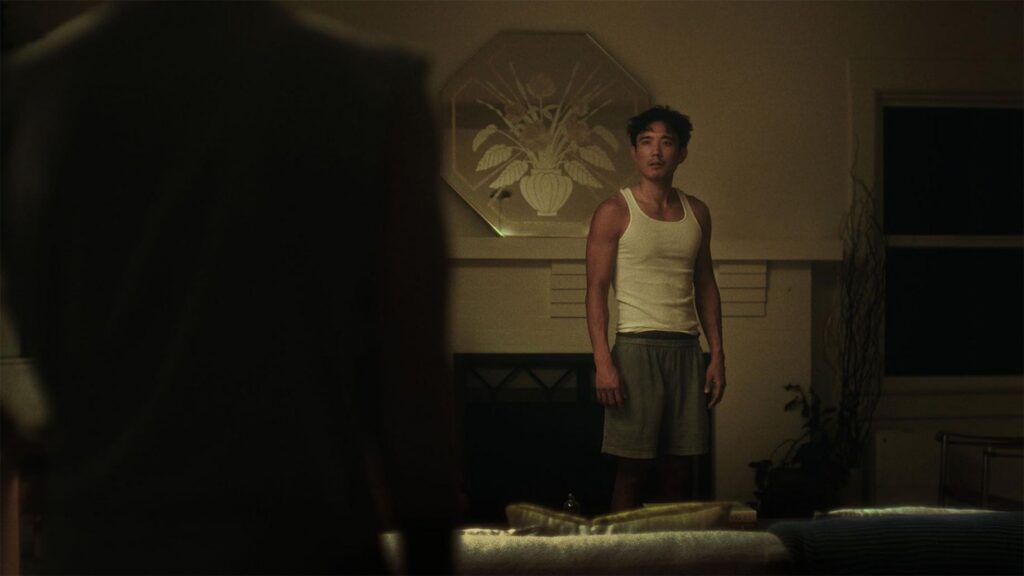
Callback follows a gay male couple, both actors—Michael Hsu Rosen and Justin H. Min—who live together while struggling with auditions. Their relationship is shaped by the uncertainty of the profession and by a deeper emotional question: can they really love one another without rivalry, and can they genuinely be happy for the other if one is chosen and the other is not? The film seems to revolve around the unstable boundary between performance and sincerity, between professional auditioning and personal self-concealment. Their lives become structured by comparison: who is the better actor, who hides emotion more effectively, and whether intimacy can survive constant evaluation.
This is a strong premise, because it turns acting itself into the metaphor and mechanism of the relationship. The film contains a genuine tour de force in this idea, but perhaps does not push it as far as it could. The actors’ insecurity may read as both a weakness in performance and a mirror of the film’s very subject, since the drama revolves around dissimulation, competition, and emotional uncertainty. That double quality sounds interesting, even if it may also create some frustration. The short seems to promise an intense psychological duel but perhaps remains slightly restrained where it might have gone deeper.Rating: 3/5
Brief Somebodies
Directed by Andy Reid | Canada, 2025, 15 min
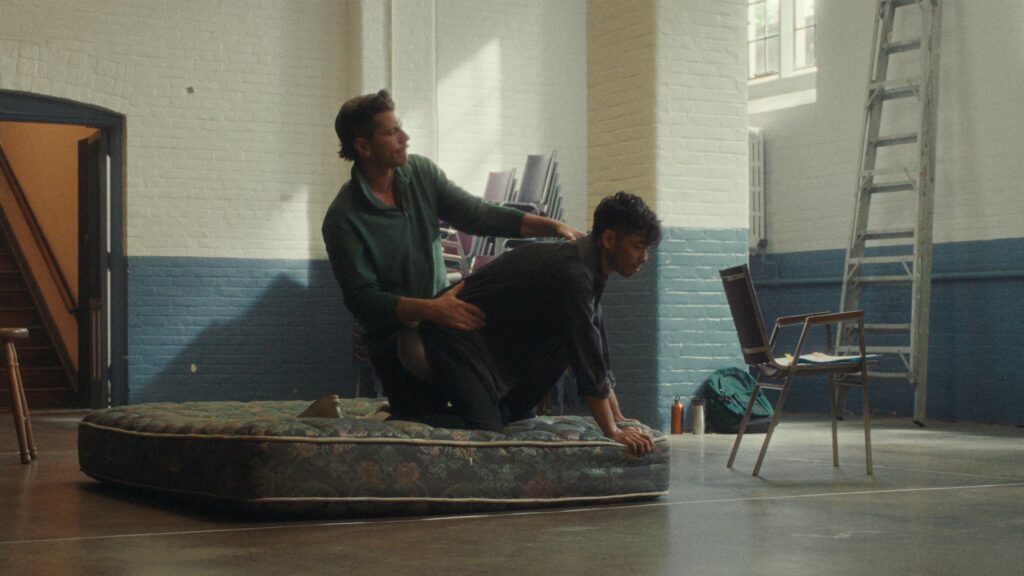
Brief Somebodies centers on two actors rehearsing a sexual assault scene. One of them is also the writer-director within the film’s nested production structure, and the rehearsal process creates an increasingly unstable emotional space between the two performers. At one point, one actor praises the other’s bravery for putting such material forward, only to be immediately contradicted. The film appears to blur the lines between performance and sincerity, between staged violence and emotional implication, and between sexual assault and casual sex, without clearly settling into one interpretive frame.
That ambiguity may be intentional, but it also becomes a serious problem. The film seems to generate confusion not in a productive or provocative way, but in a manner that leaves the viewer uncertain about the characters’ emotional involvement and about the very stakes of the scene being rehearsed. A short dealing with sexual assault and performance needs a particularly clear sense of tonal and ethical precision, and here the uncertainty sounds more muddled than challenging. It may be that the film is aiming for instability and discomfort, but the result appears too opaque to fully convince.Rating: 3/5
Picking Crew
Written and directed by Tanu Gago | New Zealand, 2025, 11 min
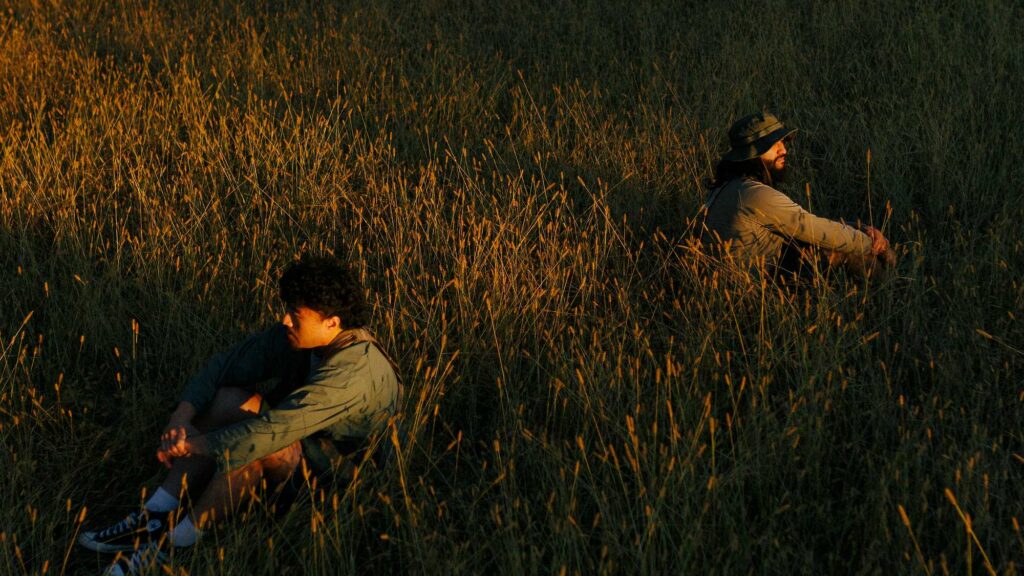
In Picking Crew, Tomasi (Henry Auva’a), a young Maori man, arrives at an apple plantation for the harvest season and is introduced to Api (Joe Malu Folau), who will train him. The two men will not only work together but also sleep in the same workers’ bungalow, isolated from their families during the harvest period. Gradually, a bond of understanding and quiet complicity develops between them. Much of what passes between them is expressed through silences, glances, and half-spoken thoughts rather than direct declarations. Around them, the social world is represented by another co-worker who constantly makes sexual jokes and provokes Tomasi, as if offering a model of masculinity that he is expected to imitate. Tomasi and Api, however, seem to recognize in one another a shared distance from that behavior, and they reflect together on the toxic masculinity that shapes not only their work environment but also their fathers’ way of loving them.
What makes the film especially striking is its minimalism. Tanu Gago appears to trust silence, duration, and the expressive force of faces, particularly through extreme close-ups that make the emotional bond between Tomasi and Api feel both inevitable and fragile. Rather than over-explaining their connection, the film seems to let intimacy emerge through what remains unsaid. This formal restraint is one of its greatest strengths. At the same time, the short touches on larger themes—masculine expectation, paternal disappointment, social conformity, and queer difference and loneliness—without turning them into heavy-handed statements. It sounds like a film that understands how quiet cinema can hold deep emotional and political tension. In only eleven minutes, Picking Crew appears to create a world of longing, disappointment, and recognition with remarkable subtlety.Rating: 4.4/5
More details including online screenings here: schedule all films and events