by Hudson Moura
Hot Docs 2026 once again confirms its importance as a major international space for documentary cinema that is both politically engaged and formally attentive to the complexities of the contemporary world. For its 33rd edition, the festival presents 115 films from 51 countries, including 80 features and 35 shorts, with 52 world or international premieres. What stands out in this year’s programming is not only its scale, but also its breadth of concerns: political struggles, historical memory, cultural identities, gender issues, technological transformations, and urgent social crises all emerge as central themes. The festival moves across very different levels of experience, from global systems of surveillance and border violence to the lingering wounds of war, from queer cultural history to questions of AI, Indigenous knowledge, and public health. In that sense, Hot Docs is not simply documenting the present; it is mapping how the present is shaped by unresolved histories, technological power, and ongoing struggles over identity and justice.
What is especially striking this year is the balance between the international and the Canadian, as well as between more classical documentary forms and more hybrid or exploratory approaches. With 30 Canadian films in the selection, Hot Docs continues to serve as an essential platform for national documentary production, while also maintaining a broad international scope through sections such as International Spectrum Competition and special programs like Made in Brazil. At the same time, the festival clearly affirms its double role: it is both a public-facing cultural event and a major professional space for the documentary industry, with networking activities, market initiatives, and the return of the Hot Docs Forum. Through films such as The Sandbox, Une photo à Saigon, Antidiva, and Black Zombie, Hot Docs 2026 shows that documentary can still function as investigation, testimony, memory work, and cultural reparation—all while remaining a vital site for debate, circulation, and discovery.
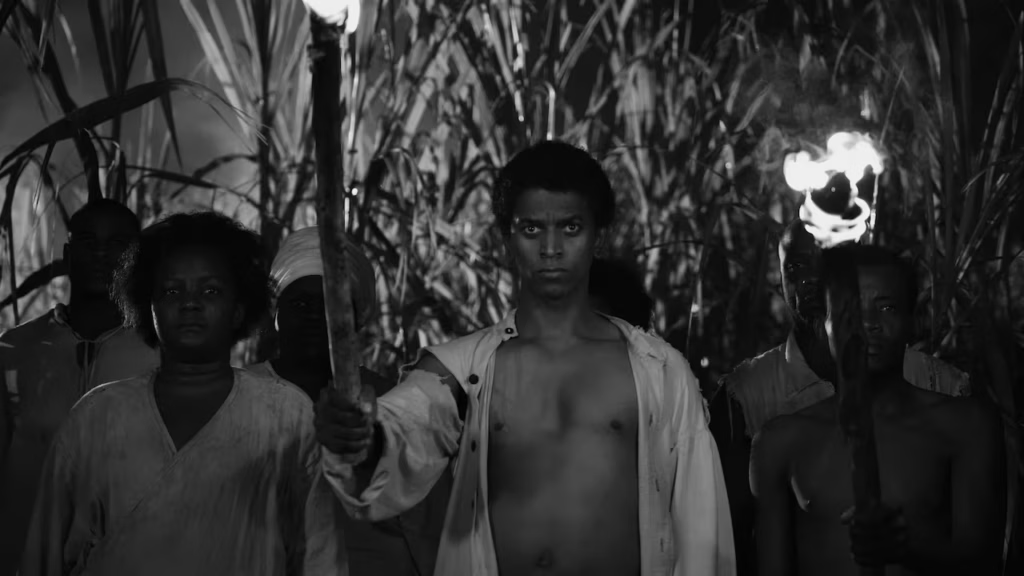
Black Zombie (Canada, 2025) directed by Maya Annik Bedward
Maya Annik Bedward’s Black Zombie offers a powerful re-reading of one of popular culture’s most familiar figures. Rather than approaching the zombie through the usual American cinematic imagination, the documentary returns to its Haitian origins and shows that the zombie was never simply a monster attacking the living. In the film, zombification is tied to the history of slavery, to the loss of autonomy, and to the terrifying possibility of remaining under someone else’s control even after death. Bedward reconnects the zombie to Haitian history, Vodou spirituality, and colonial violence, tracing how this figure emerged out of a society shaped by plantation slavery and the struggle over agency, body, and soul. The documentary also explains how American popular culture progressively stripped the zombie of this history, especially through sensationalist and racialized representations that turned a symbol of dispossession into an object of horror entertainment.
What makes Black Zombie so compelling is precisely this effort of reclamation. The film does not merely correct a historical misunderstanding; it exposes how cinema and popular culture participate in broader processes of distortion, racialization, and erasure. By linking the zombie to colonial Haiti, Vodou, and the question of stolen agency, the documentary gives the figure a far more disturbing and meaningful political depth than most genre films ever acknowledge. At the same time, its critique of American cinema is especially sharp, showing how Hollywood and earlier travel writing transformed Haitian religious and cultural practices into racist spectacle. In this sense, Black Zombie is both a cultural history and a decolonial intervention, one that challenges viewers to rethink a supposedly familiar figure from the ground up. It sounds like one of the most intellectually and politically important films in this year’s Hot Docs selection. Rating: 4.5/5

The Sandbox (Canada, 2026) directed by Kenya-Jade Pinto
The Sandbox is a powerful Canadian documentary about the new frontiers of surveillance. The film moves between the Arizona desert at the US-Mexico border, the Mediterranean, and camps in Greece, showing how drones, facial recognition, biometric scans, artificial intelligence, and other technologies are deployed in the name of security. But what the film insists on, with disturbing clarity, is that these systems do far more than “protect borders”: they sort, monitor, contain, and endanger some of the most vulnerable people in the world, especially migrants and asylum seekers. The documentary also includes testimonies concerning traffickers, abuse, state inaction, and forms of complicity that make this border regime feel even more brutal.
What makes The Sandbox especially strong is its precision. It appears to be a rigorous, highly informative documentary that reveals how technologies marketed as modern, efficient, or even humanitarian can become instruments of dehumanization. The film is not only politically urgent; it is also genuinely frightening, because it suggests that asylum seekers are becoming a kind of testing ground for ever more sophisticated systems of surveillance and control. Rather than treating technology as neutral, the documentary exposes its ideological and administrative uses. It sounds like one of the most important films in the festival precisely because it links border politics to the larger question of what happens when machines increasingly mediate who gets to move, who gets to live, and who remains visible only as data.Rating: 4.5/5
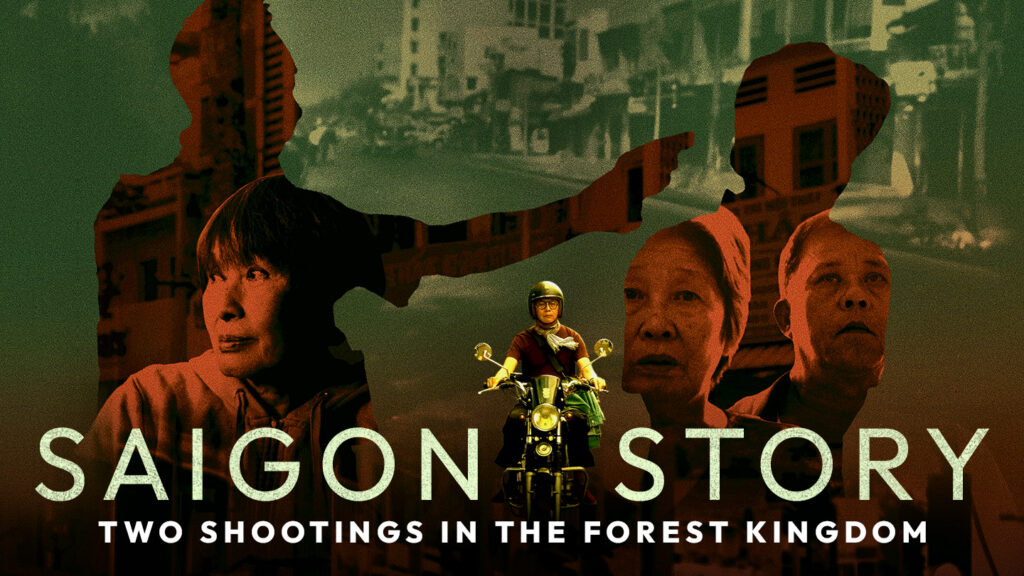
Saigon Story : Two Shootings in the Forest Kingdom (Canada, 2026) directed by Kim Nguyen
In Une photo à Saigon : coups de feu sur deux vies, Kim Nguyen revisits one of the most famous photographs of the Vietnam War: Saigon Execution, taken by Eddie Adams in 1968. But rather than stopping at the iconic image itself, the film asks what remains hidden behind it. Who was the man being executed? Why does his identity remain uncertain? And how does this single photograph continue to affect multiple Vietnamese families decades later? The documentary unfolds as both an intimate and historical investigation, moving through war memory, unresolved grief, missing bodies, and the long afterlife of violence. It turns a globally recognizable image into a deeply human inquiry into what photographs reveal and what they conceal.
What seems most moving about the film is that it does not rely on historical recognition alone. Even for viewers who know little about the Vietnam War, the documentary appears accessible because it is fundamentally about family wounds, buried truths, and the emotional residue of political catastrophe. Kim Nguyen seems to transform a canonical war photograph into a meditation on memory, trauma, and reconciliation. The film’s power lies in this double movement: it remains attentive to historical complexity, but it is never trapped in abstraction. It sounds like a documentary that understands that the most famous images of war often flatten the very lives they memorialize, and that cinema can restore a measure of emotional and historical depth to what photography leaves suspended.Rating: 4.2/5
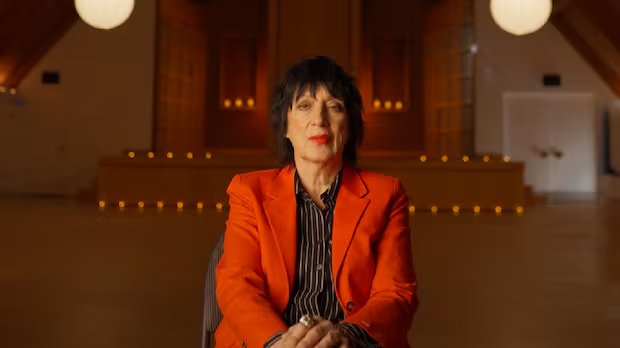
Antidiva: The Carole Pope Confessions (Canada, 2026) directed by Michelle Mama
Antidiva: The Carole Pope Confessions, directed by Michelle Mama, opens Hot Docs 2026 with a portrait of one of Canada’s most provocative and underrecognized musical figures. The film traces the career of Carole Pope, from her years with Rough Trade in Toronto’s 1970s and 1980s music scene to her broader cultural legacy as a queer pioneer who challenged sexual and gender norms. Songs such as High School Confidential become part of a larger story about artistic defiance, public scandal, and cultural influence. Yet the documentary goes beyond performance history: it also explores aging, visibility, resistance, chosen family, and the personal costs of refusing conformity within a music industry that rewards youth and often sidelines outsiders.
What makes Antidiva important is that it does not sound like a simple nostalgic tribute. Michelle Mama appears to frame Carole Pope not as a quirky footnote, but as a central figure in queer cultural history whose significance demands re-evaluation. The film seems invested in rehabilitation as much as remembrance. By connecting Pope’s music, sexuality, performance style, and continued artistic presence to broader questions of self-expression and cultural erasure, the documentary becomes a work of recovery. It restores historical scale to a performer whose daring once unsettled the mainstream and whose legacy still resonates. As an opening-night film, it makes perfect sense: it is celebratory, politically resonant, distinctly Canadian, and committed to the idea that documentary can also serve as an act of cultural justice.Rating: 4.2/5