By Hudson Moura
Directed by Georgia Oakley and adapted by Diana Reid from Jane Austen’s celebrated novel, Sense and Sensibility (2026) offers a more socially grounded and emotionally restrained interpretation of the familiar story of the Dashwood sisters, Elinor (Daisy Edgar-Jones) and Marianne (Esmé Creed-Miles). Yet this greater emphasis on social hardship and romantic disappointment does not necessarily produce a more compelling understanding of Austen’s world. Her fiction derives much of its richness from the interplay between economic insecurity, class conventions, irony, romantic longing, and the possibility of happiness. Oakley’s adaptation captures the obstacles to love more convincingly than its emotional enchantment, creating a film that feels more dramatic and socially grounded without being particularly more revealing. The question, then, is not simply why adapt Sense and Sensibility once again, but what this more sober approach actually adds to a novel whose social and romantic dimensions have already been so successfully explored on screen.
The film opens with beautiful pastoral landscapes that contrast with the economic insecurity awaiting the Dashwood family. Following their father’s death, the family estate passes to his son from a previous marriage, leaving his widow and daughters in a precarious position. Forced to abandon their comfortable home in Sussex, they relocate to a modest cottage in Devonshire, where their prospects increasingly depend on the possibility of marriage.
This situation establishes the social dimension that has always been fundamental to Austen’s fiction. Marriage is not simply the culmination of romantic desire; it is also a question of financial security, class position, and social survival. For women with limited economic independence, choosing a husband involves negotiating affection and material necessity, often under circumstances over which they have little control.
Between Romantic Expectations and Social Reality
At the centre of the narrative are Elinor’s growing feelings for Edward Ferrars (George MacKay) and Marianne’s passionate attachment to Willoughby (Frank Dillane), while Colonel Brandon (Herbert Nordrum) introduces another possibility into Marianne’s romantic life. Their relationships unfold through misunderstandings, withheld feelings, social obstacles, and expectations that are frequently disappointed.
Yet Oakley’s adaptation seems more interested in the suffering produced by romantic uncertainty than in the pleasures of romantic anticipation. The characters spend considerable time wondering whether their feelings are reciprocated, interpreting one another’s behaviour, and confronting the painful consequences of disappointment. Their experiences are shaped less by the intoxicating possibility of love than by the fear that love may not be enough to overcome social conventions.
This approach gives the film a certain realism, emphasizing the material and emotional consequences of relationships within Austen’s society. Yet the problem is not that Oakley privileges social hardship over romantic idealization, but that the film does not entirely succeed in reconciling these dimensions. Austen’s romantic narratives are inseparable from their social circumstances, but their emotional force also depends on longing, irony, misinterpretation, and the possibility of happiness. Oakley gives considerable attention to the suffering produced by romantic expectations, while the pleasures and contradictions of falling in love remain less convincingly developed. The film consequently appears more restrained without necessarily becoming more insightful.
The distinction is therefore not between a romantic Austen and a socially critical one, but between different cinematic ways of balancing these elements.
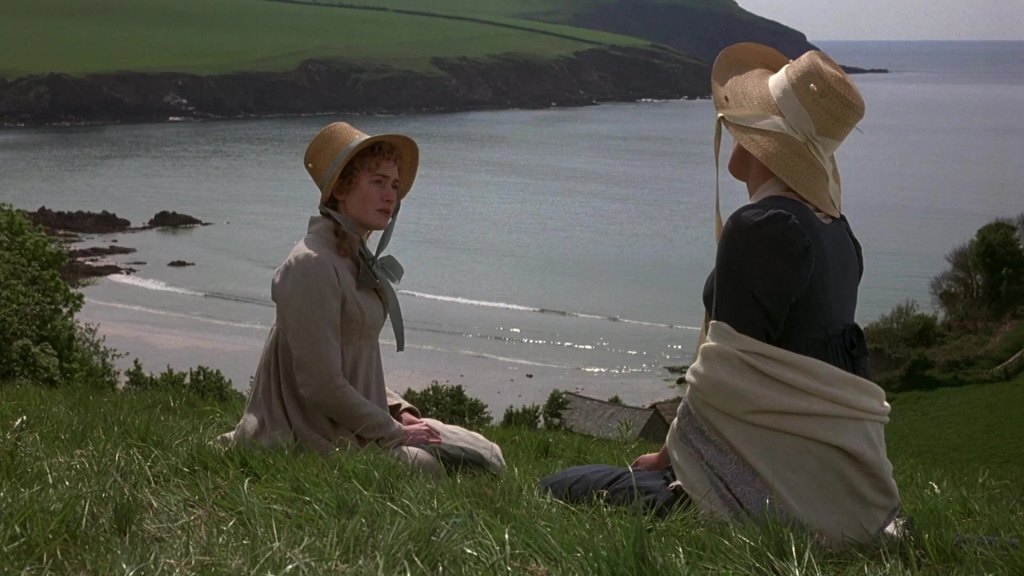
Compared with Ang Lee’s 1995 adaptation, written by Emma Thompson, this new version is particularly revealing. Lee’s film preserved much of Austen’s social criticism while transforming the story into an emotionally satisfying romantic drama. Oakley retains the tensions between love and social obligation but considerably reduces the atmosphere of romantic idealization and emotional enchantment. The result is a film in which the obstacles to love often seem more tangible than love itself.
One potentially significant difference lies in the adaptation’s attempt to shift the emotional centre away from the sisters’ romantic relationships and toward their relationship with each other. This is an interesting approach, particularly because Austen’s novel is as much about the contrasting temperaments and emotional education of Elinor and Marianne as it is about finding suitable husbands. Yet this shift does not substantially transform the dramatic importance of their relationship or offer a particularly revealing interpretation of the sisters’ emotional development. Diminishing the romantic idealization of earlier adaptations therefore raises the question of what takes its place. The film’s greater emphasis on introspection and emotional suffering does not always generate an equally compelling dramatic alternative.
A More Restrained and Contemplative Austen
This relative austerity also extends to the film’s aesthetic choices. The countryside is beautifully photographed, and the natural landscapes acquire a contemplative quality. Yet the Dashwoods’ modest cottage is presented without the comfort or visual romanticism that period dramas frequently associate with rural life. Their reduced circumstances are made physically credible rather than transformed into picturesque domestic charm.
There are moments when the filmmaking seems more introspective than dialogue-driven, allowing the characters’ silences, expressions, and surroundings to communicate their emotional uncertainty. This quieter, more contemplative approach creates space for unspoken emotions, although it does not always generate the emotional intensity required by the film’s romantic conflicts. James Ivory and screenwriter Ruth Prawer Jhabvala’s literary adaptations, particularly A Room with a View (1985), Howards End (1992), and The Remains of the Day (1993), demonstrate how restraint, subtle gestures, and unspoken feelings can convey extraordinary romantic longing while exposing the rigid class conventions and social expectations of their respective periods. In those films, emotional repression intensifies desire rather than diminishing it. Oakley adopts a similarly restrained approach, but without consistently achieving the same tension between what the characters feel, what they conceal, and what they are socially permitted to express.
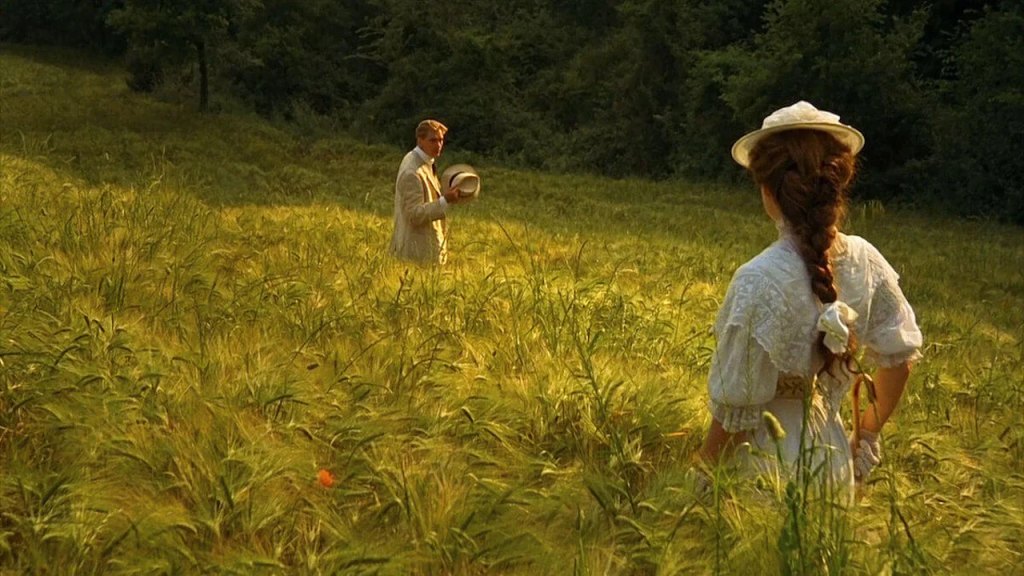
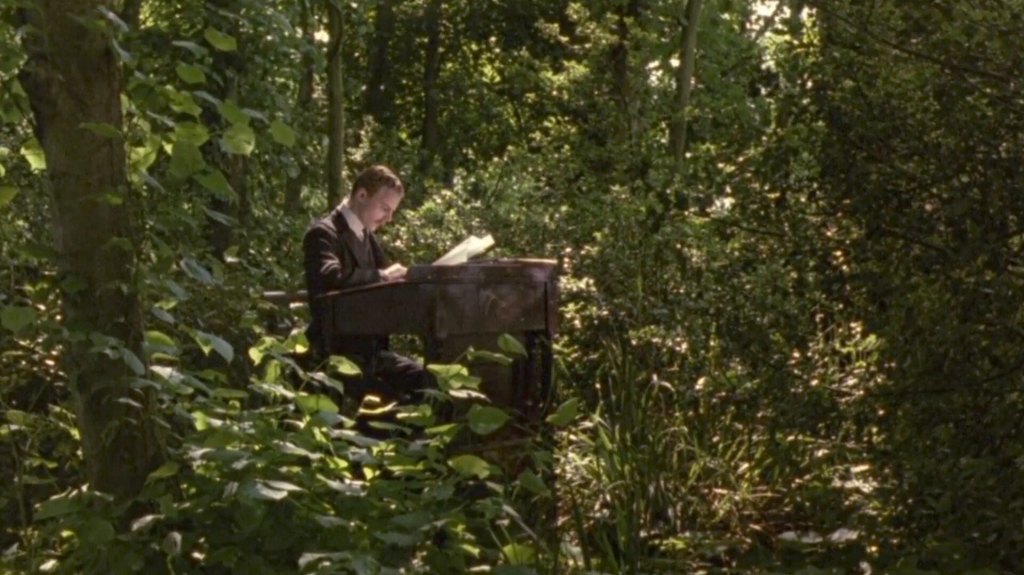
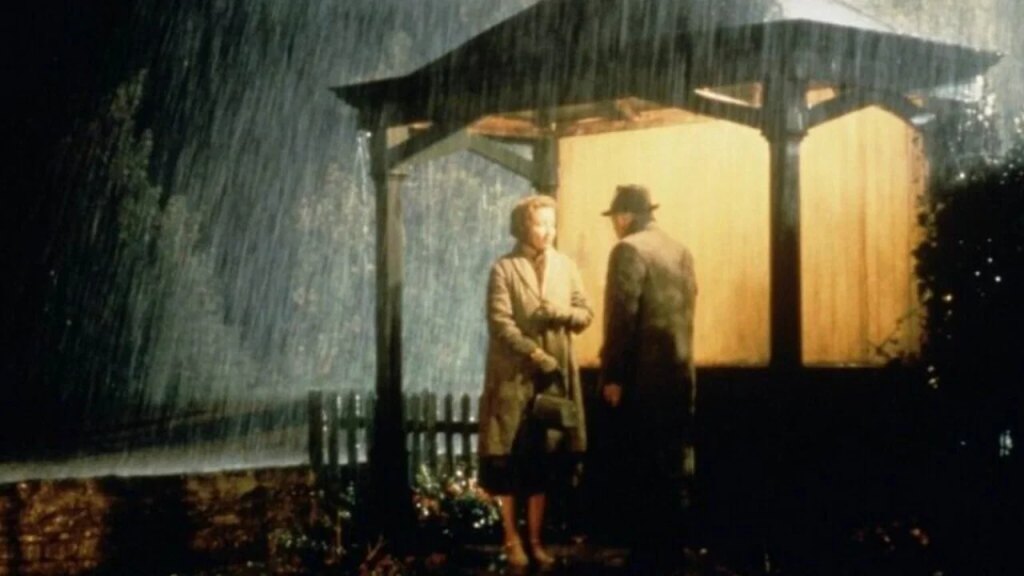
The performances reflect this restraint. Daisy Edgar-Jones brings her characteristic charm, composure, and understated magnetism to Elinor. She is particularly convincing in expressing feelings that her character cannot openly articulate, giving emotional credibility to a woman whose sense of responsibility constantly restrains her desires.
Esmé Creed-Miles, as Marianne, delivers a competent but less compelling performance. Marianne should provide an important emotional counterpoint to Elinor’s reserve, embodying a more passionate and spontaneous relationship with love. Yet Creed-Miles struggles to convey that emotional intensity convincingly. At times, her performance feels overstated, with expressions of passion and distress that seem more theatrical than spontaneous, ultimately weakening the contrast between Marianne’s sensibility and Elinor’s restraint.
The male actors, including George MacKay, Frank Dillane, and Herbert Nordrum, are similarly competent without making their respective characters especially memorable. The ensemble functions well within the film’s subdued dramatic register, but rarely elevates the romantic relationships beyond what the narrative establishes.
What Does This Adaptation Add?
The title Sense and Sensibility refers to more than two contrasting personalities. It suggests different ways of experiencing, expressing, and regulating emotion, as well as the necessity of negotiating between personal desire and social responsibility. Both sisters must confront the limitations of their expectations and the distance between what they feel and what society allows them to pursue.
Oakley’s adaptation emphasizes this distance, particularly through disappointment, emotional restraint, and the social consequences of romantic attachment. Yet its commitment to realism does not necessarily produce a more revealing interpretation of Austen’s world. The economic insecurity, class divisions, and marriage expectations were already central to the original narrative and have been effectively explored in previous adaptations.
What distinguishes the 2026 version is therefore less a new understanding of Austen than a different emotional and aesthetic register: more sober, more contemplative, and less interested in romantic idealization. This may appeal to viewers who prefer their period dramas grounded in material circumstances rather than romantic fantasy. But it can also leave those familiar with previous adaptations wondering what has been gained by diminishing the story’s romantic enchantment.
Sense and Sensibility is a carefully constructed and competently performed adaptation, with attractive cinematography and an appreciable concern for the social realities underlying Austen’s fiction. Its principal limitation lies in its inability to fully reconcile its realistic ambitions with the emotional demands of the romantic narrative. The film makes the difficulties of finding love within a restrictive society sufficiently clear, but it is less successful in communicating why that love should feel so extraordinary in the first place. In pursuing a more sober and socially grounded interpretation of Austen’s world, Oakley has created a film that conveys the hardships of romance more convincingly than its enchantment.
 Rating: 3.3/5
Film Info: Sense and Sensibility – Imdb