Understanding Cinema Beyond the Story
Reading Cinema
Watching a film involves more than following its story. Cinema communicates through images, movement, sound, performance, and narrative, creating meanings that extend beyond dialogue and plot. Film analysis examines how these elements interact to shape our perceptions, emotions, and interpretations.
Understanding cinematic elements allows viewers to engage more critically with films, recognizing how artistic choices contribute to their aesthetic, cultural, social, and political dimensions. Rather than seeking a single definitive interpretation, analysis encourages closer observation, informed argument, and an awareness of the different ways films can be understood.
Exploring Cinematic Form
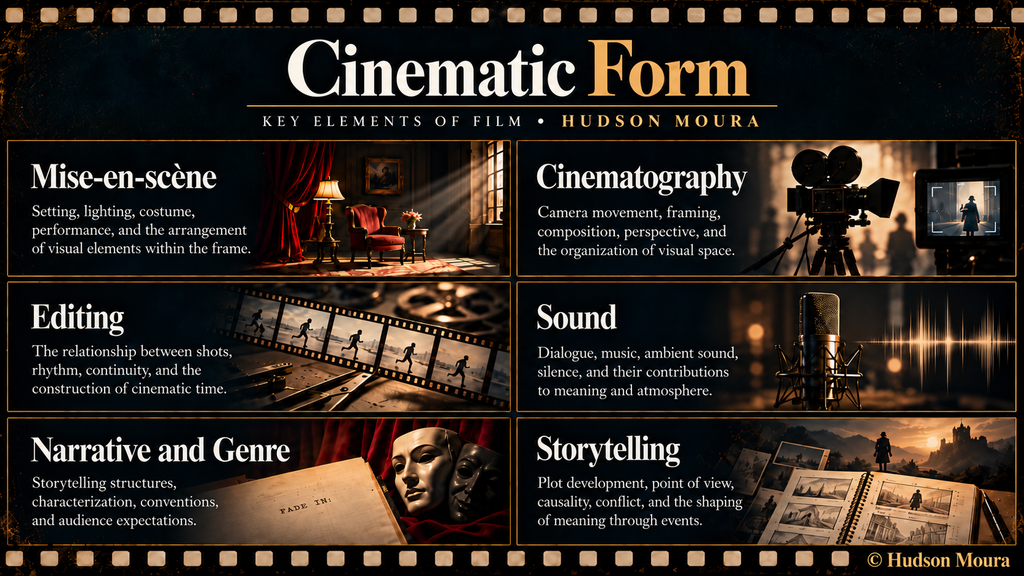
Film analysis draws on several interconnected elements of cinematic expression:
- Mise-en-scène: Setting, lighting, costume, performance, and the arrangement of visual elements within the frame.
- Cinematography: Camera movement, framing, composition, perspective, and the organization of visual space.
- Editing: The relationship between shots, rhythm, continuity, and the construction of cinematic time.
- Sound: Dialogue, music, ambient sound, silence, and their contributions to meaning and atmosphere.
- Narrative and Genre: Storytelling structures, characterization, conventions, and audience expectations.
- Storytelling: Plot development, point of view, causlity, conflict, and the shaping of meaning through events.
These elements do not operate independently. Their relationships contribute to a film’s distinctive aesthetic and the meanings audiences construct from it.
From Observation to Interpretation
Critical film analysis moves beyond describing what happens onscreen to considering how and why cinematic choices matter. It connects close observation with interpretation, situating films within broader artistic, historical, social, and cultural contexts.
Academic analysis also involves developing coherent arguments supported by evidence and informed by relevant scholarship. Unlike plot summaries or purely personal reactions, it seeks to explain and substantiate interpretations of cinematic works.
Film Criticism and Further Reading
Film reviews and critical essays offer different approaches to interpreting cinema. While criticism often combines analysis with aesthetic judgment and personal perspective, academic film analysis generally develops a sustained argument through close examination and scholarly research.
Explore my published film reviews for examples of critical engagement with contemporary cinema.
Academic Writing · Readings & Guides
Watch & Learn
Exploring the Language of Cinema
Explore essential elements of cinematic elements through six video tutorials from StudioBinder, featuring explanations and examples from films.