by Hudson Moura
If one word could define Club Kid, the film written, directed by, and starring Jordan Firstman, it would be engaging. From beginning to end, the film immerses the audience in the chaotic, colourful, and emotionally turbulent life of Peter, played by Firstman himself, a gay man whose existence revolves around New York’s queer nightlife. But what initially appears to be a story about partying, drugs, and a life without limits gradually becomes a moving exploration of fatherhood, personal responsibility, and unconditional love.
What makes Club Kid particularly compelling is not simply its story, but the way it is told. Firstman’s filmmaking brings us remarkably close to his characters, allowing us to experience their emotional instability, uncertainties, and transformations almost as if we were participating in their lives. Rather than observing Peter from a distance, we accompany him through an emotional roller coaster that challenges everything he believes about himself and his future.
A Life Without Tomorrow: From Clubbing to Fatherhood
Peter lives as though every night might be his last. He spends his evenings partying, consuming drugs, particularly cocaine, and promoting clubs within New York’s vibrant queer nightlife. Music, DJing, and partying are not simply recreational activities; they define his existence. He has spent years immersed in this environment, without any apparent desire to imagine another way of living.
Beneath his charismatic personality and seemingly carefree lifestyle, however, lies a man struggling with profoundly low self-esteem. His excessive partying is not merely an expression of pleasure or freedom, but also a way of navigating his personal insecurities. Peter is approaching middle age without having developed much of a perspective beyond his immediate surroundings.
Everything changes when he discovers that he is the father of Arlo (Reggie Absolom), a ten-year-old boy from the United Kingdom. Arlo’s mother, Leonora (Paris Petitjean), has died, and the boy finds himself in a vulnerable situation involving his abusive stepfather. With no one else to care for him, Arlo enters Peter’s life, bringing with him a responsibility for which Peter is entirely unprepared.
The circumstances surrounding their relationship are unusual. Leonora had met Peter years earlier through the queer club scene, having already followed and admired him through social media. Their brief encounter resulted in a child whose existence Peter had never known about.
Suddenly, a man accustomed to organizing his entire existence around his own pleasures must learn to consider someone else’s needs. Even the most ordinary responsibilities, such as providing meals, finding a school, and maintaining a stable household, become unfamiliar challenges.
Peter’s social environment offers few immediate references for this new role. His friends form a colourful and charismatic queer community of gay and transgender people, but none appears to share his experience of raising a child. He has no clear model to follow, no established routine to rely upon, and little confidence in his ability to become a responsible father.
What makes this transformation convincing is that it does not happen overnight. Peter gradually realizes that his previous lifestyle, particularly his relationship with drugs, is incompatible with caring for Arlo. Yet understanding this necessity and actually changing his behaviour are two very different things.
Firstman captures these hesitations and contradictions with considerable sensitivity. Peter is not suddenly transformed into an exemplary father. He struggles, makes mistakes, questions himself, and slowly begins to recognize the importance of this unexpected relationship.
Two Club Kids: Music, Identity, and an Unexpected Connection
One of the film’s most interesting qualities is its title. Club Kid is particularly appropriate because it refers not only to Peter but also, in a very different sense, to Arlo. Both father and son are club kids. For Peter, clubbing represents an entire way of life. His identity has been constructed around nightlife, electronic music, DJing, and the queer community that surrounds him. He lives intensely in the present, rarely imagining a future beyond the next party. The club is his environment, his social world, and almost an extension of himself.
Arlo, however, is also a club kid, despite being only ten years old. He shares his father’s enthusiasm for music and DJing and feels remarkably comfortable within this musical universe. This passion is also part of the emotional inheritance left by his mother. Leonora loved club music, and Arlo’s musical tastes are closely associated with the songs she listened to. Music therefore connects the boy to both parents, establishing a continuity between his memories of his mother and his emerging relationship with his father.
This shared enthusiasm becomes one of the most touching aspects of their relationship. Although Peter and Arlo have lived entirely separate lives, they discover a common language through music. What initially appears to represent Peter’s irresponsibility and inability to move beyond his nightlife eventually becomes a meaningful point of connection with his son.
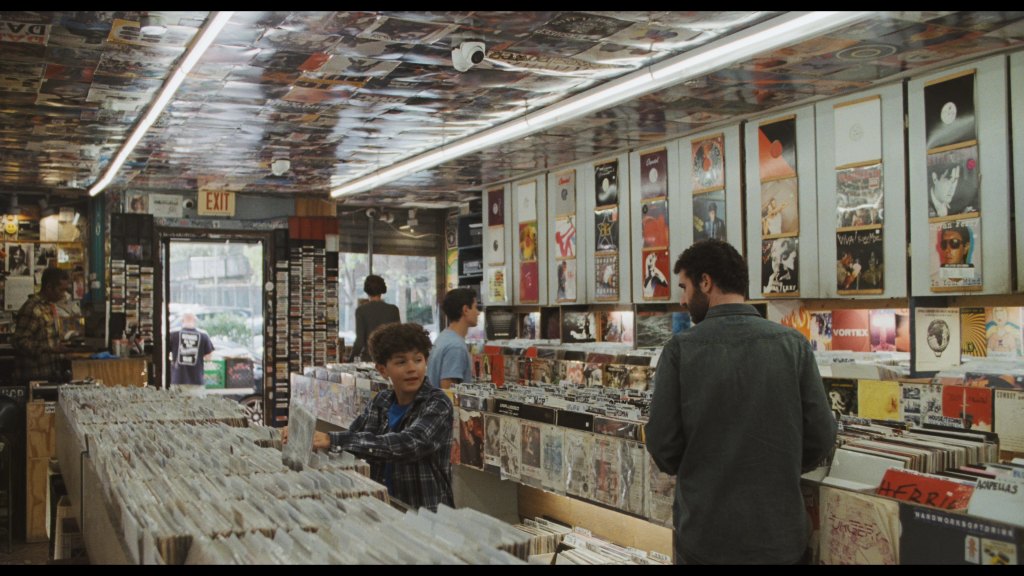
The film’s emotional effectiveness is reinforced by Firstman’s filmmaking. Its proximity to the characters and its immersion in their surroundings make the audience feel almost physically present in the clubs, among Peter’s friends, and within the emotional turbulence of his everyday life. We do not simply watch someone partying or struggling to become a father. We experience the atmosphere, the excitement, the exhaustion, and the uncertainty that accompany these experiences. The filmmaking creates a sense of intimacy that makes Peter’s emotional transformation particularly engaging.
This closeness is also supported by the performances. Peter and Arlo are both remarkably charismatic characters, and the actors establish a believable relationship that develops naturally throughout the film. Their interactions convey the awkwardness of two strangers gradually discovering how much they have in common, while learning to occupy entirely new positions in each other’s lives.
Unconditional Love and the Transformation of Fatherhood
Perhaps the film’s greatest achievement is its ability to capture something profoundly difficult to explain: the unconditional love that a father can develop for his child. Fatherhood is not simply a matter of assuming responsibilities or learning how to raise someone. It is also an emotional transformation that takes place gradually, through shared experiences, uncertainty, complicity, and the accumulation of everyday moments.
This love does not necessarily emerge fully formed. It grows over time, often without our being entirely conscious of its development. It changes our priorities, makes us more attentive to our decisions, and encourages us to become better versions of ourselves. Yet its intensity can remain difficult to articulate, even to ourselves.
As a father, I found this dimension of Club Kid particularly truthful. Although Peter’s circumstances are unusual, his emotional experience is surprisingly universal. Whether fatherhood begins with the birth of a baby or, as in Peter’s case, with the unexpected arrival of a ten-year-old child, the process of discovering oneself as a father involves similar uncertainties, adjustments, and emotional discoveries.
The fact that Peter is gay and has lived for years without knowing he had a son does not fundamentally change this experience. His sexual identity and unconventional lifestyle shape the circumstances of his transformation, but the emotions he develops toward Arlo belong to a broader experience of paternal love. What makes his situation particularly complex is the contradiction between his low self-esteem and the strength he must discover within himself to care for someone else. Peter has spent years struggling with his own insecurities, and suddenly he must become a source of stability and protection for a child who has already experienced considerable loss.
The film beautifully captures how responsibility emerges not simply from obligation, but from attachment. Peter does not necessarily understand immediately what fatherhood means or how profoundly it will change his life. He begins by doing what circumstances require, often without questioning the emotional significance of his actions. Gradually, however, his relationship with Arlo becomes inseparable from his own sense of identity.
There is something particularly powerful about this process. Sometimes we do not fully recognize how much we love someone until the possibility of losing that person forces us to confront the depth of our attachment. Only then do we understand how profoundly that relationship has transformed us, how much of the person we have become exists because of the other.
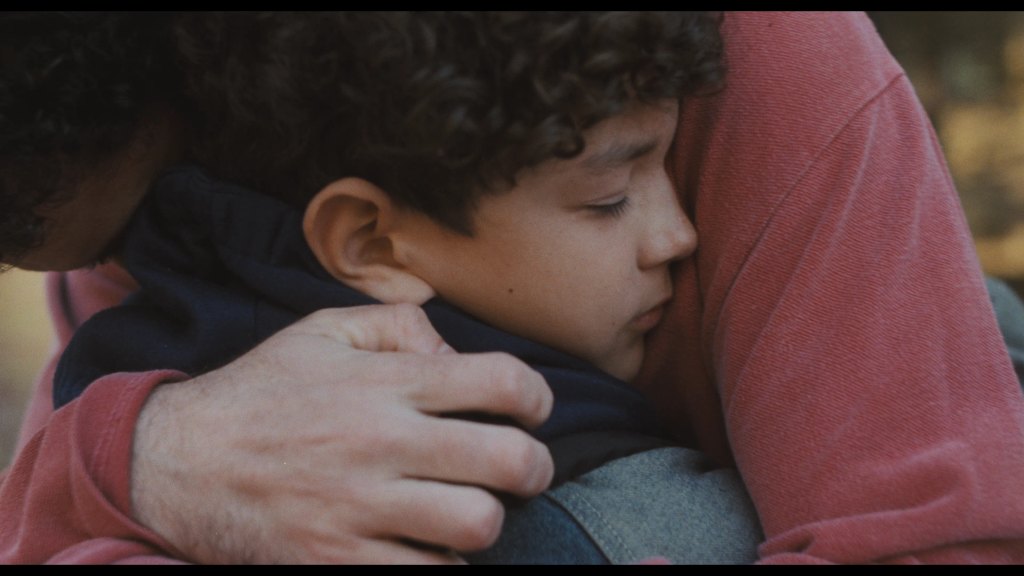
This is where Club Kid reaches its greatest emotional intensity. Initially, Arlo appears to be the one who needs Peter. Having lost his mother and facing an uncertain future, the boy requires someone willing to protect him and provide a stable home. Peter must learn to become that person. Yet as their relationship develops, the situation becomes more complex. Peter begins to discover that Arlo is not simply someone who depends on him. The boy has become essential to his own existence. His presence gives Peter a new perspective on life, a reason to confront his insecurities, and an opportunity to imagine a future he had never seriously considered.
The question is no longer simply how much Arlo needs his father, but how much Peter needs his son. The child who unexpectedly entered his life has become so deeply connected to his identity that Peter can no longer imagine himself without him. This emotional reversal is what makes Club Kid such a compelling experience. Firstman delivers a film that is vibrant, intimate, and emotionally powerful without losing the energy and spontaneity of its characters. Its portrayal of queer nightlife is engaging, its central performances are convincing, and its exploration of fatherhood is remarkably affecting.
 Rating: 4.3/5
Club Kid is distributed in Canada by Elevation Pictures and is currently playing at TIFF Lightbox in Toronto.
Info: Club Kid – Imdb