by Hudson Moura
First published: September 12, 2026
Last updated: September 20, 2026
Simon Stone’s Elsinore, written by Stephen Beresford, tells the story of Scottish actor Ian Charleson, best known for Chariots of Fire, during the final period of his life. Seriously ill with AIDS, Charleson nevertheless decides to take on one of the most demanding roles in theatre: Hamlet at London’s National Theatre. It is an extraordinary premise for a film, but what makes Elsinore so moving is that Stone and Beresford resist turning Charleson’s story into another tragic narrative defined entirely by illness and death. Instead, they make a film about life, theatre, friendship, humour, and the need to continue creating even when time is running out.
This distinction becomes apparent almost immediately. Charleson’s illness is always present, and his deteriorating physical condition cannot be separated from the story, but Elsinore refuses to make AIDS his defining characteristic. What defines him is his determination to act.
The decision to play Hamlet initially seems almost impossible. The role is physically and psychologically exhausting, requiring Charleson to perform for hours while his body is becoming increasingly fragile. Yet the theatre also offers him something that medicine cannot. Rather than spending his remaining time waiting in hospitals, thinking about blood counts and anticipating death, Charleson can enter another world. He can rehearse. He can perform. Most importantly, he can continue to identify himself as an actor rather than as a sick man.
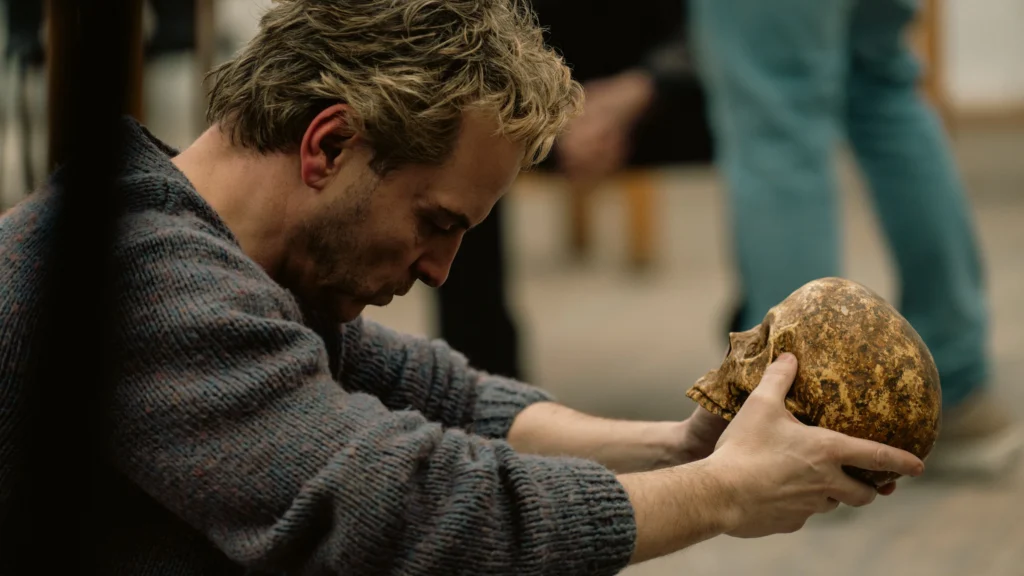
Andrew Scott gives an extraordinary performance in capturing this contradiction. He conveys Charleson’s physical exhaustion without allowing it to dominate the character. There is humour, intelligence, frustration, desire, vanity and an enormous appetite for life underneath the increasingly vulnerable body. Scott makes Charleson’s insistence on performing Hamlet understandable rather than simply heroic. He does not want to perform because he believes theatre can somehow defeat death. He wants to perform because acting is part of what makes his life worth living.
Scott’s performance is particularly impressive during the theatrical sequences. Having himself played Hamlet, he faced the unusual challenge of imagining how another actor might have approached the character rather than simply imposing his own interpretation upon it. There is very little visual documentation of Charleson’s Hamlet to imitate. What we see, therefore, is Scott playing Charleson attempting to discover Hamlet while simultaneously confronting his own mortality.
The connection between Shakespeare’s play and Charleson’s situation could easily have become heavy-handed, but Elsinore handles it with remarkable restraint. Hamlet’s preoccupation with death suddenly has an immediate meaning for an actor who knows that his own death is approaching. Shakespeare’s “undiscovered country” is no longer simply an intellectual question. Charleson is moving toward it himself.
Yet one of the great qualities of Beresford’s screenplay is its surprising levity. Considering its subject, Elsinore could have been relentlessly sombre. Instead, it is frequently very funny. Humour becomes one of the film’s most effective expressions of intimacy. Characters tease one another, make inappropriate jokes and use comedy to negotiate situations that might otherwise become unbearably sentimental.
This also gives the film one of the most convincing representations of theatrical life I have seen recently. Stone does not idealize the theatre. It is physically demanding, competitive, chaotic, occasionally ruthless and exhausting. But it is also a place of extraordinary camaraderie. The actors and people surrounding Charleson constitute a community that understands why continuing to perform matters so much to him.
That community also introduces the idea of chosen family, particularly through Patsy. While others understandably question whether Charleson should subject his already weakened body to the demands of Hamlet, she recognizes what performing the role means to him. Supporting him does not necessarily mean protecting him from every physical risk. It means respecting his desire to determine how he wants to spend the time he has left.
The ensemble surrounding Scott is excellent. Olivia Colman, playing Charleson’s doctor, is particularly memorable. As she so often does, Colman combines intense dramatic material with an extraordinary lightness. The character could easily have functioned merely as the person delivering medical information, but Colman gives her a warmth, humour and emotional density that make the relationship between doctor and patient feel completely lived-in. The strength of these supporting performances is important because Elsinore ultimately depends upon the world surrounding Charleson as much as upon Charleson himself.
Another fascinating dimension of the film is Charleson’s complicated relationship with filmmaker Derek Jarman. Beresford explained after the screening that Jarman had given Charleson his first job in Jubilee (1978) and that the two had once been friends, but they later fell out after Charleson was advised that having Jarman’s name on his CV could damage his career. Although they subsequently encountered each other socially, they apparently never properly reconciled.
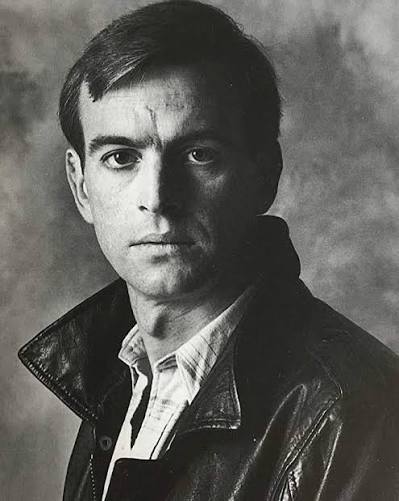
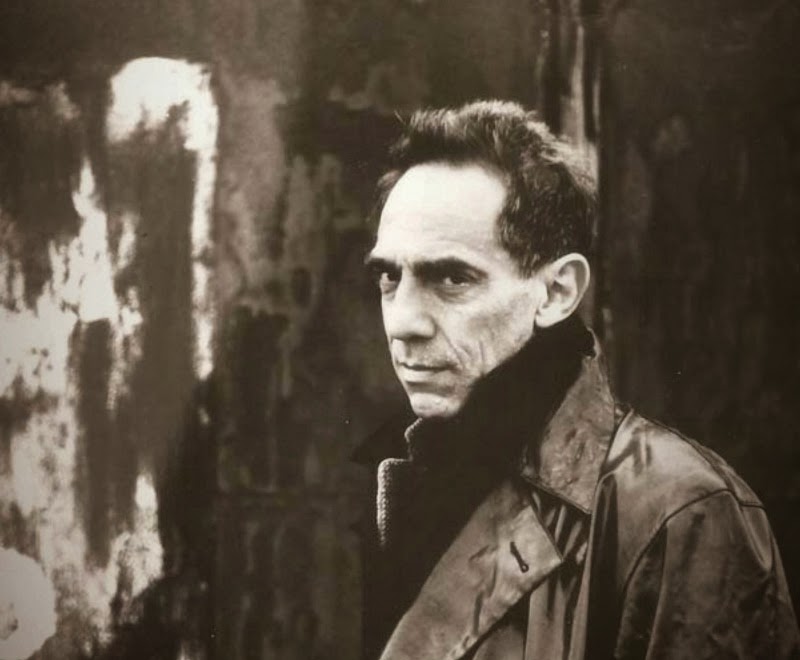
Beresford therefore does something particularly interesting: he invents the confrontation that never happened between the actor Ian Charleson and filmmaker Derek Jarman
Through it, Elsinore explores two very different responses to homosexuality and visibility. Jarman represents the necessity of being publicly visible and politically outspoken. Charleson represents another reality: that openly associating himself with homosexuality could restrict his opportunities as an actor. What makes the scene powerful is that Beresford refuses to declare one man right and the other wrong. As he explained during the discussion following the screening, he wanted both arguments to remain valid.
That ambiguity gives the conflict its historical weight. Elsinore does not judge Charleson retrospectively according to what might be expected of a gay actor today. Instead, it recognizes the compromises imposed upon gay men working in an industry in which openness could carry serious professional consequences. At the same time, it recognizes the importance of figures such as Jarman who refused those compromises and insisted upon visibility.
This question of representation also resonates through Scott’s performance. During the discussion after the screening, Scott spoke about his gratitude for being able to play a role such as this today and acknowledged the generations of gay artists who created the conditions that made those opportunities possible. There is consequently something particularly moving about watching one gay actor embody another across different historical moments.
But Elsinore never allows these ideas to overwhelm its characters. Its politics emerge from lived experience rather than speeches about history. Charleson does not become simply a representative of gay men during the AIDS crisis, just as Jarman does not become simply a symbol of queer activism. They remain contradictory individuals negotiating the possibilities available to them.
This is also why the film’s treatment of AIDS is so effective. Cinema has understandably returned many times to the enormous trauma of the epidemic and to the generation of people who were lost. Elsinore acknowledges that history without making suffering its sole narrative principle. Charleson is dying, but he is also laughing, arguing, rehearsing, performing, loving and working.That choice prevents the film from reducing another gay character to tragedy. Instead, death gives urgency to life.
The film’s most powerful idea may therefore be remarkably simple: Ian Charleson chooses Hamlet. He chooses the exhausting rehearsals, the physical demands of the performance, his colleagues, Shakespeare and the stage. Faced with the increasing medicalization of his existence, he chooses creation.
Simon Stone directs this material with confidence and considerable emotional restraint, while Beresford’s screenplay continually finds humour and vitality inside circumstances that could easily have produced melodrama. The exceptional ensemble gives the world surrounding Charleson warmth and credibility, with Olivia Colman outstanding in a relatively contained but remarkably dense role.
At the centre of everything, however, is Andrew Scott. It is a towering performance, simultaneously physical and emotionally precise, and one that deserves serious awards consideration. More importantly, Scott never asks us merely to pity Charleson. He makes us understand his appetite for life.
That is ultimately what makes Elsinore one of the films that most impressed me at TIFF this year. It tells the story of a man approaching death without making death the most interesting thing about him. It is a film about AIDS that refuses to reduce its protagonist to AIDS, and a film about mortality that remains, above all, passionately committed to life.
Perhaps the most fitting conclusion to Elsinore’s journey at TIFF was its International People’s Choice Award. Together with the overall People’s Choice Award for La Bola Negra, another film centred on gay lives and histories, its reception speaks beautifully to the openness of Toronto audiences and their willingness to embrace queer stories as an integral part of our shared human experience.
 Rating: 4.6/5