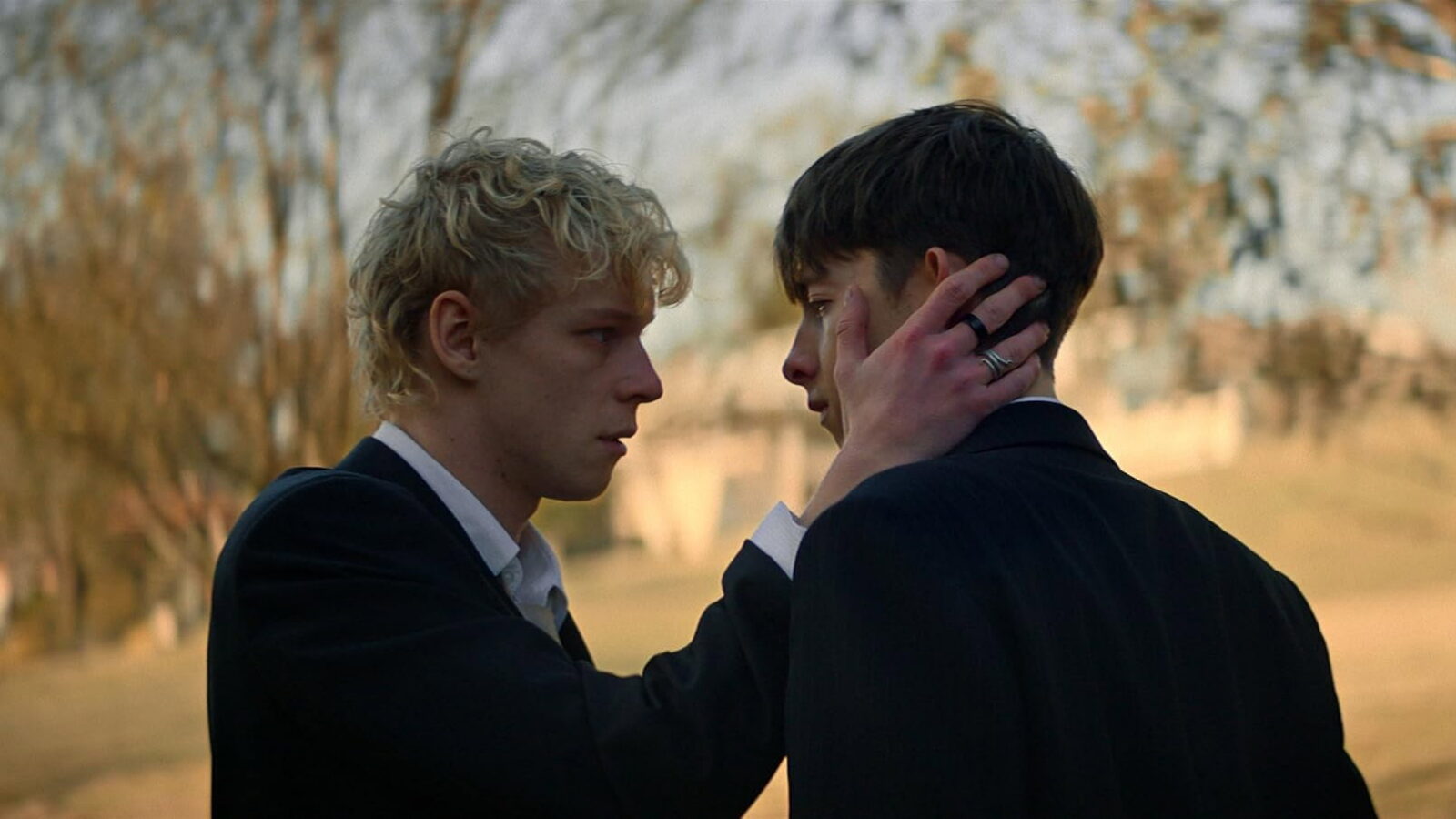
Adrian Chiarella’s Leviticus (Australia, 2026) announces its horror dimension immediately. From its opening sequence, the film establishes an atmosphere of estrangement, suffering, violence, and death, suggesting that something profoundly disturbing inhabits this small and intensely religious Australian town. That presence gradually takes hold of young people, pushing them toward erratic, frightening, and increasingly dangerous behaviour. Yet the film quickly makes clear that the real horror may not reside only in a supernatural force, but in the hatred, repression, and fear already embedded within the community itself. The film consequently blurs the distinction between supernatural possession and socially imposed repression, suggesting that the most damaging form of possession may be the internalization of a community’s hatred. Chiarella transforms sexual repression into horror imagery with considerable force, making the film not simply a story about teenagers escaping an evil presence, but about the terrifying consequences of turning desire into sin and difference into something that must be exorcised.