by Hudson Moura
You Can See Everything, Nathan Fielder, Lance Oppenheim, Elizabeth Holmes, Billy Evans, Amanda Seyfried, Theranos, Documentary Cinema, Documentary Ethics, Documentary Filmmaking, Performance of Truth, Authenticity, Reenactment, Camera-Body, Cinematography, Mise-en-scène, Self-Reflexive Documentary, Errol Morris, Film Criticism, Film Reviews
Spoiler warning: This review discusses key developments, including the final sequences. If you plan to watch the film soon, I recommend reading it afterward. Otherwise, feel free to read on! I’d love to know whether our interpretations align—or differ. Share your thoughts!
“You can see everything.” This is the promise that Elizabeth Holmes and her partner, Billy Evans, make to filmmaker Nathan Fielder. Their proposition is simple: unrestricted access to their private lives, from everyday family activities to their professional ambitions. For Billy, this “radical transparency” would allow the public to discover who Elizabeth really is, beyond the scandal that transformed her into one of Silicon Valley’s most notorious figures. Yet the more the filmmakers are allowed to see, the less certain they become about what they are actually witnessing.
Co-directed by Nathan Fielder and Lance Oppenheim, You Can See Everything (2026) begins 34 days before Elizabeth enters prison in 2023 to serve an 11-year sentence for fraud. The founder of Theranos, a company that promised to revolutionize medical testing through technology capable of performing numerous blood tests using minimal samples, Elizabeth had become internationally known for deceiving investors about the capabilities of her invention. Having largely avoided media interviews since 2016, she now agrees to an intimate documentary in which she hopes to present herself as a person rather than the character constructed around her public image.
Nathan moves into the family’s residence, accompanying Elizabeth, Billy, and their children through the final days before her imprisonment. The first part of the film follows this period almost as a countdown, observing the family’s daily routines and the tense exchanges between the filmmaker and his subjects. However, what makes this documentary interesting is not necessarily what it reveals about Elizabeth, but how its own production gradually becomes the principal narrative.
When the Negotiation Becomes the Documentary
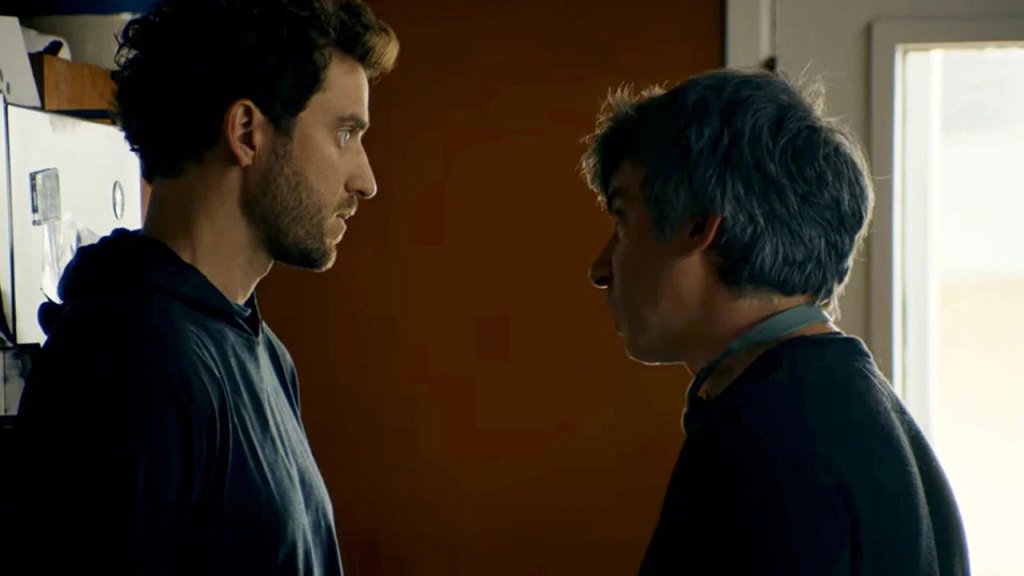
In conventional documentary filmmaking, negotiations concerning access, consent, restrictions, and the limits of representation generally take place before or alongside filming, without necessarily becoming part of the finished work. In You Can See Everything, these negotiations occupy much of the screen time. What can be filmed? Which questions can be asked? What should be included or excluded? Who has the authority to decide what the audience will ultimately see?
Rather than simply documenting Elizabeth, Nathan documents the process of negotiating her representation. The film’s central subject shifts from the woman being portrayed to the construction of the documentary itself.
This shift is significant because Nathan is far from a conventional investigative journalist. Known for his comedic work involving social experiments, staged situations, and the manipulation of everyday behaviour, he has built his career around observing how people respond to unusual circumstances. His methods often produce entertainment by exposing the contradictions and artificiality of social interactions. Here, he adopts a similarly participatory approach, becoming one of the film’s principal characters.
His facial expressions, suspicious glances, ironic comments, moments of disbelief, and uncomfortable silences are as important as his questions. At times, he appears to represent the audience, expressing the skepticism that viewers might themselves feel when confronted with Elizabeth’s explanations. At other moments, his intentions become less clear. Is he genuinely attempting to understand her, or is he creating situations in which her contradictions will become visible?
Even an apparently innocent gesture becomes an object of scrutiny. Early in the film, while Elizabeth describes how she first attracted Billy’s attention through sustained eye contact, Nathan suggests that she might be employing the same technique with him. What begins as an anecdote about romantic attraction becomes a question about her ability to influence others. Her gaze, like her words, becomes something that Nathan observes and interprets.
Nathan also openly acknowledges his scientific limitations. He wonders whether Elizabeth chose him precisely because he lacks the expertise to challenge her technological and medical claims. She responds that her intention is not to revisit the scientific controversy but to tell a human story.
Their exchanges expose the importance of language in constructing credibility. When Nathan questions Elizabeth about her claim that Theranos had developed a device capable of performing any blood test, their discussion becomes entangled in the distinction between what the technology could theoretically accomplish and what it had actually been demonstrated to do. The ambiguity recalls the comedy of Abbott and Costello’s Who’s on First? routine, which Nathan introduces to illustrate their difficulties communicating.
Billy becomes the principal intermediary in this relationship. He presents himself as a devoted partner, determined to protect Elizabeth from further public misrepresentation. Yet his interventions, interruptions, and attempts to manage the filming make his role ambiguous. What exactly is he protecting her from? And how much of the couple’s public presentation is being controlled by him?
A domestic scene illustrates this ambiguity. While Elizabeth is preparing scrambled eggs, Billy takes over the task, explaining that she is not mixing them vigorously enough. Nathan immediately questions his intervention, transforming an ordinary kitchen interaction into an opportunity to examine their relationship. Similarly, Billy sometimes abruptly ends conversations or redirects attention toward another activity or obligation when uncomfortable questions arise, leaving Nathan without the answers he was seeking.
Paradoxically, Billy’s attempts to manage the filming coexist with moments of personal exposure. In one scene, he takes a shower and brushes his teeth with the shower enclosure open, allowing the crew to film him naked. The scene is striking because Billy, who frequently determines when conversations should stop and what may be discussed, appears uninhibited about being filmed in such a private situation.
Through these interactions, Billy assumes a prominent position in the documentary, sometimes becoming as intriguing a subject as Elizabeth herself. The exchanges among the three create a tour de force of interpersonal negotiations, in which gestures, interruptions, and seemingly trivial activities acquire significance.
The Camera-Body: Observation, Intimacy, and Mise-en-scène
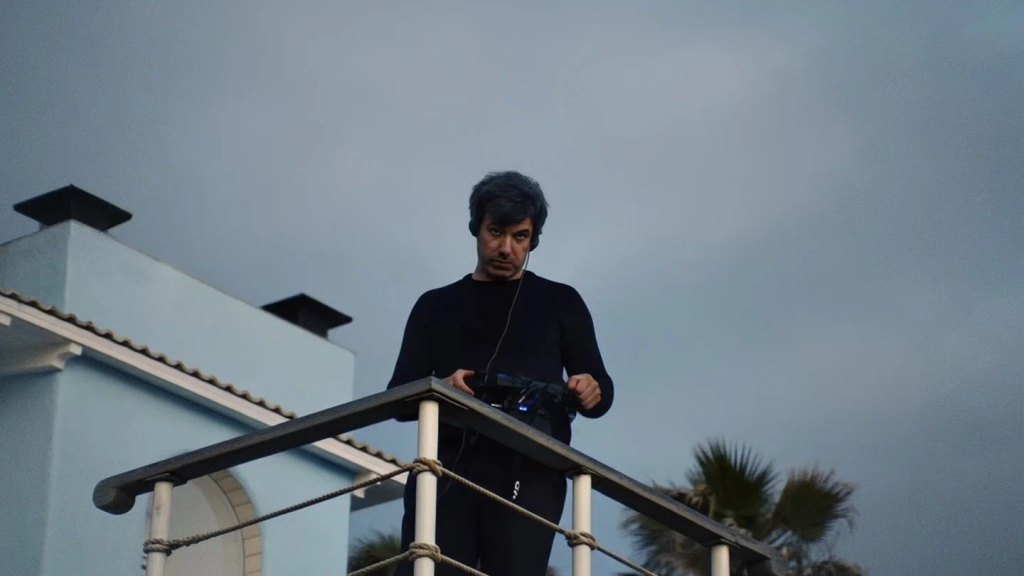
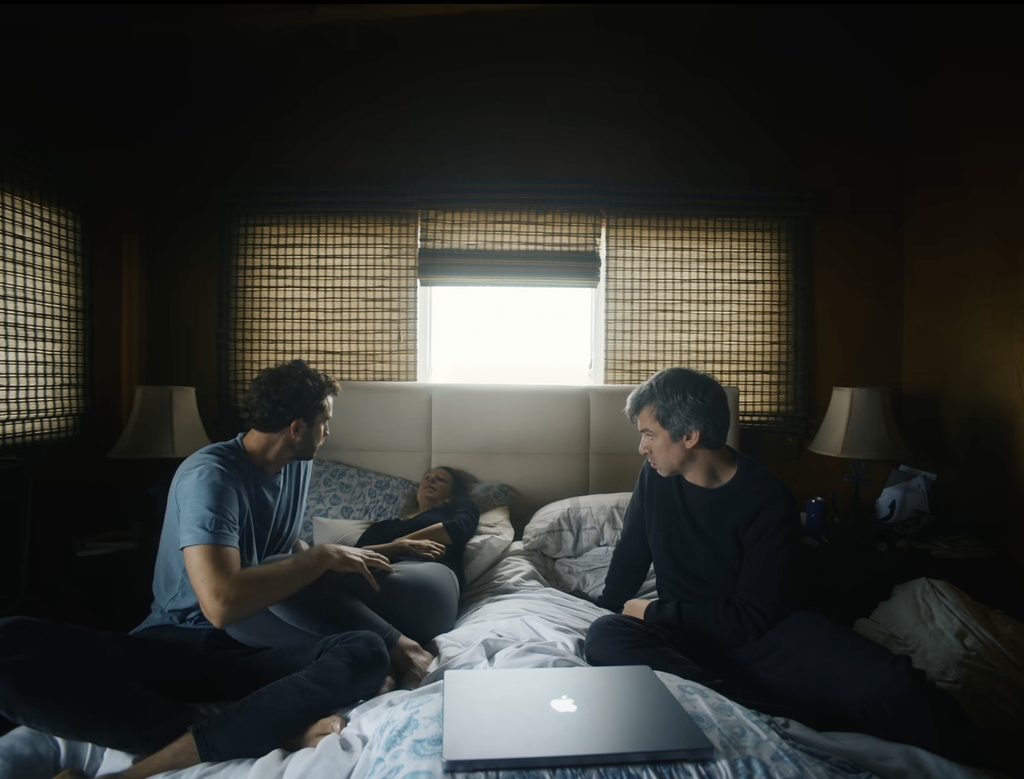
The cinematography introduces another ambiguity that the film does not sufficiently address. Its carefully composed frames, close-ups, and extreme close-ups frequently capture the participants’ reactions with a precision that seems closer to fictional cinema than spontaneous documentary observation. In certain exchanges between Nathan and Billy, the camera appears to move from one face to another at precisely the moment of a response, almost as though it anticipates the direction of the conversation.
The filmmakers used three cameras to capture these encounters, a technical arrangement that explains much of this precision. Yet this aspect of the production receives little attention within the film compared with the negotiations, disagreements, and other decisions involved in its construction. This omission is curious for a documentary so concerned with exposing its own filmmaking process. Why reveal so many aspects of production while leaving the apparatus responsible for constructing the images largely outside the discussion?
The conversations between Nathan and Amanda are equally revealing. Whether in the backyard or the living room, their positions sometimes appear carefully arranged, with symmetrical compositions and precisely framed reactions that give these supposedly spontaneous interactions an almost rehearsed quality. The camerawork does not establish that these encounters were staged, but it raises questions about the degree to which documentary observation is shaped by cinematic composition and editing.
What is more troubling is the way the camera movements themselves appear improvised, natural, and almost inadvertent. Although the production relies on several crew members operating three cameras, the visual language frequently creates the impression of a single observer moving organically through intimate conversations. The camera seems to discover gestures and reactions as they occur, following the participants without anticipating their movements. Yet this apparent spontaneity contrasts with the precision of the framing and the simultaneous coverage made possible by multiple cameras.
The relationship between fiction and documentary has long operated in both directions. Filmmakers such as Robert Altman and Woody Allen have employed techniques associated with documentary observation and improvisation to lend spontaneity to fictional encounters and narratives. Here, the opposite tendency becomes apparent: documentary encounters are presented through a visual organization that can resemble fictional mise-en-scène. The camera does not simply document spontaneous behaviour; its movements and framing contribute to constructing the impression of spontaneity.
This relationship can also be considered through the concept of the camera-body (caméra-corps), which I have developed from Henri Bergson’s philosophy of images. Rather than treating the camera as an external recording apparatus, this approach considers it an active presence within the filmed environment, an image among images, capable of interacting with the bodies, movements, and spaces surrounding it. Through its movements, proximity, framing, and pauses, the camera acquires a body of its own, participating in the scene rather than merely observing it.
In You Can See Everything, the camera often assumes precisely this embodied presence. It approaches the protagonists, follows their gestures, lingers on their expressions, and accompanies conversations as though it were another participant. At times, it becomes a witness to their private lives, almost a confidant to whom intimate moments, uncertainties, and contradictions are disclosed. Its movements create the sensation of sharing the same space and participating in the unfolding encounter.
Yet this is precisely where the film becomes questionable. The apparent intimacy of this camera-body, its seemingly spontaneous reactions and unobtrusive presence, is produced through a coordinated recording apparatus whose complexity remains largely invisible. The spectator is encouraged to experience the camera as a single embodied witness, even though the images result from multiple simultaneous points of view subsequently organized through editing.
The distinction is not whether the filmed events actually occurred, but how the cinematography constructs our experience of witnessing them. The camera’s apparent spontaneity becomes another level of performance, creating an impression of naturalness and intimacy that is itself a cinematic construction.
This tension is significant in a documentary that repeatedly exposes the conditions of its own production. While Nathan questions the authenticity of his subjects and makes their negotiations visible, the film gives comparatively little attention to the role of cinematography in constructing the appearance of direct observation.
The camera-body thus becomes another participant in the film’s performance of truth: a witness and confidant whose apparent intimacy and spontaneity are themselves mediated by a carefully organized cinematic apparatus.
Amanda Seyfried: Acting, Authenticity, and Celebrity Performance
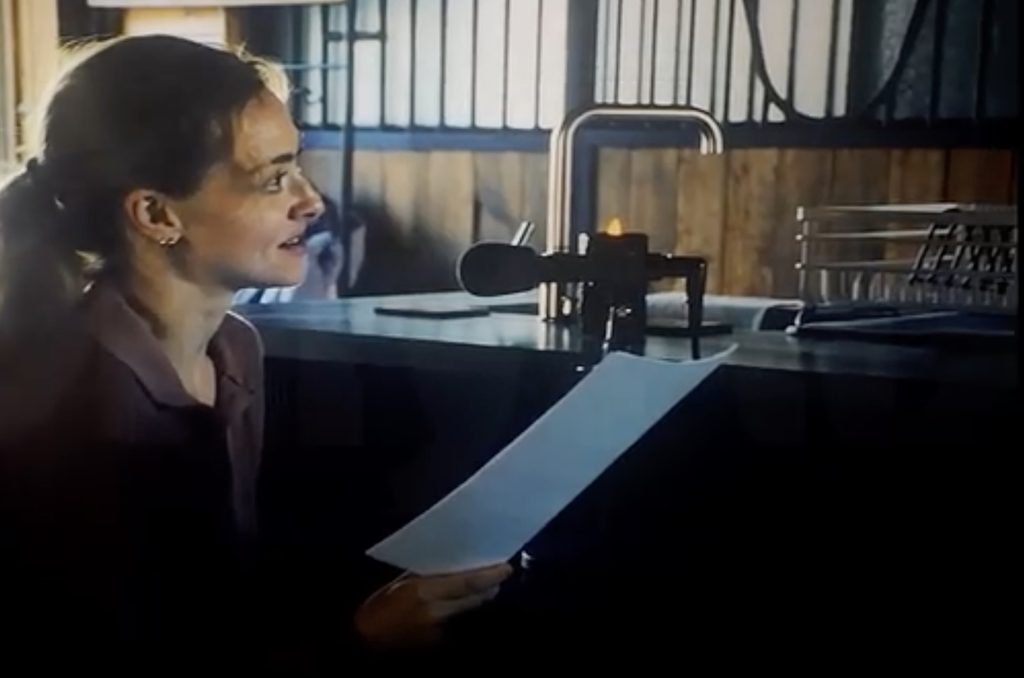
The documentary becomes more complex with the participation of Amanda Seyfried, who previously portrayed Elizabeth in the television miniseries The Dropout (2022). Initially brought into the film to reenact conversations that Nathan could not record, Amanda gradually becomes an independent and outspoken commentator on the relationship between Elizabeth and Billy.
Her position contrasts with Nathan’s. While he appears more inclined to accept the love Elizabeth and Billy profess for each other, Amanda expresses reservations about Billy’s behaviour, interpreting his interventions as controlling and manipulative. Her concerns become more pronounced when she discovers that Billy holds power of attorney over Elizabeth and controls aspects of her public communication, including messages published through her social media account.
Yet Elizabeth repeatedly expresses love and devotion toward Billy, describing a relationship in which their identities and aspirations appear almost inseparable. Nathan struggles to reconcile this declaration of love with Billy’s conduct. How can someone as intelligent and persuasive as Elizabeth, who convinced so many influential people to believe in Theranos, apparently surrender so much authority to another person? Is this a relationship based on mutual trust, or is there something more troubling beneath its surface?
Amanda seems more certain in her judgments. Her interventions create a counterpoint to Nathan’s hesitations, introducing a perspective rarely granted such prominence in a documentary ostensibly devoted to another person’s life.
But her participation also raises a question about the nature of performance. She is, after all, a professional actress whose occupation involves constructing believable characters. Moreover, actors do not necessarily cease performing when they leave the fictional world of cinema. Their interviews, public appearances, promotional activities, and celebrity identities can themselves involve the construction of personas through which they exercise cultural and social influence.
This ambiguity becomes explicit when Billy dismisses Amanda as a “fucking actress,” challenging her credibility precisely because she is a professional performer. Ironically, the confrontation occurs in a discussion in which Amanda herself criticizes someone else’s behaviour as performative.
But what exactly is Amanda doing in Nathan’s documentary? Is she expressing her personal convictions, performing a public persona, or occupying a role shaped by the filmmakers? Can these possibilities even be distinguished? Her participation makes it difficult to establish where acting ends and authentic personal intervention begins.
It is also revealing that, rather than inviting scientists to evaluate Elizabeth’s invention, investigative journalists familiar with the Theranos scandal, or specialists capable of providing independent perspectives on the protagonists’ behaviour, the filmmakers give a Hollywood actress such a prominent role. The film privileges the interpretation of behaviour and the performance of truth over the independent verification of factual claims.
The Ethics of Documentary: When Money Becomes the Story
The questions surrounding the participants’ authenticity take another direction when financial negotiations threaten the documentary’s production. Billy demands a share of the film’s potential profits, arguing that he and Elizabeth should benefit financially from their participation. For Nathan, this creates an ethical dilemma. If the documentary’s subjects have a financial interest in its commercial success, how might that affect their behaviour and the credibility of the project?
However, Nathan’s concern extends beyond the documentary’s integrity. Elizabeth’s conviction is closely associated with financial fraud and the manipulation of investors’ trust. Throughout the film, she repeatedly maintains that her motivation for developing Theranos was never personal enrichment but rather her commitment to making medical testing more accessible and improving people’s health. If she were also seeking to profit from a documentary about her life, this could reinforce the perception that financial gain remains central to her motivations, further undermining the humanitarian image she attempts to present.
The question becomes more complicated when Elizabeth claims that she has no financial interest in the documentary. Nathan wonders whether she genuinely knows nothing about Billy’s negotiations or whether her apparent ignorance allows her to distance herself from decisions that might damage her public image.
This uncertainty occupies a substantial portion of the film, eventually becoming one of the central subjects of Nathan’s visit to Elizabeth in prison.
Yet the question of documentary participants receiving compensation is hardly new. Documentary filmmakers have long debated whether paying subjects compromises their testimony or whether participants deserve compensation for contributing their time, experiences, and personal lives to a project from which others may profit. Some filmmakers openly acknowledge such arrangements as part of a transparent and collaborative production process.
Consequently, Billy’s financial demands are not necessarily problematic simply because money is involved. The issue concerns how those demands are negotiated, what influence they might exert on the film, and whether the participants are being truthful about their involvement. What might ordinarily remain a relatively minor production matter becomes one of the documentary’s principal narrative conflicts.
Reenactment, Documentary Truth, and the Spectator’s Role
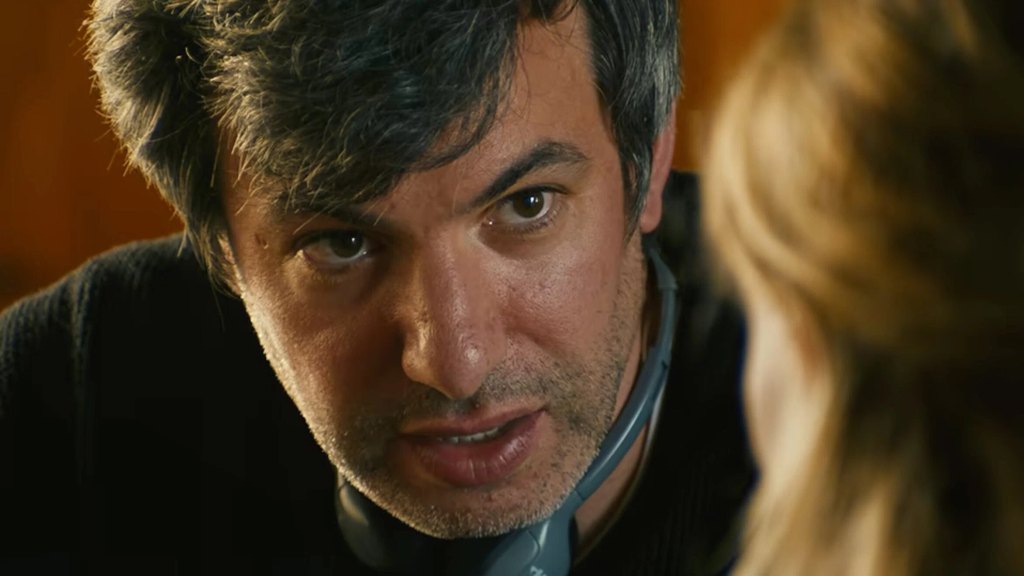
The film’s final section takes this self-reflexive approach further. Unable to film his conversations with Elizabeth inside prison, Nathan asks Amanda to portray her in reenactments based on his recollections. During their discussions, Amanda questions whether Nathan has omitted a moment in which Elizabeth may have behaved manipulatively toward him. She wonders whether he is becoming protective of his subject, consciously or unconsciously avoiding details that could portray her negatively.
Nathan rejects the suggestion. He insists that he is attempting to be accurate rather than allowing his feelings to determine the representation. Yet his discomfort reveals how difficult it is to distinguish factual reconstruction from personal interpretation.
Here, the film recalls the work of American documentarian Errol Morris, particularly his incorporation of fictional reenactments into documentary storytelling in The Thin Blue Line (1988), a film that helped redefine American documentary practice. For Morris, reenactment does not necessarily negate factual truth; it raises questions about how that truth can be represented. Nathan, however, takes this problem in another direction. He does not merely incorporate reenactment into the documentary. He exposes the discussions, doubts, disagreements, and decisions involved in producing it.
The audience therefore witnesses not simply a reconstruction of an event but the process through which that reconstruction is negotiated. Accuracy itself becomes something to be debated, interpreted, and performed.
These hesitations, uncertainties, and creative discussions bring the audience into the filmmaking process. Rather than presenting a completed interpretation, the film leaves gaps and unresolved questions that viewers are invited to fill. This recalls Gilles Deleuze’s discussion of Hitchcock’s cinema, in which the spectator becomes a third participant alongside the director and the film. In You Can See Everything, viewers are similarly drawn into the process of interpretation, connecting fragments, evaluating contradictions, and confronting uncertainties that the documentary leaves unresolved.
By exposing his own doubts, Nathan transfers part of the interpretive responsibility to the audience. Viewers are not simply asked to accept his account of events but to consider the choices and limitations involved in constructing that account.
The Performance of Truth
This brings us to the film’s central contradiction: its principal participants are all professionals whose activities involve, in different ways, constructing appearances and influencing perceptions.
Elizabeth’s public notoriety derives from her fraudulent representations of Theranos and her ability to convince investors of its technological promises. Nathan has built an entertainment career around manipulating social situations and expectations, often revealing the mechanisms through which seemingly spontaneous behaviour can be orchestrated. Amanda’s professional identity as an actress involves the construction of characters, while her celebrity status raises questions about the relationship between public persona and private identity.
These activities are not morally equivalent, but they bring together three distinct relationships to performance, credibility, and the construction of believable realities.
It is revealing that Nathan, whose entertainment depends on orchestrating situations and observing people’s responses, should attempt to document someone whose reputation was built on manipulating the trust of others. Their encounter creates a confrontation between two individuals whose professional histories are connected to the production and management of appearances.
Even Nathan’s apparent transparency becomes questionable. By revealing his uncertainties, disagreements, and difficulties throughout the filmmaking process, he seems to offer audiences access to the construction of the documentary. Yet this self-reflexivity is also characteristic of his entertainment practice. The exposure of manipulation may itself become another form of performance.
In this respect, You Can See Everything is not simply a documentary that questions the reliability of its subjects. It questions the format through which documentary cinema attempts to represent reality. Reality and truth, two fundamental premises of documentary filmmaking, become central characters and themes, negotiated through conversations, confrontations, performances, and editorial decisions.
The result is a complex and frequently uncomfortable work in which the process of making a documentary becomes more significant than its original subject. Its nearly three-hour duration is sustained largely by negotiations that would ordinarily remain outside the finished film. It is also a useful examination of documentary practice, exposing the practical and ethical difficulties of gaining access, establishing trust, compensating participants, reconstructing events, and defining the filmmaker’s position toward those being portrayed.
Ultimately, the title expresses the film’s central paradox. Elizabeth and Billy promise that the filmmakers can see everything, while Nathan and Lance expose much of the documentary’s own construction. Nevertheless, this accumulation of access and transparency does not necessarily produce greater certainty.
We may see how the documentary is constructed, how its participants negotiate their representations, and how competing performances attempt to establish their credibility. But seeing everything does not necessarily mean knowing what is true.
Yet the film’s self-reflexivity is also its principal limitation. While exposing the negotiations and manipulations involved in documentary filmmaking, it never entirely resolves whether these uncertainties arise from a genuine attempt to understand its subjects or from Fielder’s established practice of transforming manipulated situations into entertainment. This ambiguity may be intellectually stimulating, but it does not necessarily make the documentary more credible or convincing.
In You Can See Everything, the performance of authenticity becomes inseparable from the construction of documentary reality. The film does not escape manipulation by revealing its mechanisms; it transforms that revelation into another performance.